


More news on this day
Delta Air Lines is reassessing its relationship with French aerospace group Safran for the airline’s next generation of premium business-class seats, as ongoing certification and supply delays threaten to push back cabin upgrades on key U.S. transcontinental routes by several years.
Get the latest news straight to your inbox!
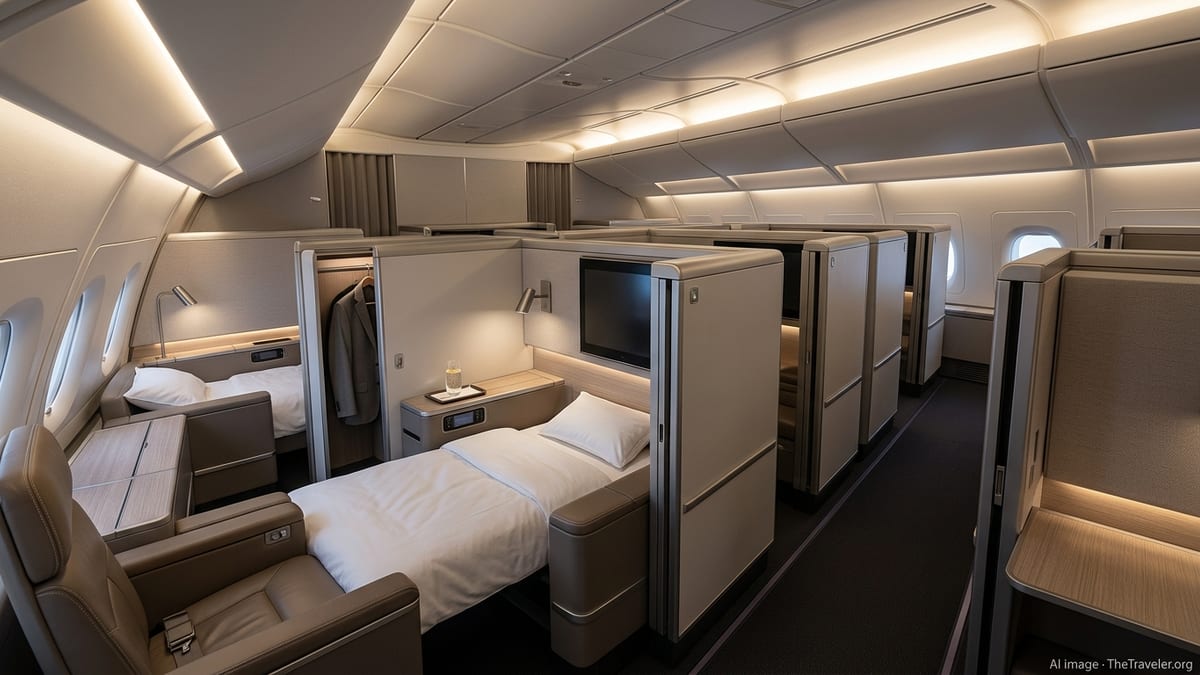
Certification Bottlenecks Put Safran Seat in Question
Recent coverage indicates that Delta originally selected a Safran business-class suite for its Airbus A321neo fleet, intended to serve high-profile transcontinental markets such as New York to Los Angeles and San Francisco. The product, often referred to in industry reporting as Safran’s Vue seat, has remained stuck in the U.S. Federal Aviation Administration’s certification process, limiting Delta’s ability to introduce the new cabin as planned.
Reports describe a combination of regulatory and human-factors testing hurdles affecting several new premium products across the industry, creating a bottleneck for airlines that have invested heavily in bespoke business-class suites. In Delta’s case, the drawn-out timeline has contributed to significant delays for its refreshed domestic long-haul premium offering, prompting an internal review of supplier options.
Publicly available information shows that the airline has already had to compromise on its original vision for the A321neo by operating some aircraft with more conventional domestic first-class seating while it waits for a long-term premium solution. For an airline that has positioned itself as a premium leader in the U.S. market, the gap between expectations and current reality on these routes has become increasingly difficult to ignore.
Industry analysts note that a stalled certification program can ripple far beyond one aircraft type, consuming engineering resources and complicating fleet planning. The Safran delays appear to have raised questions inside Delta about whether continuing to wait is compatible with the carrier’s broader premium strategy.
Thompson Aero Emerges as Leading Alternative
According to multiple industry summaries of a recent Bloomberg interview with Delta’s chief marketing and product executive, the airline is now actively evaluating an alternative business-class seat from Northern Ireland-based Thompson Aero Seating. The specific model under consideration is widely reported to be the VantageSOLO, a product that is already flying with several major international carriers.
Because the Thompson seat has been certified and deployed on other fleets, analysts suggest that it offers a more predictable path to entry into service than the still-pending Safran installation. That track record appears to be a key factor for Delta as it seeks to minimize further delays on its premium cross-country network.
Aviation-focused publications have linked the potential supplier switch to Delta’s desire for consistency and speed. Choosing a seat that is already in commercial operation may allow the airline to standardize on a solution that aligns with broader industry norms, even if it means stepping back from a more bespoke concept originally envisioned with Safran.
While Delta has not publicly announced a final decision, the fact that Thompson Aero is being evaluated as a direct replacement underscores how close the airline may be to pivoting away from its original supplier. Such a move would mark a notable reshaping of the premium seating landscape, particularly given Safran’s prominent role in the global aircraft interiors market.
Strategic Context: Delta’s Broader Premium Push
The potential break with Safran comes as Delta deepens its long-term bet on premium travel. Recent business coverage notes that the carrier now earns materially higher revenue per seat than many rivals, with premium cabins on track to rival or surpass main-cabin income. That shift has been underpinned by a multiyear push to expand business-class, premium economy, and extra-legroom offerings across the fleet.
In April, Delta unveiled what it described as its most premium aircraft to date, centered on the forthcoming Airbus A350-1000. The program includes an enhanced Delta One suite and a significant increase in the share of premium seats on those jets, supported by more than 1 billion dollars in combined aircraft and cabin investment. The new long-haul suite, which is being developed separately from the A321neo program, illustrates how central high-yield travelers have become to Delta’s growth plans.
Analysts point out that the airline is also experimenting with new fare structures that segment premium products into multiple price tiers, mirroring the evolution previously seen in economy cabins. By widening the range of price points and perks, Delta aims to capture more revenue from travelers who are willing to pay extra for space, privacy, or flexibility, even if they do not always buy the very top product.
Against that backdrop, delays in rolling out a new transcontinental business-class seat have strategic consequences. Fleet planners and revenue managers count on a consistent premium experience to support higher fares and a clearer value proposition across markets. The Safran delays, and the resulting possibility of a supplier switch, highlight how critical cabin hardware has become to the airline’s financial narrative.
Implications for Safran and the Competitive Seat Market
Safran is a major player in aircraft interiors, with a long-standing presence in premium seating alongside rivals such as Collins Aerospace, Recaro and others. Any loss of a high-visibility contract with Delta for flagship U.S. routes would be symbolically significant, even if the overall financial impact remains modest within Safran’s broader aerospace portfolio.
Recent industry reporting already points to increasing pressure on premium seat manufacturers as airlines demand more complex, privacy-focused designs while regulators scrutinize safety and ergonomics. Delays in certification or production can create bottlenecks that affect aircraft deliveries, route launches and brand promises. The situation with Delta’s A321neo program illustrates how one problematic program can prompt airlines to diversify or reconsider supplier relationships.
For the competitive landscape, Thompson Aero’s emergence as a leading candidate for Delta’s transcontinental business-class suite could strengthen the company’s position among global full-service carriers. Being selected by a U.S. network airline with a strong premium reputation would give Thompson expanded visibility and reinforce the appeal of its established, already-certified products.
Market observers suggest that the episode may also encourage airlines to weigh the benefits of cutting-edge, bespoke seat concepts against the operational certainty of proven designs. As cabin products have become a core part of airline branding, the balance between innovation and reliability remains a central question for both carriers and suppliers.
What Passengers Can Expect on Key Transcontinental Routes
For travelers, the immediate impact of Delta’s supplier deliberations is likely to be continued inconsistency in the premium experience on certain U.S. transcontinental flights. Some A321neo aircraft are flying with interim domestic first-class seating rather than the fully flat, enclosed business-class suites initially promised for routes such as New York to Los Angeles.
Travel media commentary indicates that a shift to a Thompson Aero product would bring Delta more in line with the seat types already used by several North American and transatlantic competitors. Passengers could see a lie-flat, all-aisle-access configuration with a familiar layout, rather than the more unusual reverse-herringbone design originally planned with Safran.
However, any supplier change would still require design customization, production and installation, meaning that fully upgraded cabins on all scheduled aircraft would remain a multi-year project. Even in an optimistic scenario, premium travelers on these routes can expect a mix of cabin types and seat generations as Delta gradually reconfigures its fleet.
For now, frequent flyers and corporate travel buyers are watching closely for concrete announcements on seat selection and retrofit timelines. With Delta’s premium strategy increasingly central to its brand, the outcome of the Safran decision will shape not only the physical cabins on board but also the competitive dynamics of high-yield travel in the U.S. market.