


More news on this day
Air passengers across Europe are facing a renewed wave of flight delays and cancellations as summer travel peaks, with weather disruptions, air traffic control constraints and infrastructure pressures combining to strain airport and airline operations.
Get the latest news straight to your inbox!
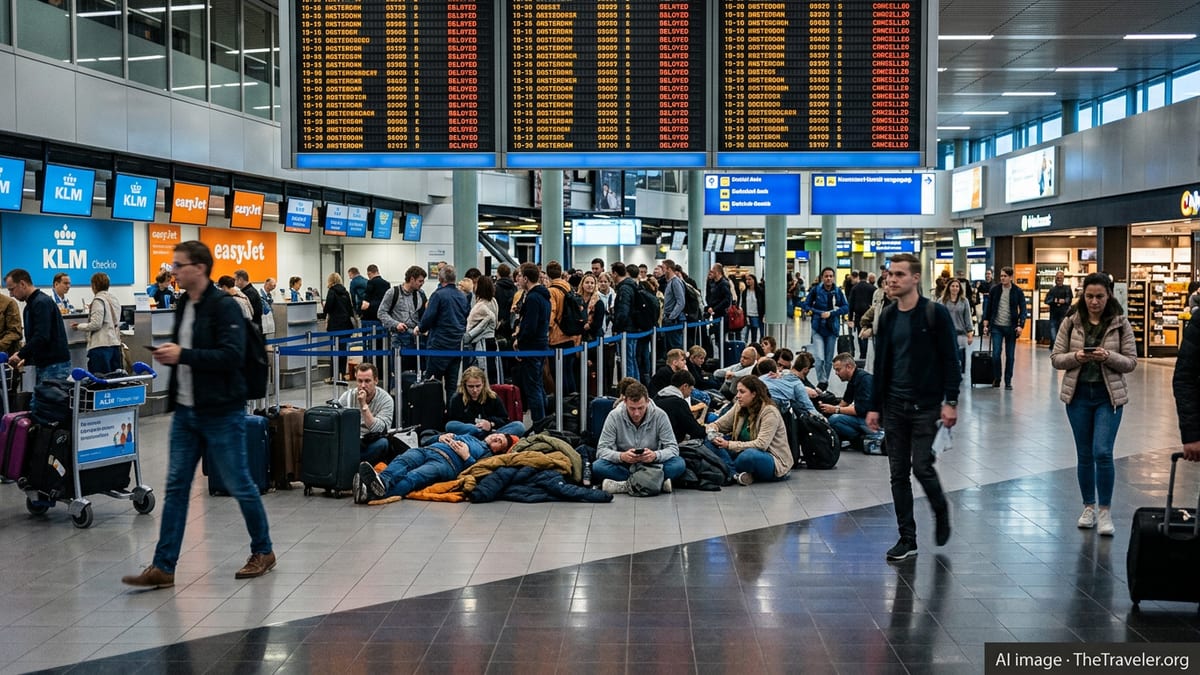
Storms, Heat and Congested Skies Disrupt Key Hubs
Recent weeks have brought severe weather across parts of Europe that has quickly translated into disrupted flight schedules. Thunderstorms and heavy rain triggered extensive delays at major hubs including London Heathrow and Gatwick in late June, with reports indicating hundreds of flights affected and some passengers waiting for hours on grounded aircraft in high temperatures.
Weather-related disruption has also been reported at major continental airports. Eurocontrol’s operational briefings describe multiple days of strong winds, low visibility and storms across Germany, Austria and other states, leading to traffic management restrictions and departure backlogs on some of the continent’s busiest routes.
Aviation data for May and June shows that while the average delay per flight across Europe remains in the range of a few minutes, localized storms can rapidly push individual airports into significant disruption. When this coincides with peak holiday volumes, relatively short operational suspensions can result in long queues, missed connections and overcrowded terminals.
Industry analysts note that consecutive days of unstable weather can be particularly problematic because delayed aircraft and crews fail to return to schedule overnight, creating a rolling wave of late departures and arrivals that may take several days to unwind.
Air Traffic Control Bottlenecks Add To Airline Pressures
Alongside adverse weather, capacity constraints within Europe’s air traffic management network are contributing to extended delays and occasional cancellations. Recent Eurocontrol overviews highlight continued pressure in several key control centers in France, Spain and Greece, where a combination of high traffic volumes, staffing issues and new system rollouts is producing additional minutes of en route delay per flight.
Airlines have publicly raised concerns about air traffic control reliability in certain markets. In early July, one major low cost carrier reported significant delays to more than a hundred flights after an air traffic control systems issue affected UK airspace, calling for stronger accountability and investment in resilient infrastructure.
Although average air traffic flow management delay per flight across Europe is still measured in low single digits of minutes, the impact on passengers can be substantial when restrictions coincide with already tight schedules and full aircraft. Where capacity limits are imposed on specific sectors, airlines may be forced to thin their schedules, consolidate services or cancel flights at short notice.
Some carriers have already trimmed planned summer flying compared with earlier schedules, citing a desire to build additional slack into operations and avoid the widespread disruption seen in some past seasons when networks were stretched close to their limits.
National Networks Feel The Strain, From Italy To The UK
Operational data from individual countries illustrates how quickly local issues can ripple through wider European travel. In Italy, publicly available statistics for early July indicate more than two hundred cancellations and several hundred delays in a single day, concentrated at Rome Fiumicino and Milan Malpensa, after a mix of stormy weather and airspace constraints affected flights across the peninsula.
In the United Kingdom, recent analysis of performance figures shows that major airports continue to struggle with punctuality into 2026, following a difficult 2025 in which several large bases recorded average departure delays of close to 20 minutes. While on-time performance varies by airport and airline, passengers flying from some of the region’s busiest hubs are being advised by travel experts to expect queues and to build additional time into their journeys.
These national snapshots mirror a broader European picture. Eurocontrol data shows that total flights are now slightly above pre-pandemic levels, intensifying the use of airspace and airport infrastructure. Reactionary delays, where a late inbound aircraft causes subsequent flights to depart behind schedule, remain a primary driver of disruption as carriers operate tight turnarounds in packed daily rotations.
Even when cancellations remain a relatively small percentage of total scheduled flights, the absolute number of affected passengers can be substantial, particularly on popular leisure routes where alternatives may be fully booked for days during the peak holiday period.
Airlines Adjust Schedules As Passenger Rights Are Strengthened
To cope with recurring bottlenecks, some European airlines have taken preemptive steps to adjust their operations. Publicly available planning documents and industry commentary indicate that several carriers have reduced planned frequencies on certain routes for the late spring and early summer period, preferring to operate slightly leaner schedules with more operational resilience rather than risk widespread last minute cancellations.
Eurocontrol’s monitoring of airline schedules points to modest reductions in planned flights for May and June compared with earlier timetable versions, a shift that analysts interpret as a response to capacity constraints and demand volatility. While this approach may limit choice for some travelers, it can help airlines run more reliably during periods of intense demand.
At the policy level, European institutions are moving to strengthen passenger protections in the face of recurring disruption. A recent agreement between the Council of the EU and the European Parliament on updated air passenger rights frameworks includes provisions aimed at improving how and when passengers are informed of expected delays, as well as clarifying conditions for rerouting and compensation when flights are cancelled or heavily disrupted.
Consumer groups argue that clearer and more enforceable rules will create additional incentives for airlines to manage schedules conservatively and to invest in operational resilience. Industry representatives, however, continue to emphasize that external factors such as weather and air traffic control capacity significantly influence punctuality, even when airlines plan cautiously.
Summer Outlook: High Demand With Persistent Risks
Looking ahead to the peak of the 2026 summer season, forecasting from Eurocontrol suggests that daily traffic levels will remain at or slightly above last year’s figures, keeping pressure on Europe’s busiest airports and air routes. With jet fuel prices still elevated compared with pre-crisis norms and some airspace corridors constrained by geopolitical tensions, airlines are attempting to balance cost control with reliability and customer expectations.
Operational briefings for early summer describe a reasonably stable overall network picture, but also highlight recurring hotspots where staffing, weather and transition to new management systems combine to generate delays. Airports in southern Europe that handle heavy holiday traffic, as well as busier hubs in western Europe, are expected to experience periodic surges in congestion during July and August.
Travel advisories from passenger rights organizations and specialist aviation services encourage travelers to monitor flight status closely, consider early morning departures where possible, and allow additional time for security, border controls and potential queues created by new digital entry procedures for some non-EU nationals.
While the current wave of delays and cancellations does not yet match the most severe disruption seen in previous years, the combination of full aircraft, changeable weather and structural constraints means that Europe’s aviation system is likely to remain under visible strain throughout the main summer getaway period.