


More news on this day
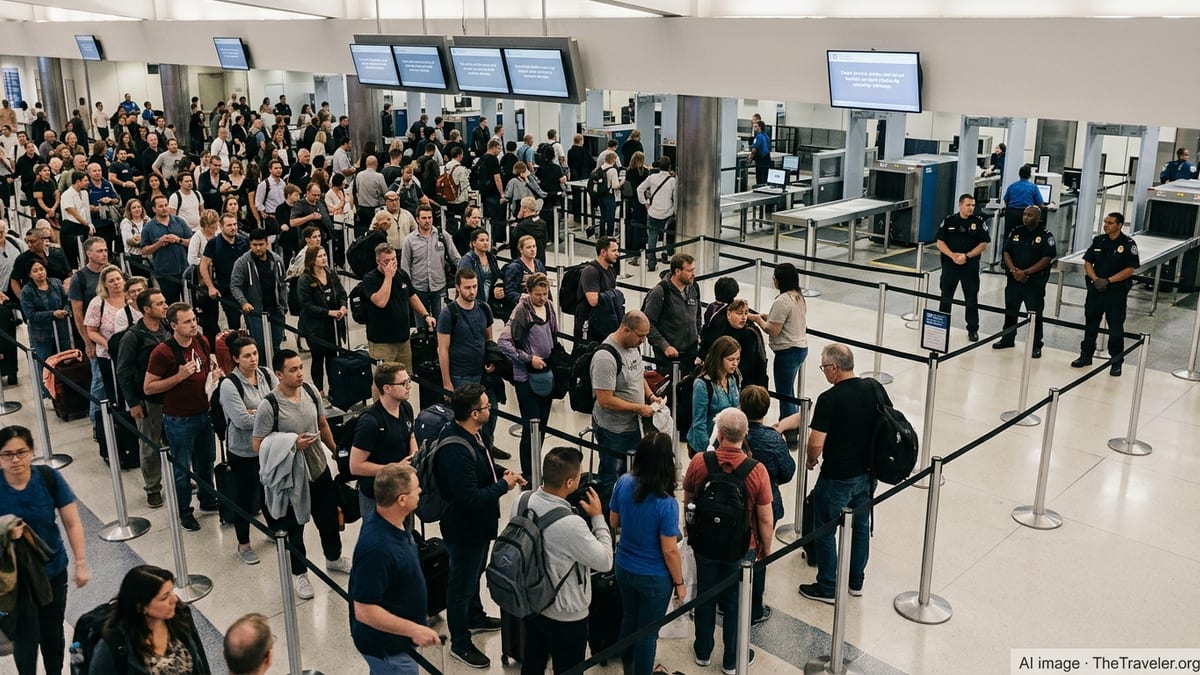
Airports across Europe are grappling with mounting queues, missed connections and disrupted schedules as the European Union’s new Entry/Exit System for non-EU travellers beds in during the peak summer holiday period.
Get the latest news straight to your inbox!
Biometric Border Checks Roll Out Across Schengen
The EU’s Entry/Exit System, known as EES, became fully operational at external Schengen borders on 10 April 2026. The digital platform replaces manual passport stamps for most non-EU visitors with electronic records that capture each person’s identity, travel document details and biometric data. Publicly available information from EU institutions describes the project as a long-planned move to tighten security, crack down on overstays and modernise border management.
The system requires most third-country nationals entering the Schengen Area to provide facial images and fingerprints during their first crossing after activation. Subsequent trips are meant to be faster, drawing on stored biometrics for up to three years. In principle, the change should streamline controls while giving border authorities better tools to detect irregular migration and identity fraud.
In practice, the first months of full deployment have coincided with a sharp spike in summer travel demand, exposing operational gaps at some of Europe’s busiest gateways. Airports and airlines had warned for months that higher processing times per passenger, if not matched with extra staff and equipment, could translate directly into longer lines at passport control.
EU briefing papers and technical summaries emphasise that the system itself is functioning as designed in many locations. The emerging picture, however, is one of uneven readiness across member states, with some hubs adjusting smoothly and others struggling to keep pace with passenger flows.
Hours-Long Queues and Missed Flights Reported
Since April, media coverage and industry statements have pointed to severe congestion at several major airports where EES registration has been fully activated. Reports from Italy, Portugal and Spain highlight instances of non-EU travellers waiting between one and four hours to clear border checks, with occasional accounts of delays stretching to six hours during peak arrival waves.
Travel coverage from outlets including Euronews and Forbes has documented missed connections as passengers found themselves still in border-control lines while boarding for onward flights closed. At Milan’s Linate Airport, one widely cited incident saw more than 100 people miss a flight to the United Kingdom after being held in what the airline described as unmanageable queues at passport control.
In some locations, local authorities have temporarily reverted to traditional booths at peak times in order to ease backlogs. Travellers passing through airports serving cities such as Rome and Lisbon have reported short-notice switches between new biometric kiosks and older manual procedures, contributing to confusion about what documentation or timing is required.
Consumer-focused travel outlets and social media accounts are now filled with first-hand accounts of extended waits, particularly for those arriving in the Schengen Area for the first time since EES went live. Many describe slow-moving lines for biometric capture and difficulties for families or older passengers unfamiliar with self-service kiosks.
Airports and Airlines Call for Adjustments
Airport and airline associations at European level have repeatedly raised concerns about the impact of the new system on capacity-constrained terminals. Joint statements from groups representing carriers and airport operators describe “significant delays” and “severe operational consequences” linked to EES registrations, especially at busy hubs with limited space for additional equipment and queuing areas.
These industry bodies argue that the core problem is not the concept of digital border management itself, but the pace and manner of rollout. According to recent open letters and press releases, sector groups are urging policymakers to allow more flexibility, including the possibility of temporarily scaling back biometric checks during the highest summer peaks where infrastructure is not yet fully in place.
Some national airport operators have gone further, publicly signalling that they may suspend or limit use of the new system if passenger safety or terminal operations are compromised. Coverage of developments in Italy, France and Portugal points to a patchwork response, with some airports seeking exemptions, others pressing ahead in full and yet others adopting hybrid models that vary by time of day or type of traveller.
European Commission documents acknowledge the operational strains and call on member states to deploy more border guards, expand automation and improve on-the-ground information for passengers. However, the basic legal requirement to register non-EU entries and exits electronically remains in force, making it likely that airports will need to adapt rather than return permanently to pre-EES procedures.
What Travellers Are Experiencing at the Border
For travellers, the most immediate impact is felt in the form of longer and less predictable queues at immigration. First-time EES enrolment involves scanning passports, capturing a facial image and recording fingerprints, often at dedicated kiosks before proceeding to a staffed checkpoint. Where there are too few working machines or limited staff to assist, the process can quickly create bottlenecks.
Accounts from passengers transiting major hubs in Italy, Spain, Greece and Portugal describe lines snaking through terminals, with some travellers warned to arrive at the airport up to four hours before departure. Those with tight connections, especially when arriving from outside Europe and connecting onward within the Schengen Area, appear particularly vulnerable to disruption.
There are also emerging reports of data inconsistencies, such as exits not being properly recorded in the system, leaving travellers concerned about how future stays will be calculated against Schengen’s 90‑days‑in‑180‑days rule. Travel forums show growing numbers of questions from visitors worried that technical glitches could cause problems at subsequent border crossings, even when they have complied with visa-free rules.
While many passengers still clear border checks in under an hour, the unpredictability of waits is driving more cautious behaviour. Travel commentary now commonly advises allowing additional time at the start and end of trips, avoiding very short connections, and carrying proof of onward travel and accommodation in case border officers ask for extra documentation.
Next Steps: Stabilising EES Before ETIAS Arrives
The Entry/Exit System is intended to be a permanent feature of travel to and from the Schengen Area, and EU institutions present it as an essential component of a wider package of security and migration tools. A European Parliament briefing published this spring notes that the system has already processed tens of millions of crossings and is expected to help identify overstays and security risks more effectively than manual passport stamps.
At the same time, European Commission reporting on the “State of Schengen” highlights the need for member states to refine their implementation. Recommendations include increasing staffing levels at peak times, upgrading infrastructure around checkpoints, expanding the use of automated gates for eligible travellers and improving training so that border officials can troubleshoot problems quickly.
The pressure to stabilise EES is likely to intensify later in 2026, when the separate European Travel Information and Authorisation System, or ETIAS, is scheduled to begin operations. ETIAS will require many visa-exempt nationals to obtain an online travel authorisation in advance, adding another layer of checks on top of the physical border process.
Travel industry analysts note that if recurring bottlenecks at airports are not resolved before ETIAS comes into effect, travellers could face a combination of pre-trip administrative steps and on-the-ground delays at border control. For now, public guidance from airlines, airports and tourism bodies increasingly focuses on one central message for non‑EU visitors heading to Europe: build extra time into your journey, expect additional checks at passport control, and stay informed about local conditions at your chosen gateway airport.