


More news on this day
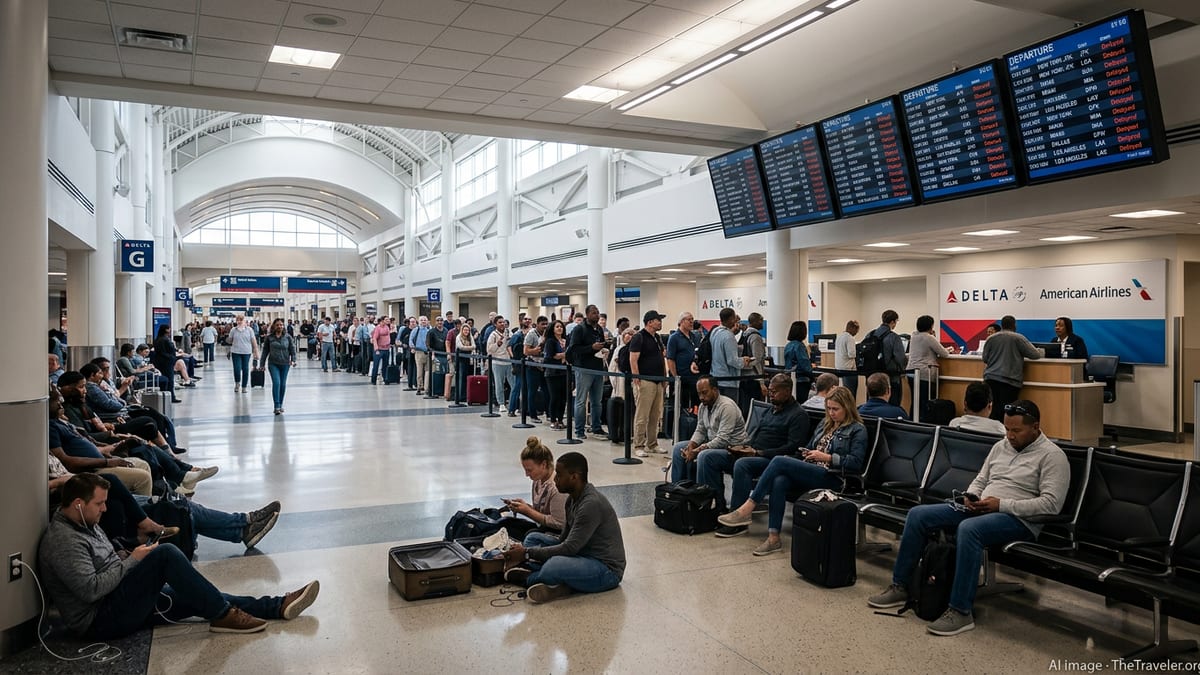
Travelers passing through Denver International Airport at the start of the week encountered mounting disruption as a combination of low clouds, thunderstorms and runway constraints contributed to delays affecting more than 800 flights, according to live aviation tracking data and industry reports.
Get the latest news straight to your inbox!
Storm Systems Slow Traffic Across the Mountain West
Published aviation and weather data for June 15 and 16 indicate that a slow-moving storm system over the central Rockies and High Plains reduced visibility and created low cloud ceilings around Denver, limiting the airport’s ability to move traffic at normal volume. As the weather shifted across the Front Range, arrival and departure rates were periodically throttled back, extending taxi times and pushing back departure slots.
Industry coverage of national operations shows that the same storm band triggered delays and cancellations at multiple hubs, with Denver consistently listed among the airports experiencing significant schedule pressure. As thunderstorms developed and intensified to the east of the city, traffic managers adjusted routes and spacing between aircraft, which further constrained the number of takeoffs and landings Denver could safely handle in a given hour.
Social media posts and traveler accounts from the concourses described unusually long lines of aircraft waiting for departure, with some passengers reporting delays on the ground approaching an hour even after boarding. Those ground waits were largely tied to the need for additional separation between flights in instrument conditions and for reroutes as storms disrupted preferred flight paths.
Runway Work Adds to Bottlenecks
While weather was the primary trigger, operational data and recent airport documentation highlight that ongoing construction and maintenance on parts of Denver’s airfield also contributed to the slowdown. Denver International is one of the few major U.S. hubs with six runways, a design that usually allows it to absorb storms and traffic surges better than many peer airports. When even one runway is partially constrained, however, the flexibility that normally keeps traffic moving quickly is reduced.
FAA construction outlooks and airport planning materials for 2025 and 2026 show a series of phased projects at Denver, including taxiway improvements and gate-area work that rely on trucks and equipment operating near active pavement. These projects require carefully choreographed runway and taxiway configurations, which can become more restrictive when poor visibility or crosswinds dictate specific approaches and departures.
Traveler reports posted over the past several days reference a “conga line” of jets taxiing for takeoff and note that departure delays have been particularly pronounced when low clouds were present and departure traffic was funneled to fewer runways than usual. In practical terms, the combination of construction constraints and adverse weather meant that Denver’s large runway system could not be used at its full potential precisely when demand for arrivals and departures was strongest.
Ripple Effects Felt Nationwide
Because of Denver’s role as a central hub for transcontinental and Rocky Mountain traffic, delays at the airport quickly resonated across airline networks. Publicly available tracking boards on Monday morning showed hundreds of flights arriving late into Denver, which then cascaded into late departures for subsequent legs to destinations across the United States.
Many of the more than 800 affected flights were not limited to Denver-originating passengers. Travelers on connecting itineraries through Denver reported missed links to secondary cities, extended layovers and, in some cases, forced overnight stays as evening departures fell behind schedule. When aircraft and crews arrived late into Denver, airlines were required to shuffle equipment, increasing the chances of further knock-on disruption.
Aviation operations guidance explains that when arrival capacity at a major hub is reduced by weather or runway issues, the national air traffic system typically responds with ground delay programs at departure airports. That approach, designed to prevent gridlock near the congested hub, pushes many delays back to travelers’ origin cities. On days like this at Denver, that means passengers can encounter long waits hours before they ever see the Front Range.
Passenger Experiences and What Travelers Can Expect
Online forums devoted to Denver International show that many passengers were caught off guard by the scale of the disruption, particularly those who saw only light rain or partial cloud cover from the terminal windows. Aviation specialists note that conditions affecting runway use and approach procedures, such as low ceilings or shifting winds, are often not obvious from the concourses yet have a major impact on airport capacity.
Travel industry guidance suggests that when an airport experiences a combination of runway constraints and summer storm activity, travelers should be prepared for extended taxi times, gate holds and last-minute gate changes. For Denver in particular, where summer thunderstorms are common and runway work is proceeding in stages, tight connections of less than an hour can be especially risky on marginal-weather days.
Passenger rights in the United States vary depending on the cause of a delay and the airline involved. Publicly available consumer resources emphasize that weather-related disruptions generally trigger fewer obligations for carriers than controllable issues such as mechanical problems, but some airlines may still provide meal vouchers or hotel accommodations in extended irregular operations. Travelers are encouraged to monitor airline apps and airport displays closely when flying through Denver during ongoing construction and unsettled weather patterns.
Longer-Term Strain on a Growing Hub
The latest wave of delays underscores how easily a busy hub can be pushed to its limits when infrastructure work intersects with volatile weather. Denver International has been one of the fastest-growing large airports in North America in recent years, and airport leadership has described current construction efforts as essential to keeping pace with long-term passenger demand.
Recent public interviews with Denver’s airport leadership have characterized the airport as being in a near-constant state of expansion, with new gates, upgraded concourses and underground tunnels being repurposed to improve passenger circulation between concourses. While these projects are expected to provide more capacity and resilience in the future, the short-term reality is a complex operating environment where even modest storms can trigger widespread schedule disruption.
Analysts note that as airlines continue to add routes and boost frequencies through Denver, the margin for error on peak travel days will remain narrow until the current round of runway-adjacent and airfield projects is completed. For now, the episode of more than 800 delayed flights serves as another reminder that the combination of construction and mountain weather can quickly reshape travel plans at one of the country’s largest and most strategically important airports.