


More news on this day
Operations at Denver International Airport were heavily disrupted on Thursday as a fast-moving storm system triggered widespread delays and a small cluster of cancellations for Southwest Airlines and United Airlines, rippling across flight networks serving the United States, Canada, Mexico and Puerto Rico.
Get the latest news straight to your inbox!
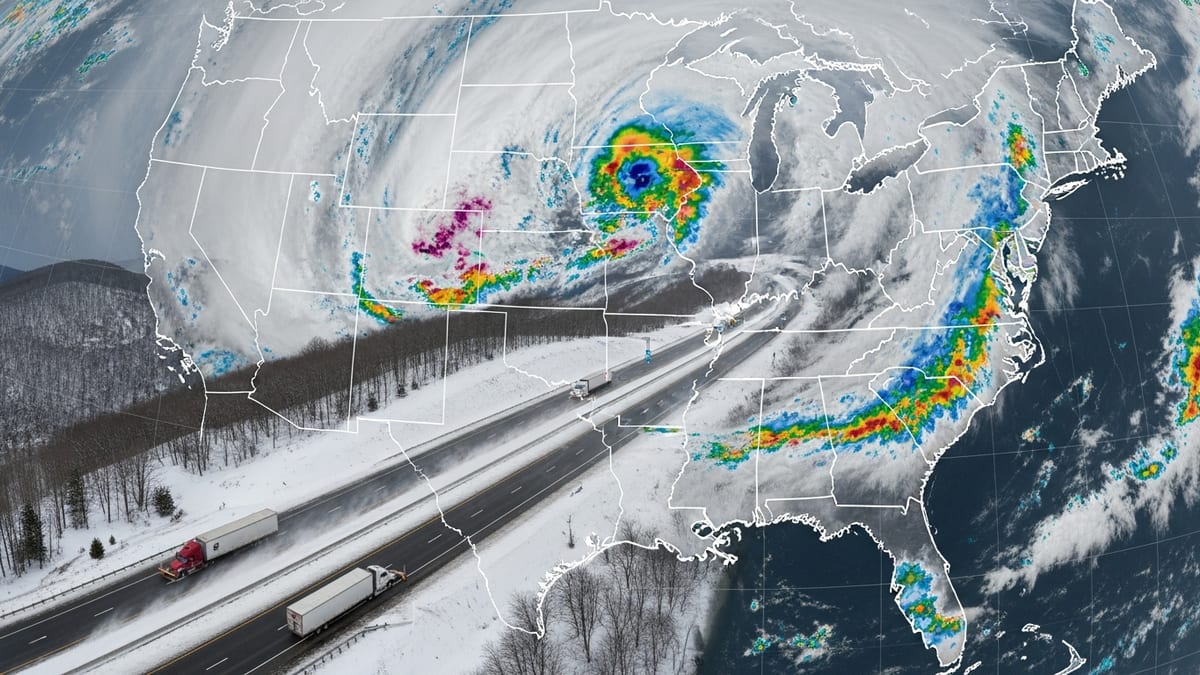
Storm Cells Stall One of America’s Busiest Hubs
Publicly available flight tracking boards showed departures and arrivals in Denver stacking up with delays as afternoon thunderstorms built over the Front Range, a recurring early-summer pattern that can quickly constrict takeoff and landing capacity. While the overall number of outright cancellations remained limited, the timing of the disruptions during peak connecting periods magnified the impact on travelers across North America.
Data from airline dashboards and aviation trackers indicated that both Southwest and United scrubbed a handful of departures linked to Denver, while dozens of other flights departed late or were held on the ground as routing and sequencing were adjusted. Denver International is a key connecting point for both carriers, so even a short-lived operational constraint can send schedule changes far beyond Colorado.
Schedules showed affected routes touching major domestic cities as well as sun destinations in Mexico and leisure markets in Puerto Rico, where Denver-based connections form part of broader transcontinental itineraries. Travelers connecting through Denver experienced missed onward flights, longer layovers and, in some cases, overnight stays as available seats on later departures quickly filled.
The pattern mirrored previous weather-driven interruptions at large hub airports, where a relatively small number of cancellations can translate into hundreds of delayed flights once aircraft and crews fall out of position. Public dashboards showed that by late afternoon, delay counts tied to Denver had climbed into the hundreds, even as the number of flights fully canceled remained in the single digits.
Southwest and United Disruptions Radiate Across Networks
Southwest and United, the two largest operators at Denver International, appeared to bear the brunt of the disruption. Flight status boards and third-party trackers showed both airlines canceling several departures in and out of Denver, then adjusting subsequent segments throughout their networks as aircraft were reassigned.
The cancellations were concentrated on domestic routes where multiple daily frequencies provide some room to rebook passengers, but the knock-on effect spread to longer-haul services and international connections. For United, intricate banks of flights that link Denver to coastal hubs and onward to Canada, Mexico and the Caribbean left limited margin for extended ground holds or diversions without affecting distant endpoints.
Southwest’s point-to-point model also left some passengers facing lengthy re-routes. Public accounts from travelers on social media described missed beach vacations in Mexico, disrupted trips to Puerto Rico and extended waits at intermediate airports after Denver-originating segments were delayed or canceled. Some itineraries that had relied on smooth same-day connections through Denver instead turned into multi-stop journeys.
While both airlines continued to operate the majority of their schedules, the mix of cancellations and rolling delays demonstrated how quickly conditions at a single hub can reverberate through extensive domestic and near-international networks. Published flight data suggested that recovery flights and aircraft repositioning would continue into the evening and potentially into the following operational day.
Travelers Confront Long Lines, Missed Connections and Rebookings
Passengers connecting through Denver reported long customer-service lines and crowded concourses as they sought new options to reach destinations across the United States and beyond. Reports indicated that travelers heading to Canada, Mexico and Puerto Rico, who often depend on one or two daily connections through major hubs, were particularly vulnerable to missed flights once schedules began to slide.
With many later services operating near capacity at the height of the summer travel period, some passengers found themselves pushed to next-day departures or rerouted through alternative hubs. In several cases documented online, travelers described overnight stays in Denver or in intermediate connecting cities after their original Denver-linked flights were canceled at short notice.
Others highlighted difficulty obtaining timely updates from airline apps and websites once disruption levels rose. Travelers described turning to airport departure boards and third-party flight trackers for more immediate information on gate changes and departure times, illustrating the information gaps that can occur when multiple schedule changes are processed in quick succession.
Despite the frustrations, publicly available data suggested that most affected travelers were ultimately accommodated on later flights, though often after significant delays. For those heading to vacation destinations in Mexico and the Caribbean, however, even a half-day delay could mean the loss of valuable time at resorts or on cruise departures tied to fixed schedules.
Operational Strain Highlights Denver’s Growing Role
The latest disruption underscored the scale and strategic importance of Denver International within the North American aviation system. The airport has steadily gained prominence as a major connecting hub, with Southwest and United both expanding networks that link the Rocky Mountain region to coastal gateways and international leisure markets.
As traffic has grown, so has the sensitivity of airline operations to short-term weather and air traffic control constraints in the Denver area. Afternoon thunderstorms common to the region can trigger temporary ground stops or flow restrictions that cascade through departure and arrival banks, particularly when they coincide with peak connecting windows.
Operational reports and historical performance data indicate that Denver’s combination of elevation, runway layout and volatile summer weather presents a recurring challenge for carriers seeking to maintain on-time performance. Episodes like the latest storm-related disruption highlight how even highly scheduled banks built around tight connection times can quickly unravel when conditions deteriorate.
The events also serve as a reminder that areas far from Colorado can feel the effects when a key hub slows down. From Canadian cities reliant on United connections through Denver to resort airports in Mexico and Puerto Rico served through Denver-based itineraries on both Southwest and United, the operational pulse of a single hub can shape travel experiences across an entire continent.
What Flyers Can Do During Denver-Driven Disruptions
While airlines work to restore normal operations after weather events and other disruptions, travel experts routinely advise passengers to adopt a few practical steps when flying through major hubs such as Denver. Monitoring flight status through multiple channels, including airline apps and independent trackers, can provide early signals that delays in one part of the network are likely to affect onward connections.
Rebooking options tend to be most favorable for travelers who act quickly once an interruption becomes clear. Publicly available guidance suggests using airline mobile apps or websites as a first line of action, followed by phone support or in-person airport assistance if digital tools are overwhelmed. In severe disruption periods, some travelers have reported success reaching airline call centers in other countries where phone queues may be shorter.
For itineraries that connect to international destinations in Canada, Mexico or Puerto Rico, leaving extra time between flights through Denver and other weather-prone hubs can reduce the risk of misconnecting. Travel planning resources commonly recommend that passengers avoid the tightest possible legal connection times during peak storm seasons, even if doing so requires an earlier departure or longer layover.
As airlines continue adjusting schedules and capacity to meet strong summer demand, the latest round of delays linked to Denver International illustrates both the resilience and the vulnerability of modern hub-and-spoke systems. For travelers, staying informed and building flexibility into itineraries remains one of the most effective ways to navigate an increasingly complex air travel landscape.