


More news on this day
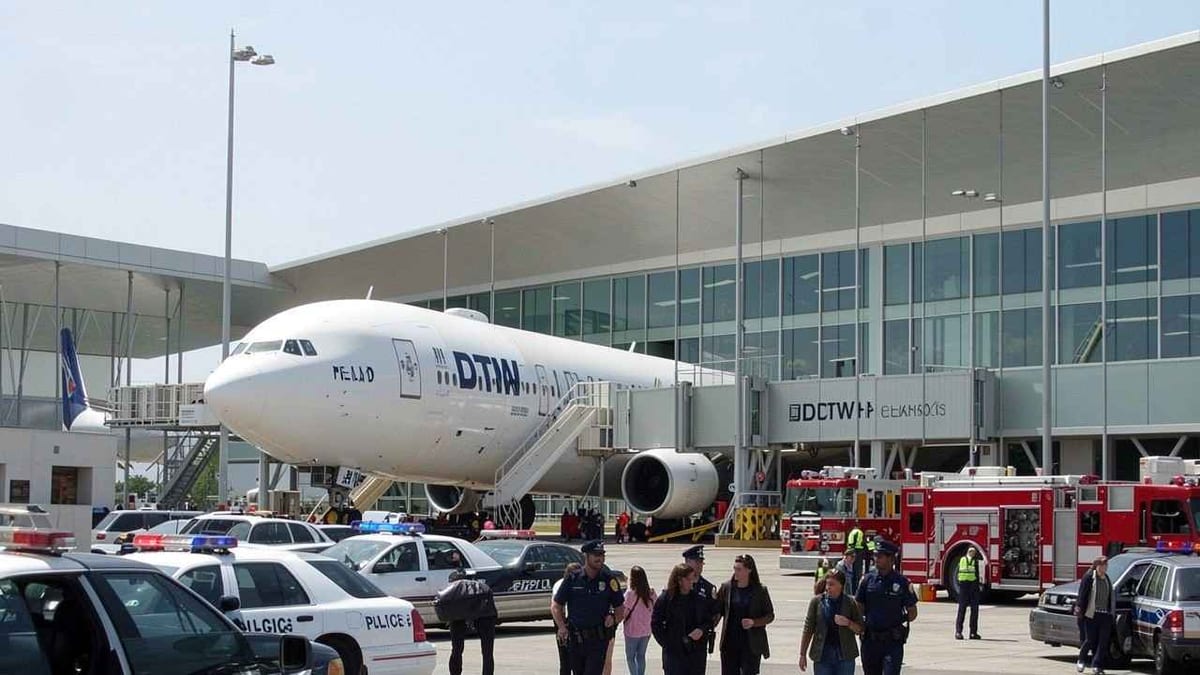
Detroit Metropolitan Wayne County Airport is facing a fresh wave of operational turbulence, with publicly available tracking data showing at least 72 delayed flights and three cancellations on Sunday, disrupting connections across the United States and to key European destinations including Germany, France and Ireland.
Get the latest news straight to your inbox!
Regional Affiliates At The Heart Of Detroit Delays
Data from flight-tracking services on May 24 indicates that a significant share of Detroit’s disruptions involve regional operators such as Endeavor Air, Envoy Air and SkyWest, which fly under the banners of larger network carriers. These airlines provide crucial feeder services into Detroit from smaller and midsize markets, meaning relatively short delays can quickly ripple through tightly timed hubs.
Operational reports show regional flights arriving late from Midwest and East Coast cities, often after encountering congestion or weather-related spacing elsewhere in the national airspace system. When those aircraft and crews reach Detroit behind schedule, subsequent departures to secondary U.S. destinations are pushed back, even when local conditions at Detroit appear manageable.
Industry analyses of previous disruption days highlight how regional carriers are particularly exposed when national traffic management initiatives reduce overall capacity. With Endeavor and Envoy operating on behalf of major legacy brands, and SkyWest linking Detroit to dozens of spoke cities, any imbalance between aircraft, crew availability and gate space tends to surface first on these thinner, higher-frequency routes.
Publicly available performance statistics from the U.S. Department of Transportation show that regional operators historically record on time percentages similar to or slightly below large mainline carriers, but experience a higher proportion of late arrivals that can compound downstream. Those patterns appear to be resurfacing in the current spell of irregular operations affecting Detroit.
Southwest And Mainline Partners Add To The Strain
The disruption picture at Detroit is not limited to regional affiliates. Tracking boards for May 24 show Southwest Airlines, along with flights operated by SkyWest and other partners on behalf of larger brands, posting a mix of moderate and extended delays into and out of the airport. Some departures that remain on the board are posting revised times of 45 minutes or more beyond schedule, especially during peak afternoon and evening banks.
Broader U.S. coverage over the holiday travel period describes several thousand delays nationwide and more than one hundred cancellations, as thunderstorms and air-traffic-control constraints weigh on operations at multiple hubs. Detroit’s role as a connecting point between the Upper Midwest and coastal cities means that knock-on effects from congestion in Chicago, New York and other constrained corridors are quickly felt in its departure halls.
For Detroit-bound passengers, a delayed inbound flight from a congested hub can mean missed onward connections and forced rebookings. For outbound travelers starting their journeys in Michigan, revised departure times for Southwest and partner-operated services can in turn jeopardize later links in Denver, Dallas, Chicago or other intermediate hubs.
Consumer-focused briefings note that, since a high-profile enforcement action, Southwest is required in certain circumstances to offer compensation vouchers when delays within the airline’s control cause passengers to reach their destination several hours late. The current pattern of rolling adjustments at Detroit is sharpening traveler interest in airline-specific policies around meal vouchers, hotel coverage and rebooking options.
Transatlantic Links To Germany, France And Ireland Affected
Detroit’s role as a transatlantic gateway has also come under pressure. Flight tracking for Sunday shows several Europe-bound departures, including services operated in coordination with Air France and other alliance partners, posting average departure or arrival delays in the range of 40 minutes to an hour. That is enough to unsettle carefully planned itineraries for travelers heading to Germany, France, Ireland and beyond.
Published travel-news coverage across the United States describes how late-arriving aircraft from domestic feeders can push back the departure of widebody or long-haul narrowbody flights, even in the absence of major local weather issues. When those outbound services to Europe depart late, the disruption can follow passengers through overnight connections into early-morning banks at Frankfurt, Paris, Dublin and other European hubs.
For Detroit-based travelers, the result on May 24 is a patchwork of schedule changes. Some long-haul flights remain broadly on time, but others are now forecast to arrive in Europe well behind their planned early morning landings, raising the risk of missed trains, regional flights or business meetings on Monday.
Aviation analysts point out that Europe-facing flights from Detroit are particularly sensitive during busy late spring weekends, as load factors climb and spare seats on alternative departures tighten. Even a handful of delays and a small number of cancellations can therefore affect a disproportionately large number of passengers across multiple countries.
National Airspace Constraints And Weather Complications
The latest Detroit disruptions are unfolding against a wider backdrop of strain across the U.S. national airspace system. Federal aviation status maps for the weekend highlight ground delay programs and spacing initiatives at several large airports, particularly along the East Coast and in the Southeast, where convective weather has flared. These measures reduce the number of arrivals that can be safely handled per hour and slow the flow of traffic along key corridors.
Travel-industry reports explain that when those constraints are introduced, carriers often respond by holding departures at origin airports, rerouting around storms or stretching flight times to accommodate rerouted flows. For Detroit, situated at an important crossroads between eastern and central U.S. airspace, that can translate into uneven arrival waves, with bursts of traffic followed by lulls as aircraft wait out restrictions in other regions.
Weather impacts are not confined to thunderstorms at hub airports. Airlines also face operational limits when forecast or actual conditions along routes prompt altitude changes, speed restrictions or minor reroutes, all of which can add minutes to flight times. In a network built on tight schedules, those minutes aggregate quickly, turning what might start as a fifteen-minute delay into something larger by the time an aircraft cycles through several legs and reaches Detroit.
Historical consumer reports from the Department of Transportation emphasize that delays are commonly attributed to a mix of air carrier issues, extreme weather and broader national aviation system factors. The pattern now visible at Detroit, with delays attributed to both operational and systemic causes, appears consistent with those longer term findings.
What Travelers Through Detroit Should Expect Next
With delays already numbering in the dozens and three cancellations logged by mid- to late-afternoon on May 24, additional changes to the schedule at Detroit remain possible as the day continues. Experience from similar disruption days suggests that evening banks, which depend on aircraft and crews completing earlier rotations on time, can be especially vulnerable to rolling knock-on effects.
Publicly available information from flight-tracking tools and airline status pages shows carriers periodically adjusting departure times and swapping aircraft in an effort to keep as many Detroit services operating as possible. Passengers booked on Endeavor, Envoy, Southwest, SkyWest and other affected operators are likely to see a mix of modest delays, gate changes and, in some cases, last-minute cancellations as the operational picture evolves.
Travel advisers recommend that passengers build in additional buffer time for domestic connections through Detroit and confirm the latest status of transatlantic flights to Germany, France, Ireland and other European points before departing for the airport. Same-day rebooking across alliance partners may be more limited on heavily booked late spring services, increasing the value of early action when disruptions emerge.
Industry observers note that while cancellation rates across the U.S. have trended lower than during the most severe periods of 2022 and 2023, localized waves of disruption such as those now affecting Detroit continue to challenge both airlines and travelers. As this latest episode unfolds, Detroit once again illustrates how closely interconnected domestic feeder networks and transatlantic links have become, and how quickly strain in one part of the system can be felt thousands of miles away.