


More news on this day
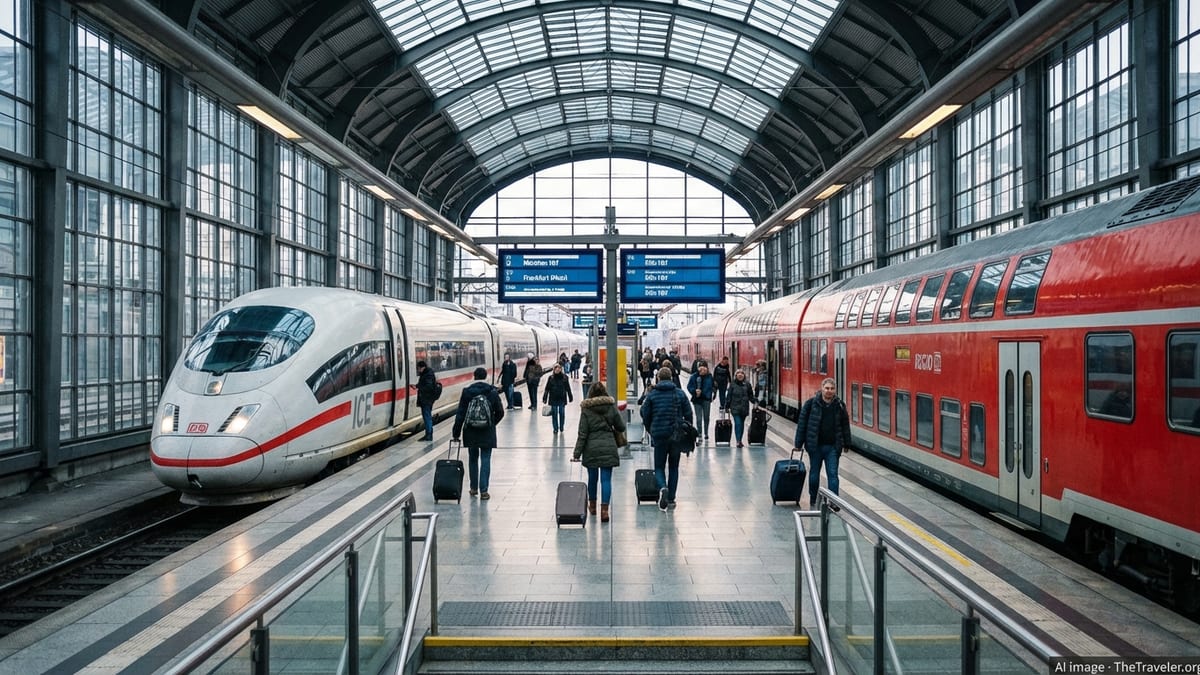
Germany’s state-owned rail operator Deutsche Bahn has reported a loss of about €2.3 billion alongside a deterioration in long-distance punctuality to roughly 60 percent, underscoring the scale of the challenges facing one of Europe’s most important passenger and freight networks.
Get the latest news straight to your inbox!
Mounting losses despite higher revenues
Recent financial disclosures and industry coverage indicate that Deutsche Bahn ended its latest financial year with a net loss of around €2.3 billion, reversing earlier expectations of a faster turnaround. The setback comes even as adjusted operating profit improved and group revenues edged higher to roughly €27 billion, pointing to a widening gap between the company’s core rail operations and the heavy financial burden of infrastructure and restructuring costs.
The loss reflects a combination of higher interest expenses, investment in the network, and the ongoing costs of a multi-year modernization and restructuring program. Analysts note that the company’s earnings have been complicated by the separation and planned sale of non-core activities, as well as by accounting effects linked to its logistics and international businesses, leaving the core German rail system under pressure.
For travelers, the headline loss of €2.3 billion is less visible than the day-to-day impact of service disruptions, but the two are closely connected. Investment in new infrastructure, maintenance backlogs, rolling-stock renewal and digital control systems all weigh on the company’s balance sheet while only gradually improving the passenger experience, creating a tension between near-term financial results and medium-term service quality.
Long-distance punctuality falls to around 60 percent
Alongside the financial loss, performance statistics show that Deutsche Bahn’s long-distance punctuality has deteriorated further, with roughly 60 percent of long-distance trains arriving on time according to the company’s own definition of punctuality. That marks a decline from an already weak performance in the previous year, when about 62.5 percent of long-distance services arrived within the six-minute tolerance commonly used in German rail reporting.
Independent analysis and specialist rail publications describe this as one of the worst on-time records for Deutsche Bahn’s long-distance network in at least two decades. While regional services continue to post significantly better punctuality figures, the flagship Intercity and high-speed ICE network has been hit hard by infrastructure works, bottlenecks at major hubs, and operational knock-on effects when delays cascade through the system.
For international travelers and business passengers, the drop to around 60 percent means a higher likelihood of missed connections, disrupted itineraries and extended journey times on Europe’s busiest intercity corridors. It also erodes one of rail’s traditional competitive advantages over air on routes such as Berlin–Munich, Frankfurt–Cologne and cross-border services into neighboring countries.
Infrastructure bottlenecks, strikes and extreme weather weigh on performance
Publicly available reports attribute much of the decline in punctuality to the condition and capacity of Germany’s rail infrastructure. Decades of underinvestment have left a backlog that Deutsche Bahn itself values in the tens of billions of euros, with aging tracks, switches, signaling systems and bridges creating chronic speed restrictions and vulnerabilities to disruption.
In recent years, the company has intensified maintenance and renewal work, leading to an unusually high number of construction-related restrictions across the network. While the long-term goal is to stabilize and modernize the system, the short-term effect has been more diversions, single-track operations and temporary capacity reductions that make it harder to run dense, punctual timetables.
Operational performance has also been hit by factors beyond construction, including multiple rounds of industrial action and recent periods of extreme weather. Strikes by train drivers and other staff have forced widespread cancellations and knock-on delays, while floods and storms have damaged infrastructure and disrupted traffic on key corridors. These events, layered on top of an already stretched network, have amplified the impact of any disruption on long-distance services.
Restructuring program aims to lift punctuality and profitability
In response to persistent delays and mounting financial strain, Deutsche Bahn has launched a group-wide restructuring program, often described in corporate materials as a system-wide stabilization effort targeting both operations and profitability by 2027. The plan includes simplifying the group structure, trimming the number of subsidiaries, and refocusing management attention and resources on the core German rail network.
Strategic documents and investor communications outline ambitions to raise long-distance punctuality into a band of roughly 75 to 80 percent over the next few years, while also returning the group to a sustainable operating profit. Measures range from concentrating maintenance and renewal works on heavily used main lines to easing congestion at key hubs such as Berlin, Hamburg, Cologne, Frankfurt and Munich, where even small disruptions can ripple across the country.
The program also places greater emphasis on rolling-stock reliability and digital tools. Deutsche Bahn plans to deploy newer, more resilient long-distance trains and expand the use of digital traffic management, with the goal of reducing technical failures and giving dispatchers more flexibility to recover from disruptions. However, the benefits of these initiatives are expected to emerge gradually, and the latest figures indicate that the railway is still in the early stages of its turnaround.
Implications for travelers and for Europe’s rail ambitions
For passengers, the combination of a multi-billion-euro loss and weak punctuality is most apparent in crowded trains, missed connections and longer journey times. Travel forums and consumer watchdogs report that delays and compensation claims remain a common feature of long-distance rail trips in Germany, even as demand for rail travel continues to recover and, in some segments, surpass pre-pandemic levels.
The performance of Deutsche Bahn carries significance beyond Germany’s borders. The company is a central player in European rail initiatives aimed at shifting more passengers and freight from air and road to rail as part of broader climate and transport-policy goals. Persistent reliability issues on the German network risk undermining confidence in long-distance rail as a viable alternative on key international corridors.
Industry observers note that the scale of Deutsche Bahn’s investment program, combined with the €2.3 billion loss, underlines the difficulty of transforming a national rail system while keeping it running at near full capacity. For travelers planning journeys across Germany in the coming years, the latest figures point to a prolonged period in which more track work and network upgrades may continue to depress punctuality before the promised improvements become visible.