


More news on this day
Severe thunderstorms over North Texas have triggered a ground stop at Dallas Fort Worth International Airport, driving more than 500 American Airlines cancellations in two days and disrupting travel plans across the United States.
Get the latest news straight to your inbox!
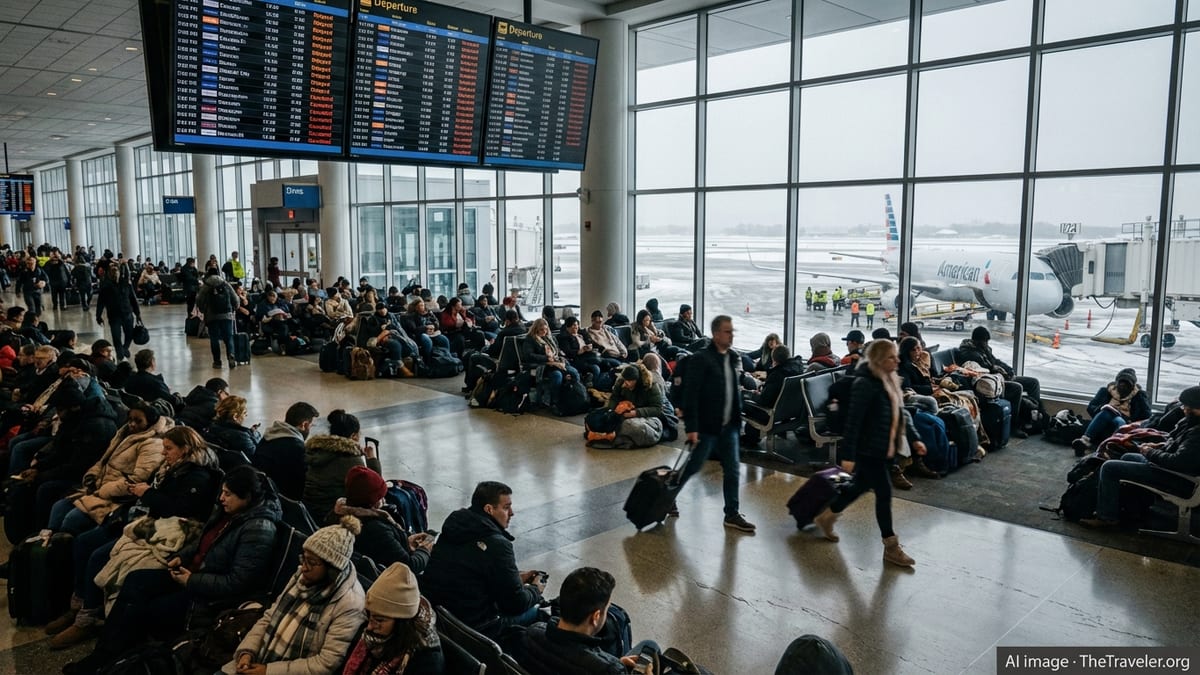
Storm System Over North Texas Brings DFW to a Standstill
Publicly available flight tracking and passenger rights data indicate that a powerful storm system moving across North Texas on May 20, 2026 led the Federal Aviation Administration to halt most departures at both Dallas Fort Worth International Airport and nearby Dallas Love Field. The resulting ground stop sharply curtailed capacity at one of the country’s busiest aviation hubs and the largest base for American Airlines.
Analyses of the disruption suggest that around 850 flights were affected over a 48 hour period, with American Airlines bearing the brunt of the schedule shock at DFW, where the carrier typically operates the majority of daily departures and arrivals. With aircraft and crews unable to move in and out of the metroplex, cancellations mounted rapidly and spilled into subsequent days.
Operational summaries compiled after the weather event show that more than 500 of the cancellations recorded across the two day window were tied to American’s network. Many of these were concentrated at DFW and Dallas Love Field, but the knock on effects extended to connecting cities nationwide as aircraft and crew rotations fell out of position.
While the weather system had largely cleared within a day, lingering airfield congestion, displaced crews and mandatory rest requirements meant that airlines, and American in particular, continued to trim schedules and consolidate flights into the following day in an attempt to reset operations.
Hub Reliance Exposes American’s Network to Wider Disruption
Dallas Fort Worth functions as American Airlines’ primary hub, linking hundreds of domestic and international routes and handling large volumes of connecting traffic. Industry data show that when a ground stop takes effect at such a heavily used hub, the impact is magnified far beyond the immediate region, as aircraft that cannot depart Dallas are no longer available to operate flights later in the day from other cities.
American’s schedule structure, built around tightly timed banks of arrivals and departures, is particularly sensitive to disruption at DFW. Once early morning and mid day banks are heavily delayed or canceled, later waves of flights can quickly unravel, leading to rolling delays and last minute cancellations as the carrier reassigns scarce aircraft and crews.
Reports from flight tracking platforms in the days after the storm indicate that American was forced to cancel or significantly delay services across the country as a direct result of the Dallas ground stop. Routes with lower demand or multiple daily frequencies appeared especially vulnerable, as the airline prioritized aircraft for key trunk routes and longer haul services.
The situation underlines how weather related restrictions at a single critical hub can cascade through a national network. Even travelers who never set foot in Texas found their itineraries disrupted when their aircraft or flight crews were trapped in the Dallas area or rerouted elsewhere to support recovery operations.
Passengers Face Missed Connections and Overnight Stays
Travelers caught in the disruption reported missed connections, unexpected overnight stays and extensive time spent in terminals as airlines reworked schedules to cope with the reduced capacity. Social media posts and forum discussions from the days following the storm describe passengers arriving at DFW or connecting airports only to find later segments of their journey already canceled or heavily delayed.
Many travelers were rebooked onto later flights or different routings, often passing through alternative hubs or making additional stops. In some cases, the cascading nature of delays meant that new itineraries also encountered disruptions, stretching what should have been a single day of travel into two or more days on the road.
Accounts shared publicly also highlight long lines at customer service counters and extended waits on airline call centers as large numbers of passengers sought new travel arrangements. With American operating a substantial share of the flights affected by the Dallas ground stop, its support channels in particular appeared to come under heavy pressure.
Some passengers reported securing hotel rooms and meal costs out of pocket when same day alternatives were not available, while others spent the night in airport terminals between rebooked flights. The experience underscored the practical challenges travelers face when large scale disruptions occur at short notice, especially during already busy travel periods.
Ground Stops Highlight Limits of Airline and Airport Flexibility
Industry guidance describes a ground stop as a severe traffic management measure, used when conditions at an airport or within a section of airspace deteriorate to the point that normal flows cannot be maintained safely. Once in place, aircraft scheduled to depart for the affected airport may be held at their origin, while departures from the impacted airport are sharply limited or halted entirely.
The Dallas event in May 2026 fits a pattern seen during other major ground stops in recent years, where intense thunderstorms or other weather hazards temporarily overwhelm an airport’s ability to safely handle arrivals and departures. When that airport is a critical hub, the ripple effects can strain airline schedules across wide geographic areas.
Operational data and airline performance analyses following the DFW ground stop suggest that carriers had little room to maneuver once severe restrictions were imposed. Spare aircraft and crews are limited, particularly in peak seasons, and airlines must balance the needs of disrupted travelers with ongoing commitments on unaffected routes.
For American Airlines, whose network is closely tied to DFW’s role as a central connecting point, the incident demonstrates both the efficiency and fragility of hub and spoke operations. Concentrating flights at a major hub allows for broad connectivity but also means that a single weather system over North Texas can reverberate across airports nationwide.
What Travelers Can Learn From the DFW Disruption
Publicly available travel rights information and American’s conditions of carriage note that when flights are canceled due to weather or air traffic control constraints, airlines generally focus on rebooking affected passengers on the next available services rather than providing extensive compensation. The DFW ground stop illustrates how, in large scale weather events, the immediate priority becomes restoring the schedule as quickly as possible.
Consumer advocates often recommend that travelers build extra connection time into itineraries passing through weather sensitive hubs and monitor forecasts for regions like North Texas during storm seasons. Flexible tickets, early day departures and backup plans, such as awareness of alternative routings, may provide more options when disruptions occur.
The Dallas cancellations also highlight the value of using multiple communication channels during irregular operations. Airline apps, text alerts, airport information screens and gate announcements can update at different times, and comparing these sources may help passengers identify options more quickly when seats become available on alternative flights.
While the May 2026 ground stop at DFW was driven by exceptional weather conditions, the resulting 500 plus American Airlines cancellations demonstrate how quickly a localized hazard can become a nationwide travel story, affecting journeys thousands of miles from the original storm clouds building over North Texas.