


More news on this day
With heatwaves intensifying across North America and Europe, rail systems are facing rising stress that can slow, divert, or even halt passenger services, turning routine train journeys into unpredictable, high‑risk travel days.
Get the latest news straight to your inbox!
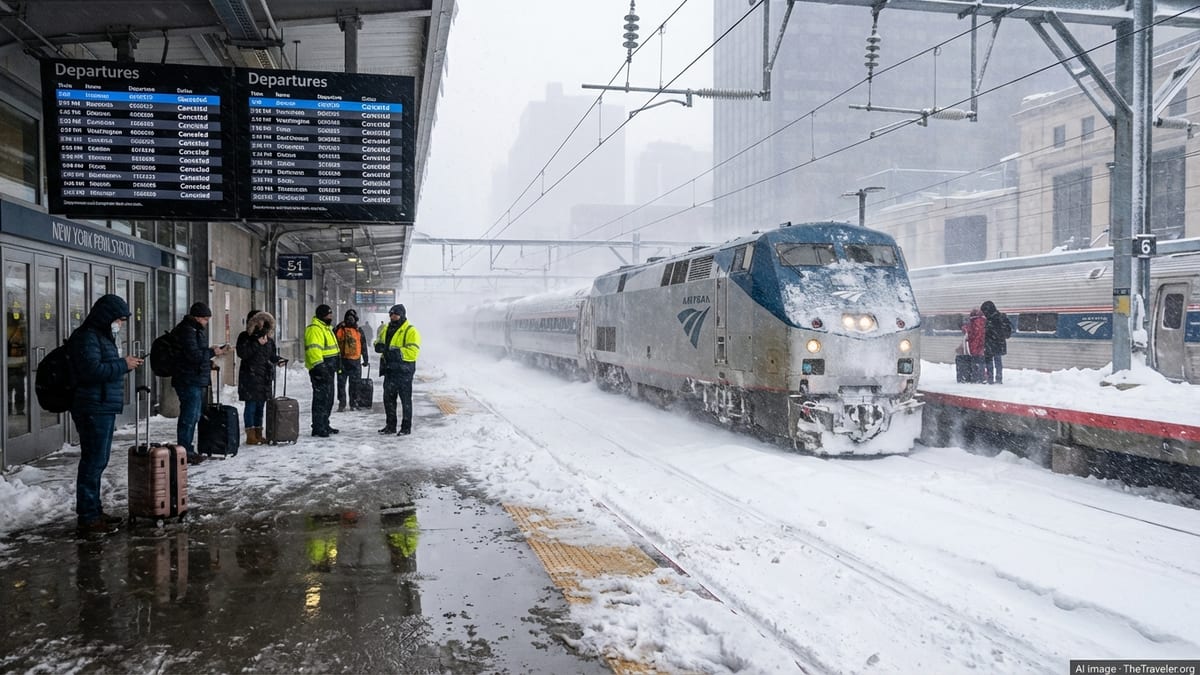
Rails Warping Under Extreme Temperatures
Steel rails can heat far beyond the surrounding air, and in direct sun their temperature can exceed ambient readings by 20 degrees Celsius or more. Under prolonged heatwave conditions, that expansion can overwhelm the ballast and sleepers designed to hold the track in place, creating sudden kinks and misalignments known in the industry as thermal buckles or sun kinks.
Engineering guidance from several rail infrastructure managers notes that such buckles can occur rapidly once steel reaches critical stress thresholds, forcing immediate speed restrictions or emergency line closures. Historical heatwaves in Europe and the United States have produced clusters of buckling incidents, with derailments documented when trains encountered distorted rails at higher speeds.
For travelers, this means that even if the line appears open, real-time operating margins may be tight. A section of track that was safe in the morning can move out of alignment by mid-afternoon as the rail heats, prompting sudden disruption mid-journey.
Slower Trains, Cancellations and Crowd Pressure
To reduce stress on hot rails, operators frequently impose temporary speed limits during heatwaves. Publicly available information from infrastructure agencies indicates that these controls can cut line capacity by more than a third on the busiest routes, pushing already crowded timetables beyond their intended design.
The immediate effect for passengers is a cascade of delays and missed connections. Slower running times mean fewer train paths per hour, so some services are shortened or canceled outright. When this coincides with peak travel periods or holiday getaways, concourses and platforms can quickly become congested, heightening the risk of unsafe crowding near platform edges.
Several summer disruption reports across European and North American networks show that minor infrastructure restrictions can balloon into large-scale timetable breakdowns under extreme heat. Travelers may find themselves held at intermediate stations, re-routed onto unfamiliar lines, or required to complete journeys by road transport when routes are partially closed.
Overhead Power Lines and Onboard System Failures
On electrified routes, overhead power lines and associated hardware are especially vulnerable in severe heat. Catenary systems are tensioned to stay within a narrow operating range. As temperatures climb, the metal expands and can begin to sag, bringing wires closer to train roofs and pantographs and increasing the risk of mechanical damage.
Industry briefings and technical documents describe how, beyond certain temperature thresholds, operators must again slow trains to limit dynamic forces on the wires. In more serious cases, power may be shut off to damaged sections while teams carry out emergency repairs, forcing trains to halt between stations and delaying hundreds or thousands of passengers at once.
Heat can also affect line-side signaling equipment, communications cabinets, and points motors. Electronic systems housed in trackside enclosures are often cooled only passively and can overheat during extended hot spells, leading to intermittent faults. Each failure introduces additional safety margins into the timetable, compounding overall disruption.
Onboard Heat Stress and Passenger Health Risks
Even where trains keep moving, heatwaves can create uncomfortable and occasionally hazardous conditions inside carriages, particularly on older fleets or urban rail systems that lack full air conditioning. Parliamentary and health-agency assessments in recent years have highlighted that temperatures in deep-level tunnels and crowded trains can significantly exceed surface readings during hot spells.
For passengers with underlying medical conditions, older adults, children, and pregnant travelers, this environment can raise the likelihood of heat exhaustion, dehydration, or fainting. Prolonged delays in stationary trains without adequate ventilation can worsen the situation, as documented during past heat-related service breakdowns when carriages were held outside stations or in tunnels.
Rail operators now routinely advise passengers to carry water, avoid alcohol, and plan journeys outside peak hours where possible during heat alerts. Nonetheless, reports from recent summers indicate recurring instances of overcrowded, overheated trains, especially on commuter and regional services where replacement rolling stock and upgraded air-conditioning units have not yet been fully deployed.
Lineside Fires, Evacuations and Stranded Trains
Intense heat and prolonged dry conditions increase the likelihood of vegetation and lineside fires, which can quickly force route closures. National risk assessments and recent transport safety advisories show that wildfires, grass fires, and incidental blazes near the track can damage signaling cables, sleepers, and overhead power equipment, or obscure drivers’ sightlines.
In several high-profile heatwave seasons, trains have been brought to a standstill for extended periods while emergency services tackled fires close to the railway. In certain cases, passengers were required to remain on board for hours or undertake controlled evacuations along the track, a process that is logistically complex and only undertaken when there is no safer alternative.
Publicly available safety documents emphasize that any decision to move people from trains to trackside must weigh the immediate heat and smoke risk against hazards from adjacent lines or live electrification. During intense heatwaves, that calculation becomes more difficult as high temperatures and wind shifts can change conditions rapidly, complicating rescue and recovery operations.
Future Heatwaves and What Travelers Can Expect
Recent climate-resilience studies from international transport and rail safety bodies converge on the same message: extreme heat events that were previously considered rare are becoming more frequent, longer-lasting, and geographically widespread. For rail networks built to historical climate norms, this translates into mounting maintenance costs, growing disruption, and a more complex safety landscape.
New standards under discussion in multiple regions focus on higher design temperatures for tracks and overhead lines, predictive weather modeling, and proactive speed restrictions before heat peaks. While these measures aim to prevent the most serious accidents, they also imply that travelers should expect more preemptive timetable changes and slower journeys on scorching days.
For passengers planning summer travel, the emerging pattern is clear. Checking for heat-related service updates before departure, allowing generous connection times, and considering earlier or later trains away from the hottest part of the day are becoming essential steps. As heatwaves intensify, disruptions that once seemed exceptional are poised to become a recurring feature of long-distance and commuter rail travel in many parts of the world.