


More news on this day
American Airlines has canceled more than 500 flights in a two day span after a ground stop at one of its largest U.S. hubs triggered a wave of delays, diversions and aircraft repositioning challenges across the carrier’s domestic network, according to operational data and industry reports.
Get the latest news straight to your inbox!
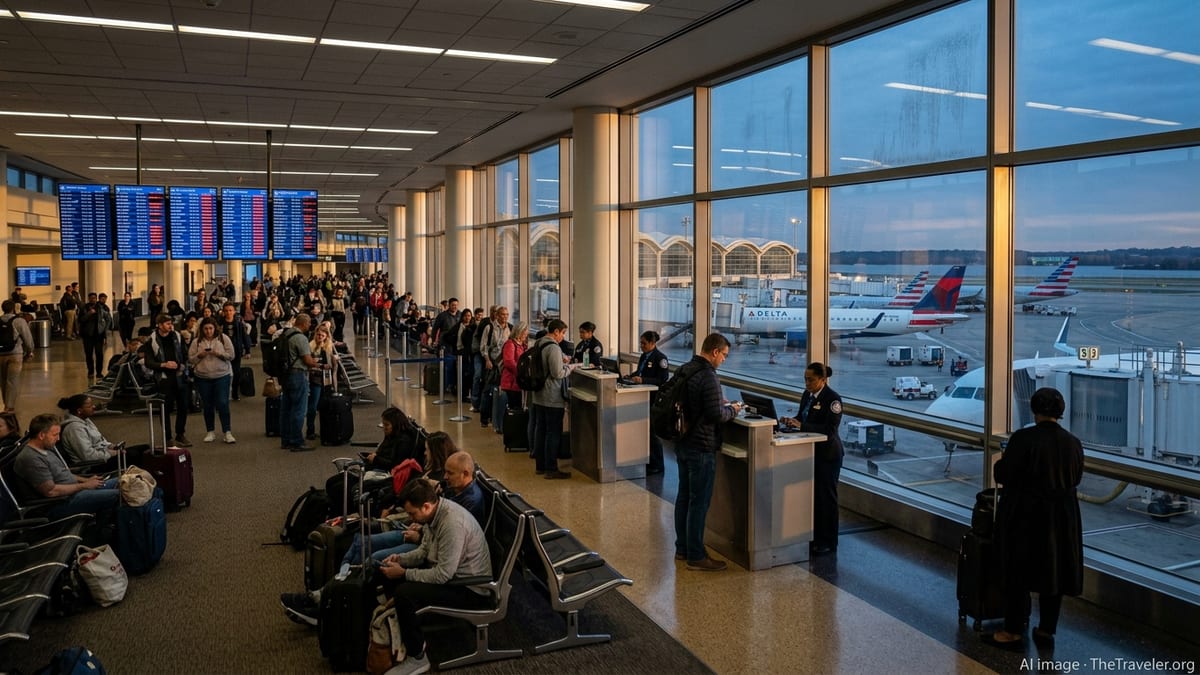
Ground Stop at Busy Hub Cascades Across Network
Operational snapshots from flight tracking and airline schedule data indicate that a ground stop at a major American Airlines hub led to an abrupt halt in departures and sharply reduced arrivals for several hours. The pause in operations forced dozens of aircraft to wait on the ground while inbound flights were held at origin airports or diverted to nearby fields, creating an immediate imbalance in planes and crew at the affected airport.
By the time the ground stop was lifted, accumulated congestion on taxiways and at gates limited how quickly the airline could resume normal activity. Publicly available flight status boards showed a rapid conversion of rolling delays into outright cancellations as the carrier attempted to reset its schedule. Within 48 hours, more than 500 American Airlines flights systemwide had been scrubbed, with the largest share touching the hub that experienced the ground stop.
Reports from impacted travelers describe long lines at customer service counters, hours spent on hold with call centers and difficulty securing same day or next day rebookings. Many passengers attempting to connect through the hub reported being forced into unexpected overnight stays or multi stop routings as the airline worked through the backlog.
Industry observers note that the incident underscores how a single disruption at a large hub can reverberate across an airline’s entire route map, particularly during the busy summer travel period when spare aircraft and seats are limited.
More Than 500 Cancellations in Two Days
Based on aggregated flight tracking data, American Airlines’ cancellation count climbed into the hundreds on each of the two days following the ground stop. The pattern showed an elevated volume of early morning cancellations, a common tactic carriers use to create space in the schedule and regain control of aircraft and crew placement after a severe disruption.
The two day total exceeded 500 cancelled departures and arrivals across the United States, including both mainline and regional operations. While a significant proportion of those flights were scheduled to begin or end at the affected hub, numerous other routes were impacted when aircraft and crews could not be repositioned in time to operate later segments.
Analysts point out that American Airlines, as one of the world’s largest carriers, operates thousands of flights per day, so a relatively small percentage of its schedule can still translate into hundreds of cancellations. Even so, the absolute number of scrapped flights represents a substantial operational shock, especially for travelers relying on carefully timed connections for cruises, international departures or major events.
Travel industry coverage notes that many travelers turned to alternative hubs and competing carriers when same day options on American were exhausted, further tightening availability on already busy summer routes. Some passengers also reported being offered multi day rebookings as the airline sought to absorb the disruption across subsequent schedules.
Weather, Airspace Constraints and a Sensitive Hub
Publicly available information points to a combination of factors behind the ground stop, including adverse weather, congested airspace and the operational complexity of the hub airport itself. Aviation specialists frequently describe such hubs as particularly sensitive to storms and low visibility because they manage high volumes of arrivals and departures on intersecting runways and heavily used approach paths.
When conditions deteriorate, air traffic managers may first slow the rate of arrivals and then impose a ground stop to prevent additional traffic from departing toward the airport. Although these measures are designed to maintain safety margins and prevent gridlock on the ground, they can quickly push an airline’s schedule beyond recovery if the disruption coincides with peak travel hours.
American Airlines’ reliance on large connecting complexes magnifies the effect. Hub waves, in which banks of flights are timed to connect passengers from smaller cities onto long haul or transcontinental services, leave limited room to absorb long pauses in operations. Once a key wave of departures is lost, crews may exceed duty limits, aircraft miss tightly planned maintenance windows and onward flights later in the day lose the planes they were expecting.
Transportation analysts note that such dynamics are not unique to American Airlines. Other major U.S. carriers have experienced similar cascading cancellations when weather or ground stops hit their main hubs, particularly during summer afternoons when thunderstorms and convective weather are common.
Stranded Travelers Confront Long Delays and Limited Options
Firsthand accounts from passengers caught in the disruption describe a frustrating combination of rolling departure times, late night cancellations and difficulty obtaining accurate information about rebooking options. Some travelers reported being informed of a cancellation only after extended delays at the gate, while others learned of schedule changes through airline apps and text alerts before airport displays were updated.
With hotel rooms near the hub in high demand, travelers described scrambling to secure last minute accommodation or, in some cases, spending the night in terminal seating areas. Families with children and passengers with limited mobility faced particular challenges as they navigated crowded concourses and long waits at customer service desks.
Travel forums and social media posts indicate that some passengers were offered rerouting through alternative hubs or nearby airports, sometimes involving multiple connections and significant additional travel time. Others opted to cancel trips entirely when the earliest available rebooking options extended several days beyond their original plans.
Consumer advocates observing the situation emphasize the importance for travelers of monitoring flight status closely, knowing their rights under the airline’s contract of carriage and housing policies, and using multiple channels such as mobile apps, websites and airport kiosks to search for alternate options when a wave of cancellations occurs.
What the Disruption Reveals About U.S. Airline Resilience
Aviation analysts view the episode as another test of U.S. carriers’ resilience at a time of sustained high demand, constrained capacity and increasingly volatile weather patterns. While the immediate ground stop was localized to a single hub, the resulting cancellations across American Airlines’ network highlight how tightly scheduled aircraft and high load factors leave limited slack when conditions deteriorate.
Industry commentary suggests that investments in more flexible crew scheduling, additional spare aircraft and improved real time communication with passengers could help mitigate the impact of similar events in the future. However, such measures also carry significant cost at a time when airlines continue to manage fuel price variability and competitive pressures.
For travelers, the incident serves as a reminder that even routine domestic journeys can be affected by events hundreds of miles away. Experts frequently recommend booking earlier flights in the day, allowing extra connection time at major hubs and maintaining backup plans when traveling for time sensitive occasions.
As the summer peak continues, operational data and public reporting indicate that airlines, airports and air traffic managers will remain under close scrutiny from both regulators and passengers whenever large scale disruptions, such as the ground stop and subsequent cancellations at American’s key hub, ripple across the national air travel system.