


More news on this day
International travelers planning to attend the 2026 FIFA World Cup in North America face new uncertainty as the U.S. Department of Homeland Security weighs cutting passport control operations at airports in so-called sanctuary cities, a move that could force widespread cancellations and rerouting of international flights.
Get the latest news straight to your inbox!
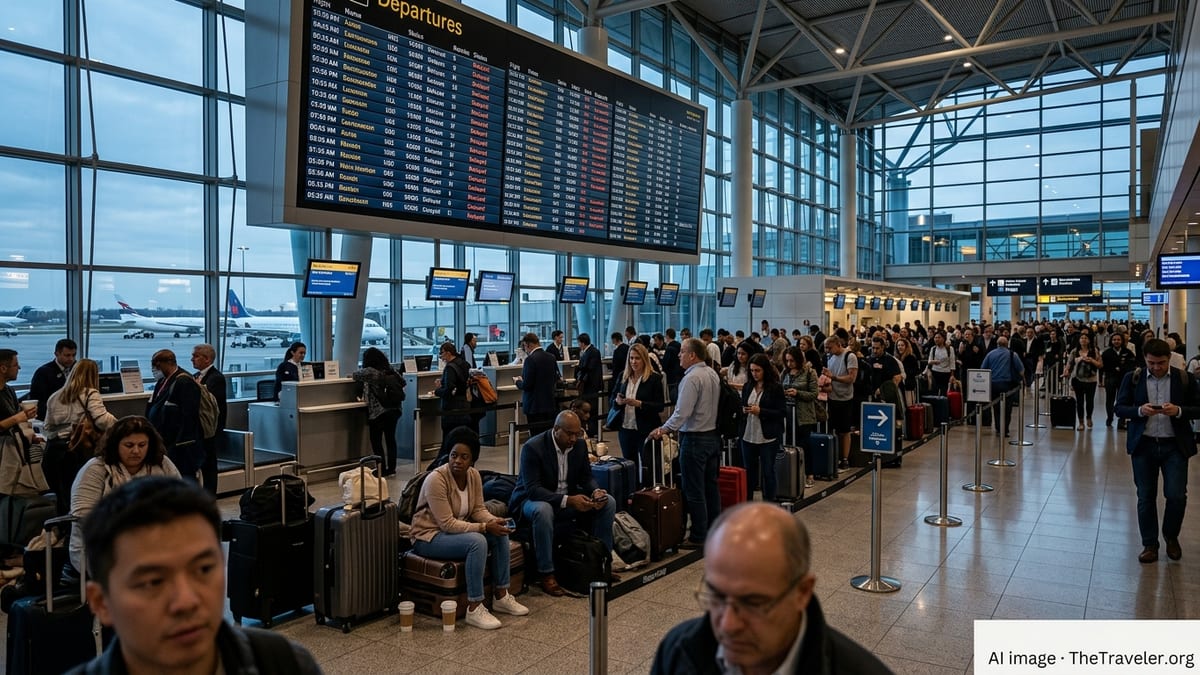
Passport Control Cuts Target Major World Cup Gateways
Publicly available information indicates that Homeland Security officials are “drawing up plans” to pull U.S. Customs and Border Protection officers from airports in jurisdictions labeled as sanctuary cities. Without CBP staff to handle passport control and customs inspections, those airports would be unable to accept arriving international flights, effectively shutting down overseas passenger traffic into some of the country’s busiest hubs.
Recent coverage in national outlets describes the move as part of an escalating clash between the federal government and local authorities over immigration enforcement. Sanctuary jurisdictions generally limit cooperation with federal immigration authorities, and the proposed travel measures are framed as a way to pressure those cities to align more closely with federal priorities.
Reports identify likely affected hubs as including New York, Los Angeles, Chicago, San Francisco and other large metropolitan gateways, many of which are central to the 2026 tournament plan. These airports are among the primary entry points for fans, teams and media, and a loss of passport control capacity there would send shock waves through airline schedules worldwide.
Industry-focused summaries warn that airlines cannot simply move dozens of daily international arrivals to nearby airports at short notice. International routes are built around gate availability, crew bases, maintenance facilities and local demand. Removing CBP processing from one airport in a metropolitan area could therefore ripple across the entire region’s aviation network.
World Cup Timelines Collide With Political Standoff
The controversy is unfolding against the backdrop of an ongoing partial shutdown of the Department of Homeland Security that began in mid February 2026, following a lapse in congressional funding. According to widely cited explainer pieces, that shutdown has already forced DHS to suspend or limit programs such as Global Entry and has strained staffing for Transportation Security Administration checkpoints and border processing.
Separate analyses from security consultancies and academic border-policy briefs note that the 2026 World Cup will dramatically increase cross-border traffic into the United States, Mexico and Canada in a compressed window. Host cities across North America, including multiple U.S. sanctuary jurisdictions, are preparing for an influx of supporters traveling on tight itineraries tied to match schedules.
If passport control cuts at sanctuary city airports were to take effect close to the tournament period, the combination of elevated demand and reduced screening capacity could be particularly disruptive. Travel specialists tracking the World Cup have warned that even routine delays at immigration or security can cascade into missed connections and lost hotel nights during mega-events; a structural shutdown of international arrivals at key airports would be far more severe.
Commentary from sports travel analysts also points out that many fans have already booked nonrefundable flights into major U.S. hubs based on the current World Cup venue list. Any later redirection of international services to alternative airports could leave travelers scrambling to reconfigure domestic connections and ground transport, often at higher last-minute prices.
Airlines and Tourism Groups Warn of Systemwide Disruption
Travel industry publications report that airlines and tourism associations are sounding alarms over the DHS proposals. Trade groups quoted in recent coverage argue that withdrawing CBP officers from large sanctuary city airports would have “devastating” effects on carriers, tourism businesses and the broader U.S. economy, particularly with a global sporting event on the horizon.
Analysts explain that immigration queues, customs processing and baggage inspection are tightly linked to aircraft turnaround times. When passport control slows down, arriving aircraft occupy gates longer, departure slots are missed and connecting passengers are stranded. Reducing staff numbers or shutting down processing entirely at high-volume hubs would therefore strain airline operations far beyond the affected cities.
Tourism economists cited in industry reports stress that metropolitan regions served by these airports account for a substantial share of U.S. gross domestic product and inbound visitor spending. A prolonged interruption of international access could hit hotels, restaurants, event venues and local transport providers at what should be a peak period of demand driven by the World Cup.
Logistics experts also warn of impacts on cargo. Many long-haul international flights carry both passengers and freight, and disruptions to those routes could complicate time-sensitive shipments, including equipment for teams, broadcasters and sponsors, as well as high-value commercial goods unrelated to the tournament.
Travelers Face New Uncertainty Amid Existing Bottlenecks
For individual travelers, the prospect of passport control cuts adds a new layer of uncertainty to a system already strained by staffing shortages and previous shutdown-related disruptions. In recent months, TSA has publicly warned of longer-than-usual checkpoint waits, while DHS has paused or curtailed expedited processing programs that help frequent travelers move more quickly through security and border checks.
Travel advisories from law firms and immigration specialists suggest that visitors with time-sensitive obligations, such as work start dates or academic programs, should anticipate possible delays and consider building additional flexibility into their itineraries. They note that visa holders who must enter the country through a specific port, or who rely on short connection windows, could be especially vulnerable if flight schedules are thinned out or rerouted.
World Cup spectators planning to combine multiple host cities in a single trip may face particular complications. Many itineraries depend on a series of cross-border legs between the United States, Canada and Mexico. Any capacity reduction at a major U.S. gateway could lead to knock-on effects for those onward flights, potentially forcing fans to choose between attending certain matches and preserving enough buffer time for border formalities.
While concrete timelines for implementing any DHS pullback at sanctuary city airports remain unclear, the mere possibility is already influencing how some travelers think about summer 2026 plans. Industry observers note growing interest in travel insurance policies, flexible fares and alternative routings that offer more options if international services into certain cities are curtailed.
What Travelers and the Industry Are Watching Next
Attention is now focused on several key questions that will shape the ultimate impact on World Cup travel. Observers are watching whether Congress can resolve the DHS funding dispute and reduce the pressure that has driven recent shutdowns and staffing cuts. A clear appropriations deal could ease some of the immediate operational strain on TSA and CBP, even if the sanctuary city dispute continues.
Airlines are also monitoring whether any passport control pullbacks will be narrowly targeted or applied broadly to sanctuary jurisdictions. Scenario planning by aviation analysts suggests that a limited reduction in staffing could translate into longer queues but manageable delays, while a full removal of CBP services at specific airports would likely force outright cancellations of international routes.
Travel planners advise that fans heading to the World Cup pay close attention to airline notifications and government travel updates as summer 2026 approaches. They recommend confirming which city will serve as the first port of entry into the United States, how much time is available for immigration and customs, and whether ticket conditions allow changes if a flight is moved to a different airport.
For now, the debate over DHS passport control cuts in sanctuary cities remains a political flashpoint with major practical implications for global mobility. With the countdown to the World Cup underway, the outcome will help determine whether North America’s biggest aviation hubs are ready to welcome the tournament’s international crowds or forced to turn them away at the border.