


More news on this day
President Donald Trump’s public push to make it easier for Americans to visit Lebanon, including a move to restore direct flights after more than four decades, is running headlong into his own government’s stark warning that U.S. citizens should not travel there for any reason.
Get the latest news straight to your inbox!
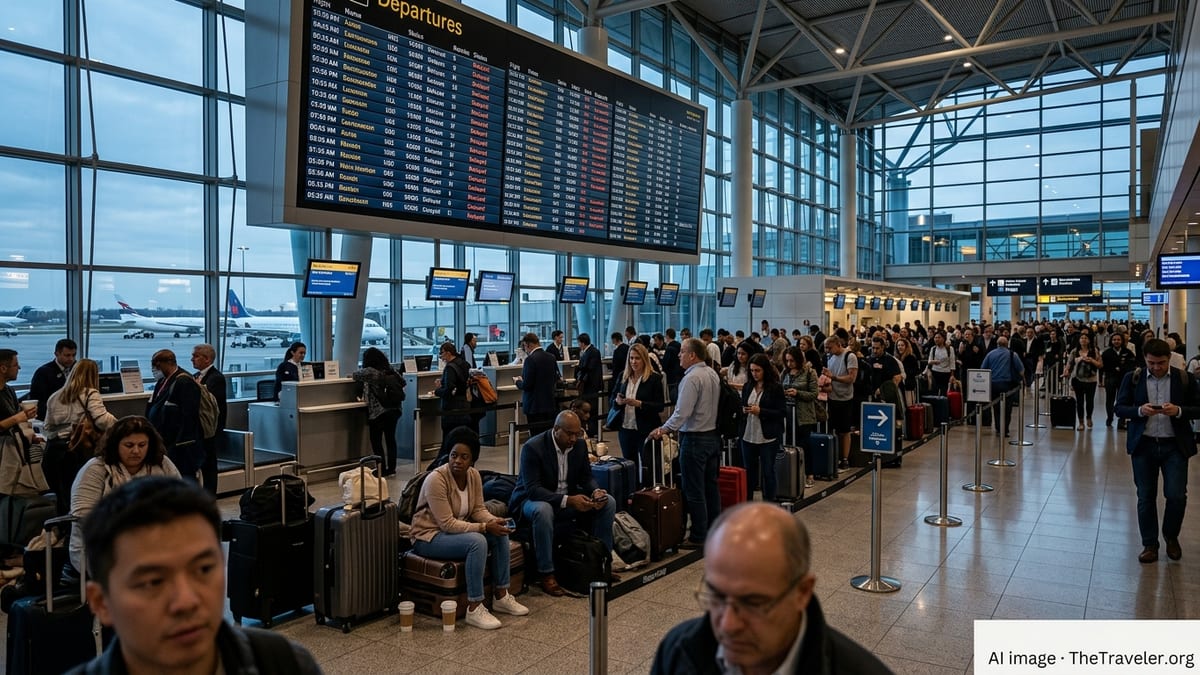
Trump Greenlights Direct Flights and Urges Visits
In comments this week, Trump announced that he is directing his administration to allow U.S. airlines to operate nonstop routes to Lebanon for the first time in more than 40 years. According to multiple news reports, the move came shortly after a White House meeting with Lebanese President Joseph Aoun, where the two leaders highlighted prospects for closer economic and security ties.
Trump described Lebanon as a “beautiful land” in a social media post and framed the decision in terms of convenience for American travelers, saying the new permission would allow U.S. carriers to fly directly so that Americans can more easily visit. Coverage in U.S. and Middle Eastern outlets indicates that Lebanese officials quickly welcomed the announcement as a potential boost for tourism, trade and the broader economy.
The decision effectively reverses a ban that dates back to the late 20th century, when U.S. authorities restricted direct air links in response to security threats and the legacy of hijackings in the region. Aviation analysts note that resuming nonstop flights does not automatically guarantee that airlines will launch routes, but it removes a major regulatory barrier that had long separated the two countries’ air markets.
Trump has frequently used aviation links as a signal of political favor or strategic realignment, presenting new routes as evidence of normalization or partnership. In the case of Lebanon, the announcement is being interpreted as part of a broader effort to reward Beirut’s current leadership for cooperation on border arrangements with Israel and for moves to distance state institutions from armed factions.
State Department Maintains “Do Not Travel” Advisory
Even as Trump encourages Americans to put Lebanon back on their travel maps, the official U.S. government guidance tells a different story. Publicly available information from the State Department shows that Lebanon remains under a Level 4 “Do not travel” advisory, the highest warning level in the U.S. system. The advisory urges U.S. citizens to avoid the country entirely because of risks tied to terrorism, civil unrest, armed conflict, crime, kidnapping and unexploded ordnance.
The Lebanon advisory has been repeatedly updated over the past several years as regional tensions have spiked, but the underlying message has not changed: Americans are strongly urged to stay away. The notice emphasizes that security conditions can deteriorate rapidly, that armed groups operate in multiple parts of the country and that the U.S. government’s ability to provide emergency consular services is limited if violence escalates.
Earlier this year, the department ordered the departure of some nonessential U.S. government personnel and family members from Lebanon, citing the security environment. That step underscored concerns about potential spillover from conflicts involving Iran and its allied groups, as well as the possibility of new clashes along Lebanon’s southern border.
Travel advisories are issued through a formal interagency process and are meant to serve as nonbinding but authoritative risk assessments for U.S. citizens abroad. In the Lebanon case, the advisory framework places the country in the same highest-risk category as active war zones, placing Trump’s upbeat language about tourism in sharp contrast with the technical assessment circulating within his own administration.
A Meeting in Washington and a Message to Beirut
Trump’s travel push came in the context of a high-profile visit by Lebanese President Joseph Aoun to the White House, the first such meeting between U.S. and Lebanese leaders in more than a decade. According to published coverage, the two presidents discussed economic relief, military assistance and the implementation of a recent U.S.-brokered agreement that reshaped security arrangements along Lebanon’s southern frontier.
Reports indicate that Trump hailed Aoun’s efforts to “transform” Lebanon and presented the direct-flight initiative as both a symbolic and practical reward. By holding out easier access for American visitors and investors, the administration signaled support for the current Lebanese leadership at a moment when Beirut is seeking foreign backing to stabilize its fragile economy.
Lebanese officials and local media have portrayed the prospect of U.S. carriers flying into Beirut’s Rafic Hariri International Airport as a historic step that could reconnect the country more directly with the North American market. Business groups in Lebanon are already highlighting potential gains for tourism, diaspora travel and cargo traffic if airlines ultimately seize the opportunity opened by Washington’s policy shift.
At the same time, the visit underscored the balancing act for Lebanese leaders, who must navigate between Western partners and powerful armed actors at home. Observers note that increased commercial links with the United States could strengthen state institutions, but could also expose travelers and airlines to greater risks if regional tensions worsen.
Security Risks and Conflicting Signals for Travelers
The clash between Trump’s optimistic rhetoric and the State Department’s stark travel warning leaves American travelers with a confusing picture. On one side, the president is presenting Lebanon as an accessible destination whose perceived isolation can be overcome by restoring direct flights. On the other, the official advisory system places the country in a category where U.S. citizens are urged not to go at all.
Security analysts quoted across recent coverage point to several overlapping sources of risk. These include the presence of armed groups with ties to regional powers, periodic exchanges of fire along the border with Israel, and the possibility of attacks targeting diplomatic or symbolic Western sites. The advisory also highlights concerns about crime and kidnapping, particularly in areas where state authority is weak.
For airlines, the calculation is similarly complex. Carriers weigh not only demand and profitability but also insurance costs, overflight restrictions and the safety of crews and passengers. Even with a green light from Washington, some aviation experts suggest that U.S. airlines may be cautious about entering the Lebanese market until there is greater clarity on long-term security trends and regulatory requirements.
For would-be visitors, publicly available guidance continues to emphasize contingency planning, awareness of potential airport disruptions and the risk of sudden changes in the security environment. The gap between the president’s message and the advisory language illustrates how political signaling and technical risk assessments can diverge, leaving travelers to sift through conflicting cues before making decisions.
Regional Tensions and the Politics of Travel Policy
The debate over Lebanon travel is unfolding against a backdrop of heightened tensions across the wider Middle East. Trump has expanded the U.S. military footprint in the region and repeatedly warned that Washington is prepared to respond forcefully if negotiations with Iran over its nuclear program and proxy activities fail. At the same time, missile and drone attacks have affected multiple countries, fueling concerns about a wider conflict.
Members of Congress from both parties have raised questions in recent months about how the administration communicates risks to Americans abroad, particularly in fast-moving crises. Reports from Capitol Hill describe frustration over what some lawmakers view as delayed or unclear messaging during previous flare-ups, with particular attention to travelers and diaspora communities caught in conflict zones.
Lebanon sits at the intersection of many of these pressures. Its territory hosts armed factions aligned with Iran, lies adjacent to Israel and serves as a logistical hub for regional trade. Analysts note that even limited escalations can quickly affect civilian air travel, whether through airspace closures, airport disruptions or changes in airline risk assessments.
The decision to champion new U.S. flights to Beirut at a time of maximum-level travel warnings underscores how travel policy can become entangled with broader geopolitical goals. For now, the practical effect may be more symbolic than immediate, but it has already sparked a pointed question for American travelers: when the president and the State Department appear to be sending opposite signals, which guidance should carry more weight?