


More news on this day
After a decade of branding itself as the Middle East’s dependable escape, Jordan is confronting one of its toughest tourism slumps in years as regional wars, wary travelers and shifting travel advisories erode the gains of a record pre-war season.
Get the latest news straight to your inbox!
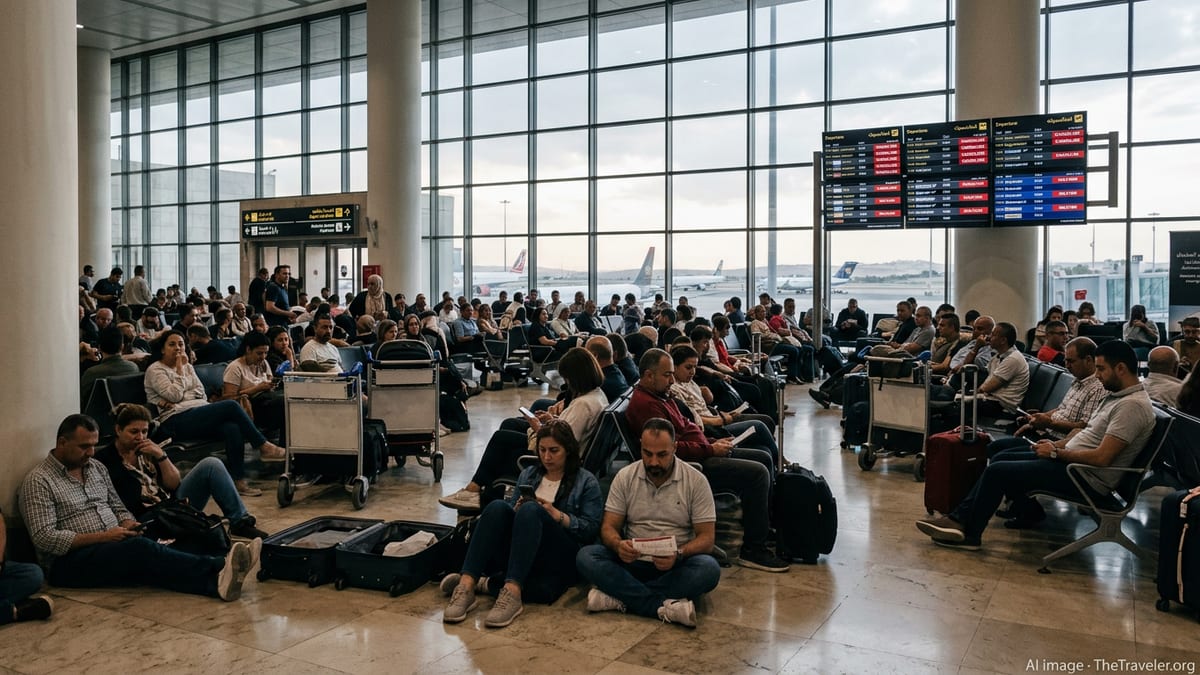
From regional safe haven to collateral damage
Before the latest cycle of conflict in Gaza and the wider region, Jordan had built a reputation as a “safe haven” destination, drawing millions of visitors to Petra, Wadi Rum and the Dead Sea even when neighboring countries were in turmoil. Government strategies for 2021 to 2025 projected steady growth and highlighted tourism as a pillar of foreign-currency earnings and jobs.
Official statistics and recent economic assessments show how abruptly that trajectory has been interrupted. World Bank analysis for 2024 points to a sharp fall in foreign arrivals beginning in the final quarter of 2023, with tourism singled out as one of the sectors most exposed to the Gaza war and subsequent regional tensions. National tourism strategies had assumed rising visitor numbers through 2024 and 2025; instead, expectations have been revised down amid weaker bookings and ongoing uncertainty.
Jordan is not a party to the conflict in Gaza, and major tourist areas such as Amman, Petra and Aqaba have remained calm. Yet the country’s proximity to Israel and the Palestinian territories, combined with highly visible media coverage of the conflict, has linked Jordan with a wider zone of perceived instability in the minds of many would-be visitors.
Data from international travel analytics firms and regional media reports indicate that air ticket bookings to Jordan slumped in the weeks after October 7, 2023, and again after missile strikes between Israel and Iran in early 2024. Industry observers note that the timing could not have been worse, hitting Jordan’s traditional autumn and spring high seasons.
Numbers tell the story of an abrupt reversal
Jordan’s headline tourism figures underline the scale of the reversal. According to data collated by the Ministry of Tourism and Antiquities and the Central Bank of Jordan, 2023 was a record year for the sector, with total visits to sites and overall tourist numbers surpassing pre-pandemic benchmarks. Petra alone welcomed close to 1.2 million visitors that year, reflecting a strong rebound after COVID-19 closures.
By 2024 and into early 2025, that momentum had largely evaporated. Figures cited by the Petra Development and Tourism Region Authority and regional media coverage show visitor numbers to Petra dropping to fewer than 460,000 in the year following the start of the Gaza war, a fall of around 60 percent compared with 2023. The Jordan News has reported that total visits to tourist sites nationwide fell from about 6 million in 2023 to roughly 2.6 million in 2024, with foreign arrivals bearing the brunt of the decline.
More recent ministry data for the first half of 2026 indicates a cautious, uneven recovery. Around 1.3 million visits to key sites were recorded in the first six months of the year, almost evenly split between Jordanians and international tourists. While that suggests strengthening domestic demand and some return of foreign visitors, it still leaves the sector far short of the highs reached before the Gaza conflict.
International financial institutions have warned that the drop in tourism receipts is weighing on Jordan’s already stretched public finances. Assessments released in 2024 describe tourism as a critical source of foreign exchange, and note that sustained weakness in the sector could slow economic growth, pressure employment in southern governorates that rely heavily on tourism, and complicate fiscal consolidation efforts.
Petra and Wadi Rum feel the chill on the ground
The impact of the downturn is particularly visible in flagship destinations such as Petra and Wadi Rum, long marketed as symbols of Jordan’s resilience and appeal. Both sites had seen strong growth in the years leading up to 2023, helped by international promotion campaigns and new air routes into Amman and Aqaba.
Since late 2023, published reports and testimonies gathered by regional media describe crowds thinning dramatically at Petra’s main entrance, where daily visitor numbers have fallen from peaks of well over 10,000 in high season to a fraction of that level on some days. Hotels, souvenir stalls and tour operators in the surrounding town of Wadi Musa have reported cancellations across key source markets including Europe, North America and East Asia.
In Wadi Rum, desert camps that once operated near capacity through much of the winter now report longer off-peak stretches and more last-minute bookings. Industry surveys suggest that visitors who do come are staying fewer nights and spending more cautiously, reflecting both global cost-of-living pressures and lingering nerves about travel in the wider Middle East.
The ripple effects extend beyond front-line tourism businesses. Transport companies, guides, crafts cooperatives and seasonal workers in Petra, Wadi Rum and the Dead Sea corridor all depend on international flows that have proved highly sensitive to geopolitical shocks. Local business associations warn that another weak season could accelerate out-migration from rural areas and deepen regional inequalities within Jordan.
Travel advisories and perceptions reshape demand
Alongside the hard numbers, the narrative around Jordan as a destination has shifted. Updated travel advisories from several Western governments over the past two years have urged visitors to exercise increased caution due to regional tensions, protests and the risk of cross-border attacks. While these advisories typically distinguish between higher-risk border zones and mainstream tourist circuits, industry observers say many travelers do not read the fine print.
Publicly available information from travel risk services shows that Jordan is often grouped into wider Middle East alerts that also cover active conflict zones. This bundling effect has contributed to a perception of generalized instability, even as many travelers and travel writers continue to describe the country itself as calm and welcoming.
Social media has amplified these mixed signals. Online forums and travel communities feature repeated questions about whether “now” is the right time to visit Jordan, reflecting family concerns, insurance queries and confusion over fast-changing headlines. Some travelers who went ahead with trips in late 2024 and 2025 have reported quieter sites and positive experiences, but their accounts compete with images of regional airstrikes and protests that continue to dominate news feeds.
Industry analysts note that perception shocks can outlast the events that triggered them. Even if regional tensions ease, it may take several seasons of uneventful travel and sustained marketing to restore the sense of Jordan as the region’s safest bet for culture and adventure tourism.
Pivot to domestic tourism and regional markets
In response to the downturn, Jordan has moved to shore up demand from Jordanians and from visitors in nearby markets perceived as less sensitive to regional headlines. Government-backed programs such as the expanded “Urdunna Jannah” initiative have been scaled up to encourage residents to explore lesser-known sites, with subsidized packages to destinations from the north of the country to Petra, Wadi Rum and the Dead Sea.
Recent announcements from the Jordan News Agency describe targets to reach hundreds of thousands of domestic beneficiaries by 2026, alongside more than 60 curated routes designed to spread tourism spending beyond a handful of hotspots. Early figures for 2026 showing that nearly half of site visits are now made by Jordanians suggest that this strategy is helping to plug at least part of the gap left by falling long-haul arrivals.
At the same time, official data indicates that visitors from Gulf states have become increasingly important, with arrivals from the Gulf region rising compared with other markets in 2024. Analysts say these travelers are often more familiar with Jordan and less influenced by Western travel advisories, making them a crucial buffer when European and North American bookings falter.
However, domestic and regional tourism typically generate lower per-capita spending than long-haul international markets. Tourism economists caution that Jordan cannot fully replace lost revenue from high-spending visitors from Europe, Asia and North America with short-break trips and subsidized local packages, even if such initiatives are vital for sustaining jobs and keeping businesses open.
Uncertain outlook for a key pillar of the economy
Looking ahead, forecasts for Jordan’s tourism sector remain highly contingent on developments beyond the country’s borders. Economic monitors from the World Bank and others project only modest overall growth for Jordan in 2024 and 2025, partly because of the drag from weaker tourism and disruptions to trade through the Red Sea.
Investors and multilateral lenders continue to describe Jordan as relatively stable compared with many of its neighbors, highlighting political continuity and incremental reforms. The question for the tourism industry is whether that relative stability will be enough to reassure travelers in an era when global news cycles can transform distant conflicts into perceived immediate risks.
Tourism businesses and local communities are pressing for continued marketing campaigns, clearer communication about on-the-ground conditions and further support for domestic travel schemes. As peak seasons approach, the stakes are high: a strong rebound could restore Jordan’s image as the region’s reliable refuge for history and nature seekers, while another disrupted year would deepen the sense that one of the Middle East’s safest bets has been pulled into the orbit of conflicts beyond its control.