


More news on this day
Air travel across northern and central Europe remained fragile over the weekend, as Germany, Finland, France and Switzerland continued to absorb the impact of an early June wave of delays and cancellations that disrupted nearly 2,000 flights across the continent.
Get the latest news straight to your inbox!
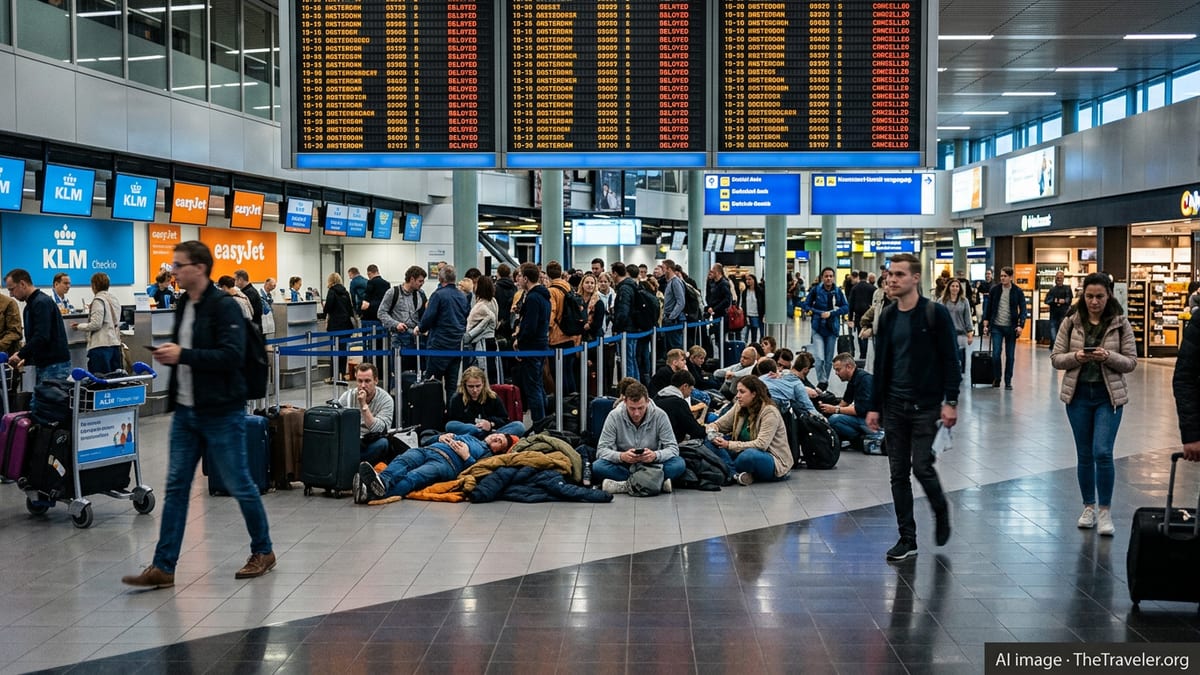
Ripple Effects From Early June Disruptions
Published flight-tracking data and aviation news reports indicate that on June 5 alone, close to 1,900 flights were delayed and around 70 were canceled across Europe, with France, Norway and Switzerland among the hardest hit. Those figures, combined with additional disruption on June 4 around key Scandinavian and central European hubs, left passengers facing rolling knock-on delays into the weekend as aircraft and crews struggled to return to position.
In Switzerland, Zurich and Geneva were among the airports most exposed, reflecting their role as transfer nodes linking northern, central and southern Europe. Earlier in April, Swiss airports had already absorbed cancellations linked to industrial action at Lufthansa and its affiliates, and the latest wave of schedule changes has added further strain. Publicly available operational data for Zurich shows a pattern of elevated en route delays tied to capacity and weather constraints this spring, conditions that left the system less resilient when June disruptions hit.
France’s large share of European air traffic meant that even a moderate percentage of delayed flights translated into thousands of affected passengers. Eurocontrol analyses for the spring period show that French airspace has accounted for a significant share of en route air traffic flow management delays, largely due to air traffic control capacity and staffing, making the network more vulnerable when additional shocks such as storms or rerouting pressures arise. With Paris Charles de Gaulle and Orly both serving as major long haul and intra-European hubs, operational imbalances there quickly propagated throughout the continent.
Although Norway was one of the countries most visibly impacted on June 5, the network implications reached neighboring Finland and the wider Nordic region. Helsinki, which already experienced a spike in delays and cancellations in early June according to specialized aviation outlets, has been working through terminal congestion and aircraft rotation challenges that contributed to the broader picture of instability.
Germany and Switzerland Wrestle With Capacity and Labor Hangover
Germany entered the busy summer travel period with a weakened buffer after a series of labor disputes at Lufthansa and related carriers earlier in the year. Airline and union announcements in February and April documented waves of strikes that led to thousands of cancellations and a sharp reduction in short haul capacity. Although a new agreement paused the strike wave in mid April, schedule adjustments and previously announced capacity cuts continued to shape the operating environment heading into June.
Zurich and Basel, closely connected to Germany through Lufthansa Group operations, felt these reverberations. Swiss media reported in April that strikes in Germany had already forced dozens of cancellations at Swiss airports, and Eurocontrol figures for March highlighted Switzerland’s contribution to Europe’s delay statistics, again tied to air traffic control capacity and weather. As early June disruptions rippled across the network, these structural fragilities limited the options for rapid recovery.
Industry analyses from route planners and data providers point to a broader retrenchment in European short haul capacity for 2026, particularly in Germany. Reports of large blocks of preemptive cancellations by major groups earlier in the spring have reduced available frequencies on key domestic and cross border routes. When storms or knock on delays hit, fewer spare aircraft and crew rotations are available to absorb the shock, which helps explain why a single day of severe disruption could still be felt several days later in German and Swiss operations.
For travelers using Frankfurt, Munich, Zurich and Geneva as connecting hubs, the consequences included missed onward flights and extended overnight stays. Publicly shared passenger accounts on social platforms described rebookings through alternative hubs such as Amsterdam, Vienna and Madrid, illustrating how stress in one part of the network quickly radiates across the continent.
Finland and the Nordic Network Under Pressure
The early June disruption also underscored the vulnerability of the Nordic aviation network. Detailed coverage from regional travel news platforms reported that Helsinki Vantaa, Finnair’s main hub, experienced dozens of severe delays and a cluster of abrupt cancellations on June 4. Flight tracking data cited in those reports showed heavy congestion across Nordic terminals, with knock on effects reaching as far as North America and Asia through missed connections.
Finland’s position at the northeastern edge of Europe means that many long haul itineraries between Europe and Asia or the Arctic region depend on precise connections through Helsinki. When a departure bank is significantly delayed, waves of onward flights can quickly become misaligned. This structure proved particularly fragile in early June, as delays tied to weather, airspace complexity and high demand converged on the same day.
Regional carriers and alliance partners attempted to stabilize operations by consolidating lightly booked flights and rerouting passengers through Copenhagen, Oslo and Stockholm. However, aviation punctuality statistics for major Nordic hubs show that even relatively reliable airports can experience sharp day to day swings in on time performance when broader European capacity is tight. The result for travelers was a patchwork of last minute gate changes and reroutes that extended well beyond Finland itself.
Travel industry analysts note that the Nordic region is also contending with evolving traffic patterns driven by geopolitical tensions and altered long haul routings. These shifts have increased reliance on a smaller number of viable corridors, making schedule recovery more challenging when multiple hubs, including Helsinki, experience disruption at the same time.
France’s Airspace Bottlenecks and Holiday Demand
France continues to occupy a central role in Europe’s aviation bottleneck story. Eurocontrol monitoring during late winter and early spring found that French airspace accounted for roughly one third of en route air traffic flow management delays in certain weeks, with key control centers in Reims, Brest and Marseille cited as particular pinch points. These constraints have combined with localized weather events and occasional industrial action to produce a structurally fragile operating backdrop.
As early June holiday traffic began to rise, this fragility became more visible. Published coverage from European business and travel outlets noted that airlines had already trimmed millions of seats from planned summer schedules in response to jet fuel supply concerns and broader cost pressures, yet demand for southern Europe remained high. That meant flights transiting French airspace were frequently operating with very high load factors, leaving limited scope to accommodate disrupted passengers.
Paris area airports, especially Charles de Gaulle, play a significant connecting role for travelers originating in Germany, Scandinavia and the United Kingdom en route to Mediterranean destinations. When delays in German or Nordic hubs pushed arrivals into later banks in Paris, short turnaround times left little leeway, triggering further hold ups or missed departures toward Spain, Italy and Greece. In effect, the June disruption became a network problem rather than an issue confined to any single country.
French domestic travelers also faced challenges. With some high speed rail routes already close to capacity during peak hours, alternative options for last minute rebooking were limited. Consumer organizations and travel advisories across Europe renewed calls for passengers to build longer buffers into itineraries involving connections through Paris or flights crossing busy French sectors during peak periods.
Passengers Face Longer Recoveries and Complex Claims
For travelers caught in the turbulence, the immediate concern has been how fast the system can recover. While operations across Germany, Finland, France and Switzerland showed signs of stabilization by June 7, data shared by aviation tracking platforms still pointed to elevated delay levels at several major hubs. With aircraft and crews out of rotation, schedules often require multiple days to fully normalize, especially when operating near capacity.
The disruptions have also brought renewed focus on consumer rights. Under European Union Regulation 261/2004, passengers on many flights to, from and within Europe may be entitled to compensation and assistance, depending on the cause and length of delay or cancellation. Legal specialists and travel advocates caution, however, that not all events qualify, particularly where airlines can point to extraordinary circumstances such as severe weather or certain external constraints.
Published reports from consumer advocacy groups highlight increasing frustration among passengers attempting to secure compensation or refunds, especially when journeys involve multiple airlines or connecting hubs in different countries. The cross border nature of the early June disruption, affecting Germany, Finland, France and Switzerland simultaneously, is expected to generate a complex wave of claims and disputes in the weeks ahead.
Travel industry observers suggest that the early June chaos may be a preview of a difficult summer for European aviation, as capacity, staffing, fuel supply concerns and high demand intersect. For travelers planning itineraries through the affected countries, publicly available guidance increasingly emphasizes flexible tickets, additional connection time and close monitoring of flight status as key strategies to navigate an unsettled sky.