


More news on this day
Deadly missile and drone attacks on Riyadh’s King Khalid International Airport in early October have triggered a wave of urgent travel warnings, flight suspensions and heightened security advisories for anyone planning to transit Saudi Arabia in the coming weeks.
Get the latest news straight to your inbox!
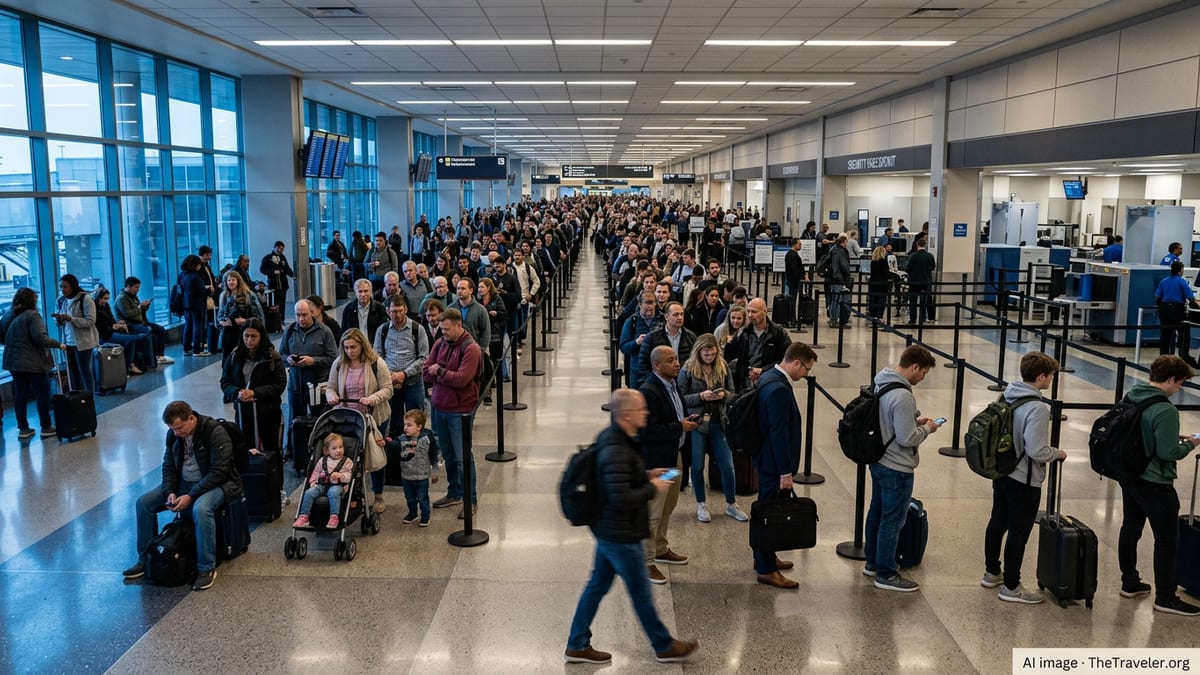
Deadly strikes shut down a major Gulf aviation hub
Published coverage from international and regional outlets indicates that a series of missile and drone attacks hit King Khalid International Airport between October 8 and 11, 2026, killing at least a dozen people and injuring hundreds. Reports describe a first wave of strikes that damaged airport facilities and a Saudia aircraft, followed by further explosions inside the terminal area over the weekend, making it the deadliest incident of its kind in the kingdom in more than a decade.
Saudi Arabia’s General Authority of Civil Aviation announced that operations at the airport were temporarily suspended after the attacks, with flights diverted or cancelled as damage assessments and safety checks continued. Local media reports note that the closure affected both international and domestic services, disrupting one of the Gulf’s key aviation gateways at the start of the busy autumn travel period.
International news reports attribute the strikes to Houthi forces based in Yemen, which have previously targeted aviation and energy infrastructure across Saudi Arabia. Coverage of statements from Houthi military spokespeople indicates that airlines were warned that Saudi airports and airspace, with the exception of the airports in Mecca and Medina, could be considered potential targets in the current escalation.
The repeated hits on Riyadh’s main airport have raised questions in regional media about the effectiveness of Saudi air defense systems and the resilience of civilian infrastructure. Analysts quoted in open reporting suggest that the latest barrage demonstrated an ability to overwhelm defensive layers and reach heavily protected assets, increasing anxiety among travelers and airlines that rely on Saudi airspace for connections between Europe, Asia and Africa.
Strong new government advisories and security alerts
In the days following the attacks, multiple governments updated their official travel advice for Saudi Arabia, with particular emphasis on the risks around airports and aviation infrastructure. The United States updated its Level 3 “reconsider travel” advisory for Saudi Arabia in mid October, highlighting the ongoing threat of missile and drone attacks and warning that strikes on airports could occur with little or no warning. The advisory notes that U.S. government employees now require special authorization to use any airport in the country and urges private travelers to review alternate transport options where possible.
A separate security alert from the U.S. Mission in Saudi Arabia, released in mid October, warns of possible follow-on attacks on airports, temporary airspace closures and flight cancellations. The alert advises U.S. citizens to avoid non-essential airport use, maintain a high level of situational awareness and prepare for sudden changes to itineraries, including diversions and extended layovers outside the kingdom.
The United Kingdom’s Foreign, Commonwealth and Development Office also updated its travel advice after what it described as a “serious incident” at King Khalid International Airport on October 10. The guidance advises British nationals to stay away from the Riyadh airport until it is confirmed secure and points to a heightened threat environment around airports, defense installations and energy infrastructure across several Saudi regions, including Riyadh, Jeddah and Dammam.
Australia’s Smartraveller service issued one of the clearest aviation-specific warnings, stating that travelers should not travel to King Khalid International Airport due to recent security incidents that have disrupted operations. The advisory urges passengers not to depart for any Saudi airport until they have reconfirmed their flight directly with their airline or travel provider, and it highlights strict prohibitions on photographing missile or drone activity, which can lead to criminal penalties.
Impact on airlines, routes and transit passengers
The attacks have immediate implications for airlines operating to and overflying Saudi Arabia. A notice from the U.S. Federal Aviation Administration issued in mid October advises U.S. carriers to exercise extreme caution in Saudi airspace, citing the recent strikes on Riyadh’s airport and warning that threats could pose a risk to aircraft at all altitudes and during all phases of flight. The advisory is currently set to remain in effect into December, covering the late-year peak for business and pilgrimage travel.
Published business reports indicate that at least one planned nonstop U.S.–Riyadh route, linking Atlanta with the Saudi capital, has been pushed back to 2027 amid the deteriorating security environment. The postponement underlines broader uncertainty for new long haul links into Riyadh, which has been positioning itself as a rival hub to Dubai and Doha for global transfer traffic.
Regional carriers and Gulf super-connectors have not announced comprehensive timetable changes in open sources, but public flight-tracking data and media coverage show multiple diversions and cancellations on services to Riyadh in the days after the attacks. Some airlines appear to be routing more passengers through Jeddah or Dammam, while others are relying on hubs outside Saudi Arabia, such as Dubai, Doha and Abu Dhabi, to maintain connectivity between Europe, Asia and Africa.
Transit passengers are feeling the effect of this shift. Questions posted on public forums in recent days show travelers reconsidering itineraries that involve a Riyadh connection, and in some cases seeking to rebook through alternative hubs. Concerns focus not only on the risk from further strikes but also on the possibility of short notice airport closures that could leave passengers stranded or force complex rerouting at their own expense.
What travelers should know before flying to or near Saudi Arabia
Current official advisories emphasize that conditions can change quickly and that strikes may occur with limited or no warning. Travelers whose journeys involve Riyadh or other Saudi airports are being urged by their own governments and airlines to monitor developments closely right up until departure. This includes reconfirming flights within 24 hours of travel, enabling airline app notifications, and checking for updates from national foreign ministries or consular services.
Given the possibility of diversions and extended ground delays, several government advisories recommend that travelers maintain flexible ticket conditions where possible, carry essential medication and valuables in hand luggage, and keep access to funds in case of unplanned overnight stays outside Saudi Arabia. Some notices also highlight that photographing or filming missile launches, air defense activity or damaged infrastructure is prohibited in Saudi law and has led to previous arrests unrelated to the latest attacks.
For those who decide to postpone or avoid air travel to Saudi Arabia, alternatives within the region include routing via major hubs in neighboring countries and, for travelers already in the Gulf, using cross-border road or rail links where they are judged safe by national advisories. However, governments underline that security conditions across the wider region remain fragile due to ongoing tensions involving Iran, Yemen and maritime routes in the Red Sea, and travelers are advised to review the latest country-specific guidance before making substitutions.
Across all recent updates, a consistent message emerges: anyone considering travel to or through Riyadh in the near term should treat the situation as fluid, build contingency time into itineraries, and be prepared for sudden changes to flight plans. The combination of direct attacks on a major international airport and explicit warnings from armed groups has created a risk profile that many governments now judge to be significantly higher than earlier in the year.