


More news on this day
A fresh shelter-in-place security alert covering parts of Gulf airspace is pushing Australian travellers to reconsider traditional “Kangaroo Route” stopovers, as airlines weigh complex detours around a region that has long served as a critical bridge between Australia, Europe and the wider Middle East.
Get the latest news straight to your inbox!
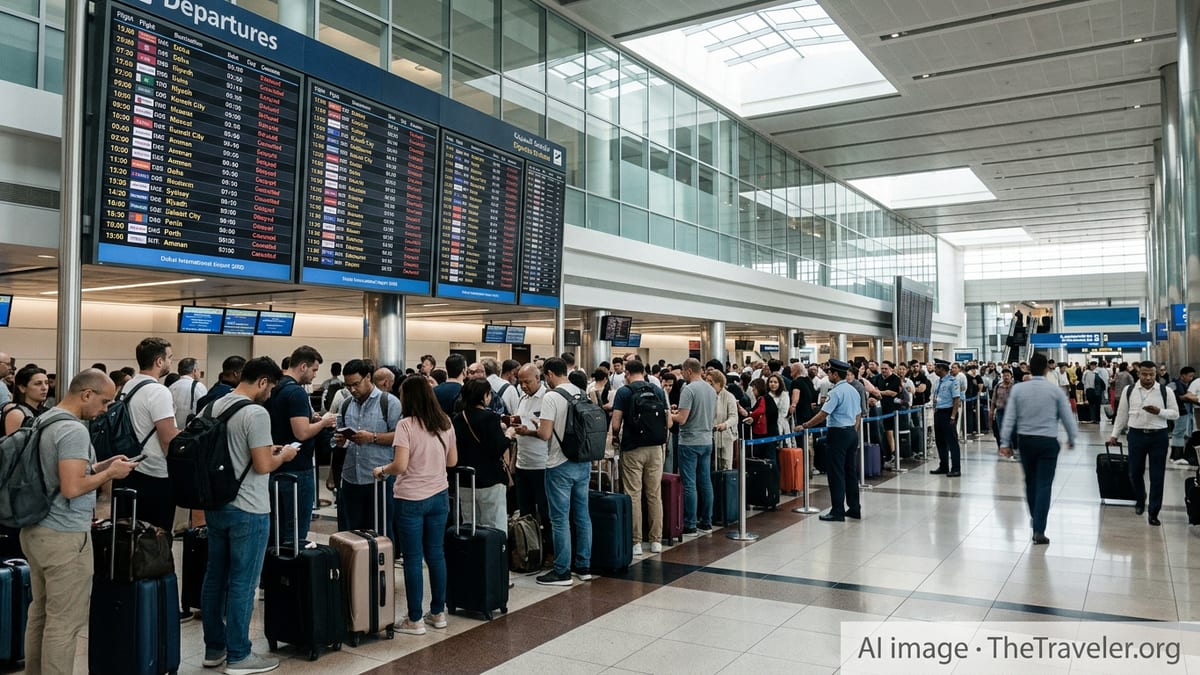
Heightened alerts over the Gulf disrupt a key transit corridor
Publicly available aviation advisories show a patchwork of flight notices and security warnings across the broader Middle East, including updated cautions for operations involving Saudi Arabian airspace after recent strikes near Riyadh’s international airport. Separate airspace notices in the United States refer to potential Gulf route closures in connection with security-related planning, underlining how fast-changing restrictions in one region can ripple across long-haul traffic patterns.
Special airspace advisories and temporary flight restrictions, published through official aeronautical information channels, are designed to steer civil traffic away from areas of elevated risk. These measures can include diversion corridors, altitude caps and routing constraints that effectively funnel widebody jets into narrower lanes across the Gulf and northern Saudi Arabia, or push them further north via Central Asia and the Caucasus.
Analyst briefings circulated in early March 2026 described how closures and congestion at key Middle East hubs triggered severe delays and bottlenecks for transit passengers. According to one widely cited corporate advisory summarising conditions at the time, airspace closures around Qatar and disruption at major airports such as Dubai and Abu Dhabi sharply reduced available connections and forced airlines to rationalise schedules.
While the latest shelter-in-place alert is framed as a precautionary security step, its operational impact is felt most keenly on trunk routes linking Australasia with Europe. With aircraft and crews already stretched, even modest re-routings or schedule cuts can cascade into missed connections and longer travel times for passengers departing Sydney, Melbourne, Brisbane and Perth.
Australian carriers adjust Europe links as foreign hubs come under strain
The Gulf has long been a central plank of Australia’s international connectivity, but published reports indicate that local carriers and their partners are once again rebalancing how they reach Europe. Qantas, which had already reconfigured its nonstop Perth to London service to include a refuelling stop in Singapore in order to avoid sensitive airspace, has limited direct exposure to Gulf overflight compared with some rivals.
Other major players in the Australian market rely more heavily on Gulf hubs. Emirates, Etihad Airways and Qatar Airways normally funnel large numbers of Australians through Dubai, Abu Dhabi and Doha on the way to European destinations. Trade and travel publications in early October highlighted renewed disruption at Dubai and Abu Dhabi, including morning waves of cancellations and delays as airlines grappled with regional advisories and congested airspace.
Separate incident reporting has further sharpened attention on security. Australian media recently detailed an attempted hijack involving a flydubai service operating between Dubai and Tel Aviv that diverted to the Saudi city of Tabuk for an emergency landing, with Australians confirmed on board. Official travel-planning resources subsequently pointed to this and other episodes as examples of how quickly routine transit flights can be affected by security events well beyond Australia’s borders.
Despite these challenges, the latest competition report from Australia’s competition regulator shows that Asia Pacific carriers are deepening their presence on international routes to and from Australia. Expanded services by airlines based in Southeast and East Asia are giving travellers more one-stop options to Europe that bypass Gulf hubs entirely, including routings over Singapore, Kuala Lumpur, Bangkok and various Chinese gateways.
What the shelter-in-place alert means for Aussie itineraries
The shelter-in-place alert affecting parts of Gulf-region airspace does not close the sky outright, but it changes how and where aircraft can operate. Flight notices referenced in air traffic planning advisories speak of possible Gulf route closures tied to security conditions, signalling that certain established air corridors could be curtailed at short notice. For Australian travellers, that translates into an elevated risk of last-minute schedule changes when itineraries hinge on a single Gulf connection.
Travel alerts and safety notices emphasise that airspace can be closed with little warning and that airlines may reroute or consolidate services with minimal lead time. Australian government guidance for citizens in the broader Middle East region has for months advised those intending to depart to secure flights while commercial options remain available, pointing to previous instances where departing passengers were caught off guard by rapidly imposed airspace shutdowns.
Corporate risk consultants tracking the situation across the Middle East and North Africa have reported intermittent airport congestion, especially at hubs such as Dubai, Abu Dhabi, Doha and Kuwait City, whenever new advisories are issued. In the March 2026 disruption wave, analysts documented how the closure of Qatari airspace and pressure on alternative corridors through Saudi Arabia produced mechanical delays, missed onward connections and extended layovers for travellers attempting to transit between Australia and Europe.
With the current shelter-in-place alert adding another layer of caution to an already complex environment, Australian passengers booking or holding tickets via Gulf hubs are facing a more uncertain landscape. Publicly available advisories encourage travellers to remain flexible about routings and to monitor airline communications closely in the days leading up to departure.
Alternative routes emerge through Asia and new Pacific links
Published schedule data and regulatory filings suggest that airlines are increasingly steering Australian-Europe itineraries through Asian waypoints rather than Gulf hubs. Singapore, Kuala Lumpur, Bangkok and Hong Kong are absorbing more connecting traffic from Australia, helped by additional frequencies and competitive fares as carriers seek to capture demand diverted from the Gulf.
The Australian competition regulator’s latest report on domestic airline competition also highlights the growing role of non-Gulf long-haul options. New services such as the recently launched Papeete to Sydney flight by Air Tahiti Nui, while not directly tied to Europe, expand the web of connections available to Australian travellers and underscore the broader diversification of route networks away from a handful of mega-hubs.
European and Asian carriers are likewise refining their schedules. Some have filed flight plans that avoid certain Middle Eastern flight information regions entirely, even when those airspaces technically remain open, choosing instead to route over Central Asia or the eastern Mediterranean. This type of proactive detouring typically adds flight time and fuel costs, but it can provide a measure of operational predictability at a time when new alerts and security notices are appearing frequently.
For Australians, the practical result is a wider menu of one-stop options to cities such as London, Paris, Frankfurt and Rome that do not require a Gulf transit. However, these alternatives may involve longer total journeys or overnight layovers, particularly when connecting via northern European or Central Asian hubs that have less frequent services to and from Australia.
How travellers can respond to a fast-moving security picture
Travel industry commentary in Australian and Middle Eastern media stresses that passengers have limited control over high-level routing decisions driven by airspace security assessments. Airlines must follow the binding instructions set out in official notices to air missions and related publications, which can change several times in a short period as conditions evolve.
Nevertheless, there are practical steps Australian travellers can take while the shelter-in-place alert over the Gulf remains in effect. Travel agents and airline customer service channels can assist in identifying itineraries with more than one plausible connecting point, such as tickets that allow re-routing via an Asian hub if a Gulf segment is cancelled. Passengers are also encouraged in public advisories to allow extra buffer time between domestic feeder flights and long-haul departures.
Government travel advice platforms recommend monitoring security updates for both transit and destination countries, especially when itineraries involve multiple stops in or near the Middle East. Recent online discussions among Australian travellers describe heightened security screening at major European airports and note that connecting passengers should expect more time-consuming checks, even when simply transiting airside.
With the Gulf shelter-in-place alert adding to a dense backdrop of regional tension, the once-straightforward choice of a single-stop Gulf connection between Australia and Europe is now being weighed more carefully. For many, that means balancing the convenience of familiar hubs in Dubai, Abu Dhabi or Doha against emerging alternatives through Asia or other regions, in an environment where route maps can shift almost as quickly as the security advisories that shape them.