


More news on this day
Days of student-led protests and nighttime clashes in central Tirana are reshaping travel plans across Albania, as foreign embassies update advisories and urge visitors to avoid demonstration zones in the capital.
Get the latest news straight to your inbox!
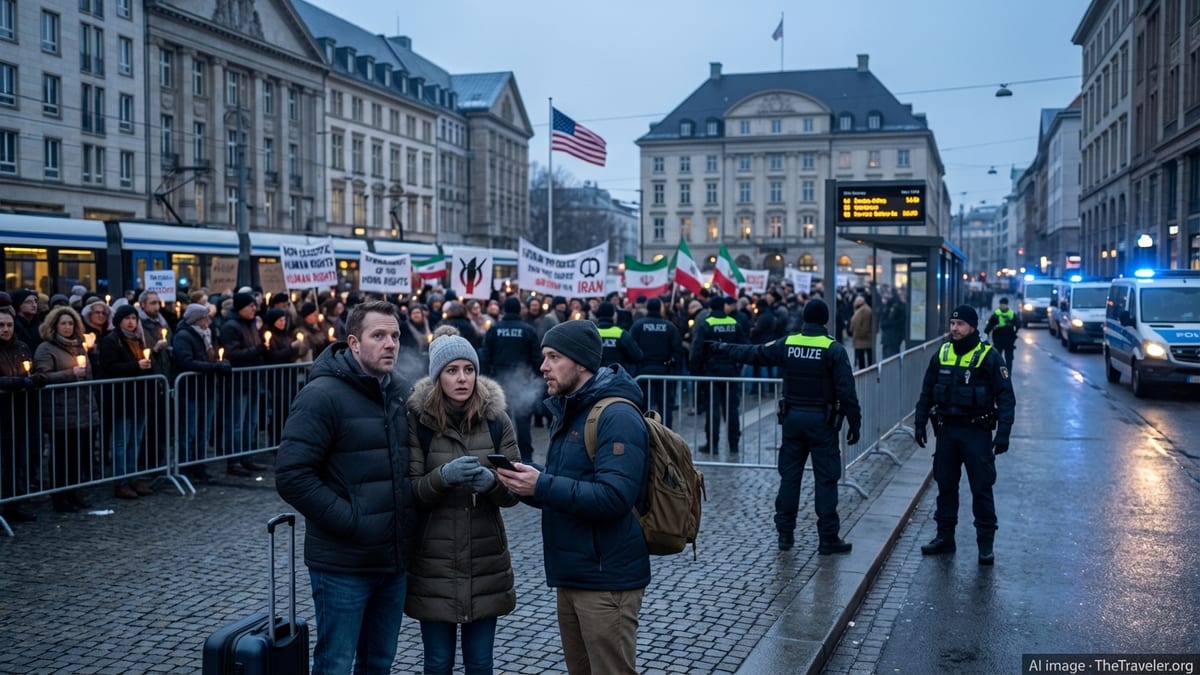
Escalating Unrest Around Tirana’s Government Quarter
Publicly available coverage shows that large student-led protests over higher education funding and living costs, which began peacefully earlier this month, have escalated into some of the most violent street unrest Albania has seen in years. Demonstrations have been concentrated along the main boulevard between Skanderbeg Square and key government buildings, including the parliament, the prime minister’s office and the Ministry of Education.
Reports from international and regional media over the past several days describe repeated clashes between groups of mostly young protesters and riot police after dark. Water cannon, tear gas and stun grenades have been deployed on multiple evenings, while small fires, smashed bus shelters and damaged shopfronts have been documented near the protest routes. Local broadcasters have shown images of protesters using traffic signs and construction barriers as improvised shields against police lines.
According to published figures cited in European media, more than one hundred people have been treated for injuries related to the unrest since midweek, including both demonstrators and police officers. Although no fatalities have been reported as of October 18, hospitals in Tirana have received a steady flow of patients suffering from tear-gas inhalation, contusions and minor burns linked to the protests.
Information compiled from Albanian and European news outlets indicates that while the largest gatherings occur in Tirana, solidarity demonstrations have also taken place in other university towns. However, the bulk of the violence and property damage remains concentrated in the capital’s central administrative district, especially after nightfall.
Travel Advisories Updated as Embassies Flag Security Risks
The intensifying unrest has prompted a series of fresh warnings from foreign ministries and embassies with citizens in Albania. The United Kingdom’s official travel advice for Albania was updated in mid October with explicit reference to demonstrations in Tirana, noting that protests can turn confrontational and advising travelers to avoid large gatherings in the center of the capital.
Regional foreign ministries have issued similar guidance. The Romanian Ministry of Foreign Affairs published a travel alert on October 15 highlighting protest activity in Tirana and encouraging Romanian nationals to steer clear of demonstration areas and monitor local news before moving around the city. Bulgaria’s foreign ministry has likewise flagged an increased risk of protests in Albania and pointed travelers to its embassy in Tirana for up to date consular information.
Local media in Albania have reported on an urgent security message circulated by the United States Embassy in Tirana earlier in the week, in which the mission advised U.S. citizens to avoid protest locations in the city center after demonstrations escalated into violence. According to that notice, movement near Skanderbeg Square, the prime minister’s office and the main government boulevard has been of particular concern during evening hours.
European Union institutions have also reacted. A recent statement from the EU Delegation in Tirana expressed concern about the escalation of violence and the destruction of public and private property during the protests, while reiterating support for peaceful assembly. Several EU member state embassies have amplified that message on their own channels, pairing it with reminders that travelers should follow local authorities’ instructions and stay informed about changing conditions in the capital.
Impact on Transport, Tourism and Daily Life in the Capital
For travelers already in Tirana, the most immediate effects are being felt in and around the city center. Publicly available information and on the ground accounts shared in travel forums describe intermittent road closures and significant traffic disruption along the main protest routes, typically in the late afternoon and evening when crowds gather. Key intersections leading to Skanderbeg Square and the government quarter have been temporarily blocked, forcing taxis and buses onto detours.
These disruptions have, at times, lengthened transfer times between central hotels and Tirana International Airport by more than usual, especially for journeys passing through the inner ring road during protest hours. Some visitors report rearranging plans to travel to and from the airport earlier in the day, or using routes that skirt the downtown protest zone to reduce the risk of delays caused by roadblocks or tear gas deployment.
Hotels in residential districts south and east of the center, including hillside neighborhoods away from the main boulevard, appear to be less directly affected aside from the general strain on traffic across the city. Travelers staying in those areas have reported that day to day life in local streets, shops and cafes continues largely as normal, provided they avoid approaching the core protest sites once demonstrations begin.
Tourism businesses in Tirana’s most visited central areas, such as the streets around Skanderbeg Square and the Blloku nightlife district, are facing a more immediate impact. Some restaurants and bars have reportedly chosen to close early on evenings when large rallies are announced, and a handful of smaller businesses near government buildings have suffered broken windows or smoke damage during clashes. Visitors arriving over the weekend have shared mixed experiences, with some choosing to shorten their stays in the capital and spend more time in coastal or southern destinations instead.
What Incoming Travelers Should Expect and How to Prepare
Despite the images of burning barricades and heavily equipped riot police, information from both official advisories and traveler accounts indicates that foreign visitors have not been singled out during the unrest. The demonstrations are directed at domestic political issues and education policy, and confrontations have primarily involved protesters and security forces near state institutions.
For those planning trips in the coming days, the main risks relate to being inadvertently caught near clashes, breathing tear gas or experiencing delays in reaching accommodation, bus terminals or the airport. Travelers with bookings in central Tirana are being encouraged by embassies and travel advisers to check with their hotels about local conditions and the best routes to use, particularly for late arrivals or early morning departures when cleanup operations may still be under way.
Foreign ministries generally advise staying away from any gathering that appears to be forming along the main boulevards or in front of ministries, even if it looks peaceful at first. Visitors are also urged to carry identification, keep their phones charged with local emergency numbers stored, and follow the guidance of security personnel if routes are redirected or certain streets are temporarily sealed off.
Those considering travel beyond Tirana, including to popular coastal destinations or mountain towns, will find that transport services continue to operate, though journeys that pass through the capital may face schedule adjustments. Travelers are advised to build in extra time when transiting through Tirana, stay alert to updated embassy notices and local news, and remain flexible about itinerary changes until tensions in the capital ease.
Broader Context and Outlook for Travelers
The current wave of protests comes against a background of sustained civic activism in Albania, including environmental and anti corruption movements that have drawn large crowds in Tirana over the past year. The latest demonstrations stand out for the degree of confrontation and property damage reported, prompting sharper reactions from international partners and more detailed travel guidance from foreign governments.
At the same time, Albania’s overall security situation for visitors remains more stable outside the protest hotspots in the capital. Existing travel advisories from major partners continue to rate the country as broadly safe for tourism, while emphasizing the need for heightened awareness around political events and urban demonstrations, a pattern similar to guidance for several other European capitals experiencing periodic unrest.
How long the current disruption in Tirana will last remains uncertain. Student groups and civil society organizations have called for continued rallies until their demands for education reforms are addressed, and further demonstrations in the coming days cannot be ruled out. Travelers planning near term visits are therefore likely to encounter an evolving situation, with the potential for both quieter periods and sudden flare ups.
For now, the most consistent message emerging from foreign ministries, embassies and local media is that those who choose to visit Albania should stay informed, avoid protest areas and allow greater flexibility in their movements in and out of the capital. With careful planning and a willingness to adapt, many itineraries across the country remain feasible, even as Tirana’s streets continue to reflect a tense political moment.