


More news on this day
Moscow’s Vnukovo International Airport has temporarily halted flights following a new drone threat toward the capital, leaving passengers stranded, itineraries upended and departure boards across the city flashing waves of delays and cancellations.
Get the latest news straight to your inbox!
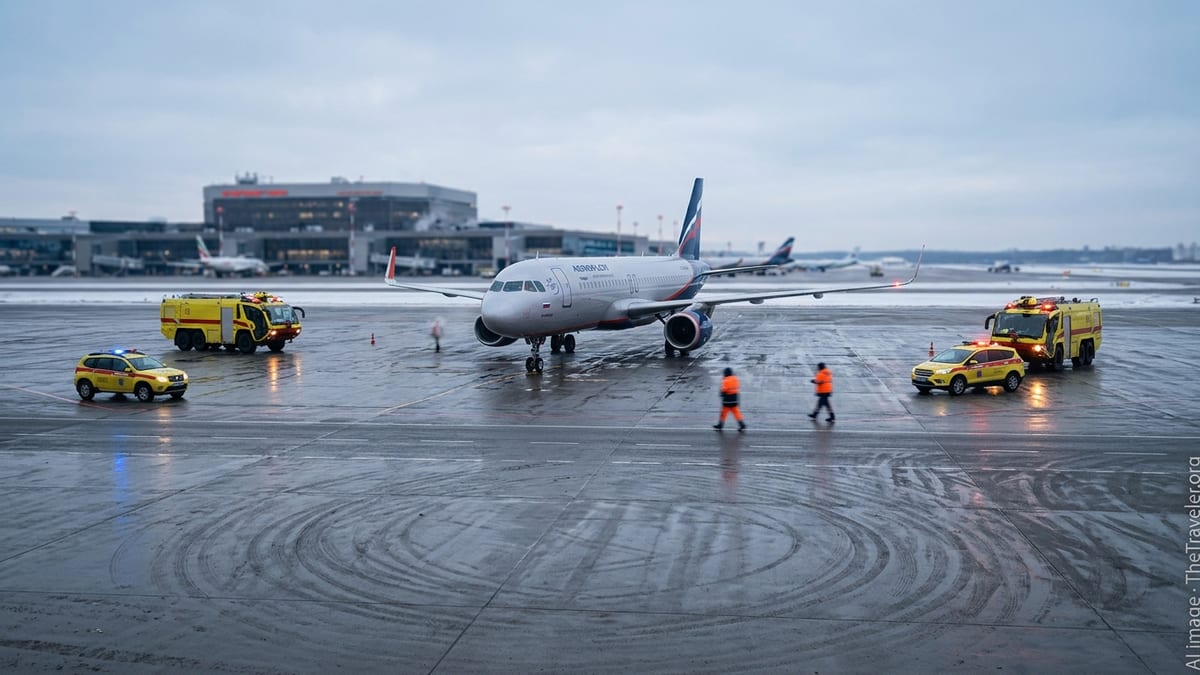
Latest Drone Alert Halts Operations at Vnukovo
According to published coverage from Russian and international outlets, Vnukovo suspended arrivals and departures during the night of October 15 to 16, 2026, as unmanned aerial vehicles were reported heading toward the Moscow region. Russia’s civil aviation regulator introduced temporary flight restrictions at all four of the capital’s main airports, but Vnukovo was among the first to stop accepting aircraft and one of the last to resume normal schedules.
Publicly available flight-board data compiled by regional media and aviation trackers indicates that Moscow’s Sheremetyevo, Domodedovo, Vnukovo and Zhukovsky airports faced several hours of shutdowns or severe restrictions, with some outlets citing more than 160 cancellations across the four airports during the overnight disruption. Earlier in the month, reports described Vnukovo remaining closed for more than eight hours during a separate alert, with passengers removed from aircraft while airspace restrictions remained in place.
Coverage from Ukrainian and Russian news agencies notes that the latest alert followed a broader wave of drone and balloon incursions toward Moscow in early and mid-October. In those earlier episodes, Vnukovo and the other airports implemented what Russian outlets call the Carpet plan, a standardized airspace safety procedure that halts takeoffs and landings while air defenses attempt to intercept suspected threats.
The renewed closure underscores how quickly operations at Vnukovo can shift from routine to restricted. Travelers arriving at the airport overnight reported via social media and aviation forums that information screens cycled from “on time” to “delayed” and then “canceled” in quick succession as the restrictions took effect, while aircraft already en route were re-routed to alternate airports.
Ripple Effects Across Moscow’s Four-Airport System
Because Vnukovo is integrated into a wider four-airport network serving the Moscow metropolitan area, a shutdown there rarely remains an isolated event. Reports from European aviation outlets and Russian business media indicate that flight restrictions extended to Sheremetyevo, Domodedovo and Zhukovsky within hours, creating bottlenecks across the entire system and complicating efforts to use other Moscow airports as fallback options.
Tracking data cited by specialist aviation publications shows that some flights originally bound for Vnukovo were diverted to cities such as St Petersburg, Mineralnye Vody, Ufa and Perm during previous drone-related closures in 2025 and 2026. More recent October 2026 disruptions again saw diversions and holding patterns as crews waited for permission to approach Moscow’s airspace or refueled at outlying airports.
Independent Russian coverage has also highlighted the uneven nature of the restrictions. In some recent incidents, airspace limits were initially introduced at Vnukovo, Domodedovo and Zhukovsky, while Sheremetyevo continued partial operations before later joining the shutdown. The staggered timing left passengers and airlines scrambling to reposition aircraft, cabin crews and connecting passengers between airports that, under normal conditions, function as a coordinated hub network for Russia’s domestic and international traffic.
For travelers, the effect is cumulative. Tour industry associations quoted in earlier incidents reported tens of thousands of passengers stranded across Russian airports during intense drone attack periods, with Vnukovo among the hardest hit because of its mix of domestic, charter and government-linked traffic. Each new alert adds to the backlog, tightening seat availability in the days that follow and complicating rebooking efforts for those who miss onward connections.
Inside the Passenger Experience When Vnukovo Shuts
Public accounts from past closures, as well as observations shared on flight-tracking forums, paint a picture of abrupt disruption for those caught in Vnukovo during a drone alert. Travelers have described situations in which boarding had already begun when departures were suddenly paused, followed by announcements that the airport was no longer accepting takeoffs or landings while airspace safety procedures were in force.
During the October 15 to 16 disruption, Russian media reported extended queues at check in and security as passengers waited for clarification on whether flights would operate at all. In previous large-scale shutdowns documented by Moscow-based outlets, some travelers remained airside overnight, relying on airport seating and limited food options as they waited for revised departure times that shifted repeatedly on terminal display boards.
Published reports also highlight communication challenges. Notices from Russia’s aviation authorities are generally issued in Russian and can be technical in nature, which can leave international travelers relying on airline apps, global flight-tracking platforms and foreign-language media to understand the scope of the disruption. Travel news coverage has noted that in several recent cases, third-party trackers and news outlets were the first to show that a drone threat had triggered a full closure at Vnukovo even before all airlines updated their customer alerts.
Compensation rules for disrupted flights depend on the carrier and jurisdiction involved. While Russian domestic regulations outline obligations for airlines in cases of delays and cancellations, publicly available guidance often classifies drone threats and related air defense measures as extraordinary circumstances. That categorization can limit eligibility for financial compensation, leaving many passengers dependent on voluntary rebooking policies and any travel insurance they may hold.
Guidance for Travelers Planning Routes Through Moscow
For travelers with upcoming itineraries through Moscow, the recent shutdown at Vnukovo serves as another reminder to build flexibility into routing. Travel advisories from foreign ministries and international airlines, issued throughout 2025 and 2026, have repeatedly pointed to the possibility of short-notice airspace restrictions around the Russian capital due to ongoing drone activity tied to the war in Ukraine.
Available booking data and airline notices suggest that same-day connections through Vnukovo and the other Moscow airports have become more vulnerable to disruption whenever tension along the front lines increases. Travelers who still choose to transit through Moscow are increasingly advised, by public guidance and travel-industry commentary, to allow longer layovers, keep essential items in carry-on luggage and ensure that airline and booking contact details are up to date so that rebooking offers are not missed.
Some carriers serving Russia have adjusted schedules and routings in response to the evolving security environment. International media reports have documented reductions or suspensions of certain European and Asian services into Moscow since the start of the conflict, which in turn reduces the number of alternative options available when a drone alert shuts a particular airport such as Vnukovo.
Travel insurance providers have also begun issuing more detailed wording around conflict-related disruptions. Policy summaries available online indicate that coverage for delays or missed connections caused by drone activity can vary significantly from one insurer to another, particularly where government advisories against travel are already in force. Passengers planning to route through Vnukovo or any of Moscow’s airports are encouraged by industry guidance to review the fine print carefully before departure.
Vnukovo’s Growing Vulnerability in a Shifting Airspace
The latest shutdown forms part of a pattern that has developed since 2022, in which Vnukovo and the wider Moscow airport system have faced intermittent closures linked to drone activity deep inside Russian territory. Media timelines of the conflict list repeated episodes where drones approaching the capital prompted precautionary suspensions at Vnukovo, sometimes alongside Domodedovo and Zhukovsky, even when no direct damage to airport infrastructure was reported.
Analysts quoted in prior coverage note that Vnukovo occupies a position that makes it especially sensitive to airspace restrictions. The airport handles a combination of scheduled passenger flights, charter operations and state-related traffic, including visits by foreign delegations and Russian government aircraft. This profile means that any suspected threat trajectory toward Moscow’s southwestern approaches tends to translate quickly into a halt in operations at Vnukovo while air defenses respond.
As drone technology continues to evolve, open-source assessments suggest that the geographic reach and frequency of long range attacks may continue to challenge airports well behind front lines. For Vnukovo, that has already translated into multiple closures in 2025 and 2026, each one stranding travelers and complicating network planning for airlines that still serve Moscow.
How often such disruptions will recur remains uncertain. What is clear from recent events is that Vnukovo’s operational reliability is now closely tied to a security environment that can change within minutes, leaving passengers and airlines to adapt quickly whenever the departure boards in Moscow again begin to reflect the latest drone threat rather than the printed timetable.