


More news on this day
A disabled United Airlines passenger says she was left alone and effectively locked on a jet bridge for around half an hour after landing in Vancouver, an incident that has intensified scrutiny of how major carriers handle assistance for travelers with disabilities.
Get the latest news straight to your inbox!
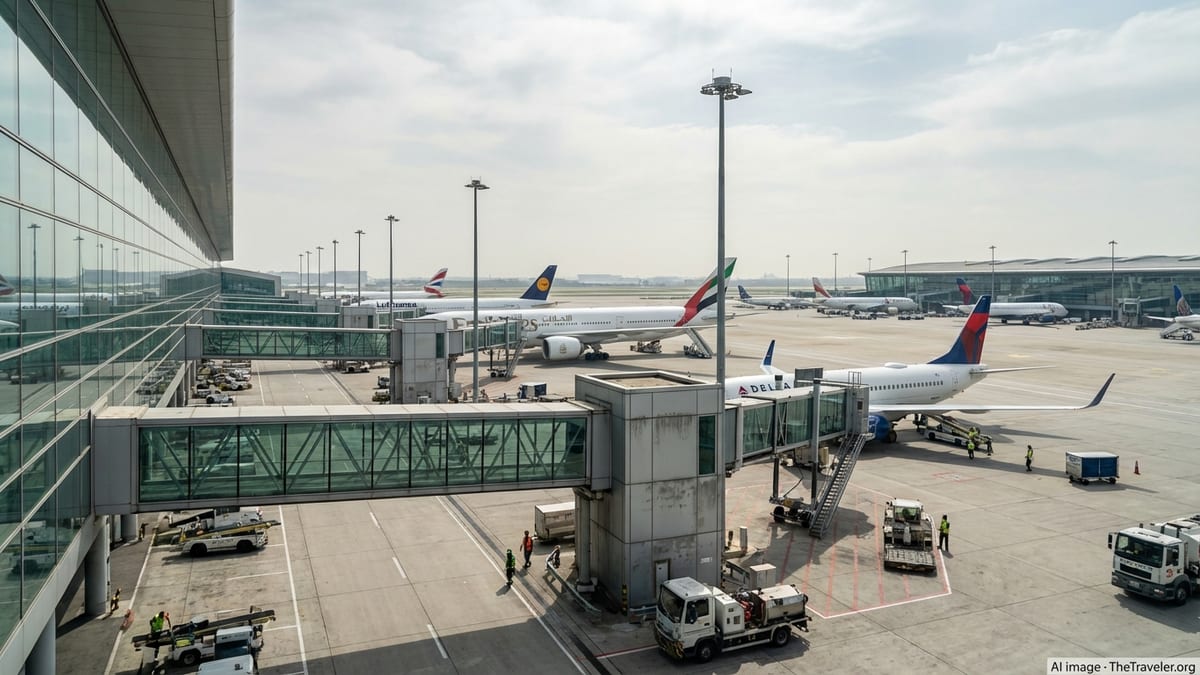
Incident After United Flight Into Vancouver
According to multiple news and travel reports, the incident occurred in early September 2026 after a late-night United Airlines flight from the United States arrived at Vancouver International Airport. The passenger, a Florida-based traveler who uses a wheelchair, had requested mobility assistance in advance and again at the departure gate.
Coverage in outlets including USA Today and several travel news sites indicates that once the aircraft reached the gate, other passengers deplaned and the traveler was asked to wait on the jet bridge for a wheelchair escort. The cabin door was then closed behind her, leaving her alone in the enclosed passage while staff attended to other duties.
The traveler later described on social media how she waited an estimated 20 to 30 minutes without a chair or a place to sit, filming part of the experience for a video that has since been widely shared. She said she could not safely walk long distances because of her disability and believed she could not return to the aircraft once the door was shut.
Publicly available reporting on the case states that a gate agent eventually returned accompanied by a staff member pushing a wheelchair, who then took her through the terminal and onward to border checks. By that time, the video of her wait on the jet bridge had started to circulate, drawing strong reactions from disability advocates and frequent flyers.
United’s Response and Questions Over Procedures
United has not publicly disputed that the passenger was left on the jet bridge but has presented a different account of how long she was unattended and how frequently staff checked on her. In statements cited by national travel coverage, the airline said its team in Vancouver responded as soon as it learned of the customer’s need for assistance and that an agent checked on her frequently while arrangements were made for a wheelchair escort.
Reports indicate that United characterized the situation as a breakdown in coordination involving contracted wheelchair services rather than a deliberate decision to abandon the traveler. The company also referenced internal training on passenger assistance, which typically covers how long customers with disabilities should be kept waiting in confined areas such as jet bridges and how to escalate when third-party support is delayed.
The differing accounts have focused attention on what actually happens between the moment a disabled traveler leaves the aircraft and the time they receive hands-on assistance. Advocates say that even if a gate agent remains nearby, leaving a passenger with limited mobility standing or unsupported on a sloping metal bridge for an extended period can pose safety and dignity concerns.
Travel industry reporting notes that United and other major U.S. airlines rely heavily on airport contractors to provide wheelchair pushers and escorts, especially at international destinations. When staffing or communication problems arise, those gaps can leave passengers in limbo in liminal spaces such as jet bridges, where there may be no seating and emergency exits are not always obvious to travelers.
Wider Pattern of Complaints From Disabled Travelers
The Vancouver episode comes amid a broader wave of public complaints from travelers with disabilities about airline assistance. Consumer coverage across North America over recent years has documented incidents where passengers were left on aircraft for long periods waiting for wheelchairs, or stranded on jet bridges and at gates when requested support failed to appear.
In another widely reported case earlier this year, a disabled passenger using a different carrier described being left on the floor of a jet bridge after her wheelchair did not arrive, highlighting similar vulnerabilities at a major European hub. Disability rights groups argue that such stories, although not universal, reveal a structural problem with how air travel systems are designed for passengers who cannot easily walk on their own.
Social media has amplified these experiences, allowing travelers to post real-time videos from aircraft cabins and jet bridges. Posts tagged with airline names and disability-related hashtags often gain rapid traction, placing pressure on carriers to review local procedures and, in some cases, offer compensation or policy clarifications.
Analysts following the sector note that while airlines have invested heavily in premium passenger experiences and onboard technology, improvements to on-the-ground accessibility, such as reliable wheelchair transfers and trained assistance staff, have lagged in some markets. The Vancouver jet bridge incident is being cited as a high-profile example of that gap.
Rules Governing Assistance for Disabled Air Travelers
For flights operated by United and other U.S. carriers, disability assistance is governed by the Air Carrier Access Act, a federal law that prohibits discrimination on the basis of disability in air travel. Under regulations enforced by the U.S. Department of Transportation, airlines are required to provide prompt boarding and deplaning assistance, including wheelchairs and escorts, when requested in advance or at the airport.
Publicly available DOT guidance states that these obligations apply to U.S. airlines on both domestic and international routes, even when flights operate to or from foreign airports such as Vancouver. That means a wheelchair-user deplaning abroad should receive timely help comparable to what is expected at an airport in the United States.
Regulatory documents and passenger rights materials also stress that carriers must coordinate effectively with contractors and airport authorities to avoid leaving disabled travelers unattended in potentially unsafe locations like aircraft aisles, stairways, or jet bridges. Enforcement orders in past cases have cited failures in these handoffs as violations when passengers were left waiting for long periods or forced to crawl or drag themselves to reach assistance.
However, neither DOT records nor public reporting to date indicate that regulators have opened a specific enforcement action tied to the Vancouver incident. Any formal review, if pursued, would likely examine communication between United staff, wheelchair providers at the airport, and the timing of the assistance ultimately provided to the passenger.
Growing Pressure for Change in Airport Accessibility
Disability advocates say the Vancouver case underscores the need for more robust safeguards so that no traveler is left alone on a jet bridge or in other transitional spaces between aircraft and terminal. Proposals discussed in policy forums include strict maximum wait times for wheelchair assistance, clearer escalation paths when contractors are short staffed, and better physical infrastructure, such as seating in or near jet bridges.
Some passenger groups are also urging airlines to give customers more precise information about how mobility assistance is arranged at specific airports. That could include telling travelers whether services are handled directly by the carrier or by a third-party provider, and what steps to take if no attendant is present when the aircraft door opens.
Industry observers note that carriers face rising expectations as more people with disabilities choose to fly and as aging populations increase demand for assistance. High-visibility incidents, such as the disabled United passenger who says she was locked alone on a Vancouver jet bridge, are likely to intensify calls for carriers and regulators to treat accessibility gaps with the same urgency as other operational disruptions.
For now, advocates advise disabled travelers to reconfirm assistance requests before both departure and arrival, document any problems in writing, and file complaints with both the airline and transportation authorities if they believe their rights were not respected. While those steps cannot prevent every breakdown on the ground, they play a role in building the public record that is driving renewed debate over accessibility in global air travel.