


Arriving in Cannes for the first time, many visitors expect a city that wakes up only in May, when the red carpet is rolled out and the world’s media descend for the Festival de Cannes. Yet the deeper you go into its streets, cinemas and neighborhoods, the more you realize that film here is not a seasonal spectacle but a year round culture. Discovering Cannes Cinéma and the network that has grown around it is often the moment when Cannes starts to feel like a real film city rather than just a glamorous backdrop.
Get the latest updates straight to your inbox!
Cannes Cinéma: The Year Round Beating Heart of Film
Cannes Cinéma is the cultural organization that quietly stitches cinema into daily life across the city. Its mission is simple but ambitious: to develop the cinematic experience throughout Cannes all year, for residents, students and visitors alike. Instead of focusing only on premieres and headlines, Cannes Cinéma works in partnership with local venues to program retrospectives, rare screenings and themed events that you would normally expect in major capital cities, not a small Riviera resort.
For a traveler, this has very practical implications. Visit Cannes in November and you might find a week dedicated to Italian neorealism at Les Arcades, with post screening discussions in French and English. A March visit could coincide with a small festival of unreleased African cinema, held in collaboration with Studio 13 in La Bocca. Tickets for these events are often priced modestly compared with festival time, and you buy them like a local at the box office instead of battling accreditation systems. The atmosphere inside is relaxed and conversational, full of regulars who know their cinema and welcome newcomers.
Cannes Cinéma also acts as a connector between the famous festival and the people who actually live here. On ordinary weekdays, you can find school groups being shepherded into matinee screenings, senior associations gathering for classic French comedies, and young filmmakers attending workshops in side rooms of the Olympia cinema. This constant background activity is what makes Cannes feel like a functioning film town, not a movie themed theme park.
If you time your visit around one of their smaller events, you can experience something uniquely Cannes. Imagine ducking into a screening room on a rainy winter afternoon to watch a restored 35 mm print introduced by a critic who has been attending Cannes since the 1970s, then stepping out afterward for an espresso across from the station while regular commuter trains rattle past. The glamour is still there in the distance, but it is grounded in ordinary routines.
Cineum Cannes: A Multiplex That Doubles as a Film Laboratory
Nothing captures the city’s long term investment in cinema quite like the Cineum Cannes multiplex, opened in the La Bocca district as part of the wider “Cannes on Air” creative campus. Designed by architect Rudy Ricciotti, the building itself is worth the tram or bus ride west from the center. Its sculpted concrete volumes look almost like stacked film reels, a deliberate counterpoint to the Belle Époque hotels lining La Croisette.
With 12 screens and around 2,400 seats, Cineum is not just another commercial mall cinema. It was conceived as one of the most technologically advanced venues in Europe, with 100 percent laser projection and full immersive sound in every auditorium. One of the largest halls features a screen over 20 meters wide, and the complex includes premium IMAX and ScreenX formats that wrap the image around the walls. For a visiting movie lover, catching a mainstream release here in the original version with subtitles can be an experience that rivals festival premieres, without the dress code or the queueing.
Beyond the projection booths, Cineum folds experimentation into its layout. The ground floor includes a substantial exhibition space for visual arts tied to cinema, from light installations by the NONOTAK duo to behind the scenes photo shows. On the first floor, a dedicated virtual reality area hosts demonstrations and pop up events that mirror the immersive competition that the Festival de Cannes has added in recent editions. Higher up, a 200 square meter lounge bar designed by Arik Levy functions as an informal networking hub for students from the neighboring Georges Méliès university campus.
From a traveler’s perspective, Cineum is where the festival’s grand talk about “the future of cinema” becomes tangible. You might find yourself visiting on a weekday afternoon, paying a standard ticket price to watch a Hollywood release in Dolby Cinema conditions that many capital city venues still do not offer, then wandering through a free exhibition on sound design afterward. The building is large enough that you can spend several hours here, treating it as both a cinema and a cultural center, before heading back along the coast to the old port for dinner.
Walking a City Painted in Film
Long before you walk into a cinema, Cannes tells its film story on the walls. One of the easiest ways to feel the city’s connection to the seventh art is to follow the trail of giant murals scattered across different neighborhoods. These painted walls depict everyone from Marilyn Monroe and Charlie Chaplin to French icons like Gérard Philipe, as well as scenes referencing films that have left their mark on the Festival de Cannes.
These murals are not confined to tourist zones. Some appear on the sides of municipal buildings, some on quiet apartment blocks in La Bocca or around the train station. As you wander, you may spot a towering image of a Clint Eastwood western as you emerge from a supermarket, or stumble upon a Jacques Demy themed wall while cutting across a residential square. It is this casual, unforced presence of cinema in everyday routes that shifts Cannes from a postcard city into a lived in film landscape.
For visitors, turning mural hunting into a self guided walk is an ideal way to get a sense of the geography beyond La Croisette. You can start near the Palais des Festivals, where one of the most photographed walls pays tribute to the festival’s red carpet. From there, head uphill into Le Suquet, the old quarter, and watch as the imagery evolves from international stars to more intimate scenes. Along the way you pass bakeries, schools and small cafes where regulars argue about football and politics under the gaze of screen legends.
The city’s tourism office sometimes publishes updated maps of these painted walls, but you do not need one to appreciate the effect. Simply looking up as you walk between the port, the station and La Bocca will reveal how Cannes has chosen to embed its cinematic identity right into its built fabric, far from the controlled frame of television cameras in May.
From the Palais to the Beach: How Screenings Spill Into Everyday Life
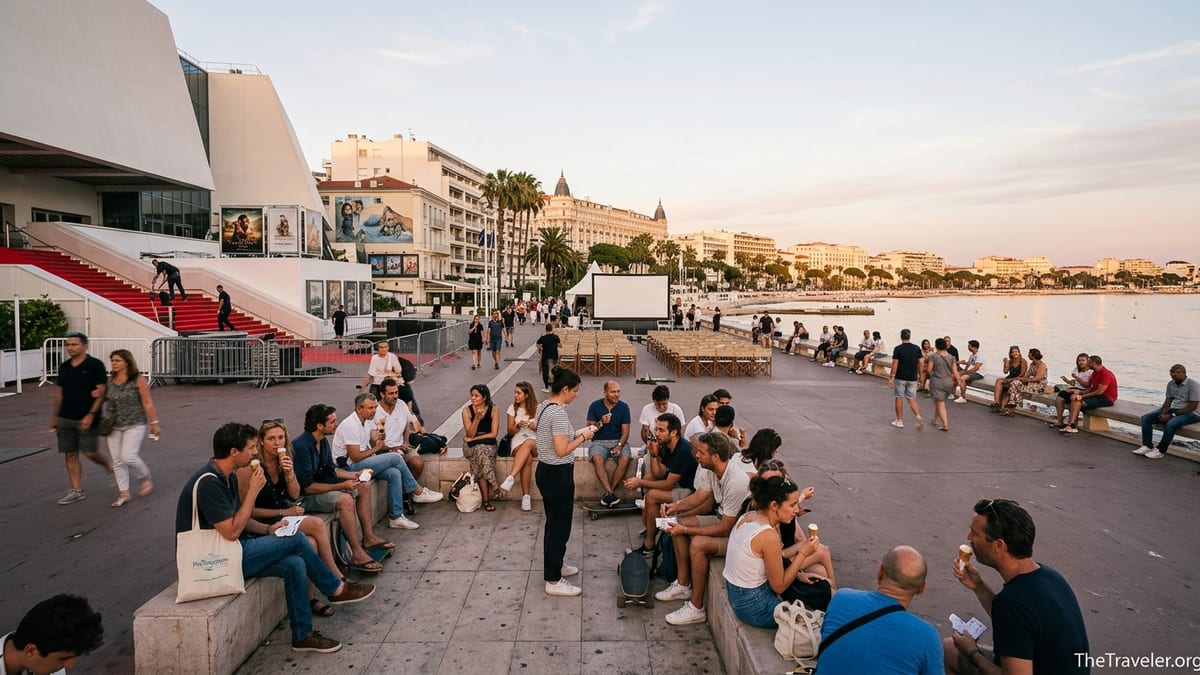
Ask most people about film in Cannes and they will picture spotlights on the steps of the Palais des Festivals. Yet outside the festival fortnight, many of the city’s most memorable screenings take place in much humbler settings. In summer, Cannes organizes open air screenings across several neighborhoods, from squares in La Bocca to the sandy stretch of Plage Macé near La Croisette. These events are often free and programmed with mainstream titles and family favorites, projected against inflatable or temporary screens as the sun disappears behind the Esterel hills.
For a traveler, stumbling upon one of these evenings can be a highlight of a July or August stay. You might arrive at the beach planning only a sunset swim and find technicians busy erecting a screen while children stake out positions on the sand with towels. By the time the film starts around 9:30 pm, the audience is a mix of locals with picnic baskets, seasonal workers on a night off and visitors still in swimwear, all watching under the same sky where festival spotlights blaze in May.
During the rest of the year, smaller cinemas in the center keep the international spirit alive without the red carpet. Les Arcades and Olympia, both within walking distance of the station, show a mix of French releases and original version international films. On quiet midweek nights in shoulder season, you can buy a ticket almost at showtime, sit among a handful of regulars and feel as close to everyday Cannes life as you are likely to get. Once the credits roll, the step back onto Rue d’Antibes or Rue Félix Faure feels seamless.
These experiences contrast sharply with the tightly scheduled, invitation only atmosphere of the Festival de Cannes itself. They are looser around the edges, less polished, but arguably closer to what it means for a city to live with cinema as part of its cultural routine. For visitors who may never have access to festival badges, they provide an accessible way to participate in the same cinematic ecosystem.
Creative Campuses and Underwater Museums: A Broader Film Ecosystem
The Cannes on Air initiative, which includes Cineum and the nearby Georges Méliès campus, makes clear that the city is thinking beyond exhibition. The cluster brings together university programs in audiovisual studies, incubators for start ups in digital content and office space for production companies. Walking around the Bastide Rouge area on a weekday, you might pass students carrying camera equipment between classes or see casting notices in the windows of small offices.
This production side matters for travelers because it subtly shapes the atmosphere of Cannes outside high season. Cafes around the campus fill with students discussing editing software and festival deadlines. Equipment rental vans appear on side streets as small shoots take place, whether for commercials, music videos or short films hoping one day to premiere across town at the Palais. The city is not just hosting cinema but increasingly manufacturing it.
Cannes has also extended its cultural identity in more surprising ways, such as the underwater ecomuseum installed off the island of Sainte Marguerite. Here, six monumental sculptures rest on the seabed a few meters below the surface, designed to slowly become artificial reefs. Their theme refers to the Man in the Iron Mask, a story that has been adapted for cinema several times and that is closely associated with the island’s former prison. Snorkeling out to see these faces emerge from the green blue water adds a mythic, almost cinematic layer to a simple swim.
Between creative campuses on shore and artistic interventions under the sea, Cannes is deliberately weaving references to storytelling and image making into its wider environment. For a visitor, this means that even excursions that seem unrelated to film, like a boat trip to the Lérins Islands or a walk through university districts, can carry unexpected echoes of the city’s cinematic identity.
Experiencing the Festival Without a Badge
Even if you visit during the Festival de Cannes, discovering Cannes Cinéma’s broader ecosystem changes how you experience those famous two weeks. Much of the media coverage focuses on the official selection and the Marche du Film industry market. Yet ordinary travelers who happen to be in town can still access parts of the festival’s programming and the city’s parallel events.
One of the most accessible entry points is Cinéma de la Plage, the open air screening series on the beach that runs most festival nights. These screenings, often free and open to the public, showcase restored classics, cult titles and sometimes premieres accompanied by cast appearances. If you are staying in a simple rental apartment or a mid range hotel back in La Bocca, you can walk down in the evening, queue with locals and festival workers, and watch a film under the stars a short distance from the Palais.
At the same time, off festival venues such as Cineum and the city center cinemas continue their own programming, sometimes hosting parallel events linked to the festival’s immersive competition or student film initiatives. It is not unusual during festival days to see a poster at Cineum advertising a virtual reality installation tied to the Marché du Film, accessible to the general public for the price of a timed ticket. For travelers, this mix of exclusive glamour and open access experimentation is part of what makes Cannes intriguing.
Understanding these alternative gateways prevents disappointment if you assume that the festival is only about red carpet invitations. With some planning, you can structure a May visit around public screenings, side events and city organized exhibitions that contextualize the festival’s history. You might spend a morning at a temporary exhibition about a director in a municipal gallery, an afternoon on the Suquet hill tracing older film locations, and the evening on the sand watching a remastered classic screened in partnership with Cannes Cinéma.
The Takeaway
Discovering Cannes Cinéma and the network of venues and initiatives it supports is often the turning point for travelers who want Cannes to be more than a backdrop for celebrity photos. It reveals a city that has invested heavily in making cinema an everyday experience, from high tech screens at Cineum to modest projector rigs on neighborhood beaches. Instead of a single annual spike of glamour, you find a steady rhythm of screenings, exhibitions and educational programs that carry on quietly once the world’s cameras leave.
This shift in perspective also changes how you move through Cannes. You begin to notice painted walls behind bus stops, flyer covered noticeboards outside small cinemas, and students huddled over laptops in coastal cafes editing short films. A rainy shoulder season afternoon can become an opportunity to duck into a repertory screening with a handful of locals, while a hot August night might end with an unexpected open air film in a public square.
For film lovers, this makes Cannes a rewarding destination in months when hotel rates are lower and streets are calmer. For travelers only mildly interested in cinema, it still offers a richer sense of place, one where local identity is built as much from classroom projects and neighborhood screenings as from red carpets. The city’s relationship with film is no longer just a spectacle to watch, but a culture you can briefly inhabit.
FAQ
Q1. Is Cannes worth visiting outside the Cannes Film Festival period?
Cannes is very much worth visiting outside the festival. Hotels are more affordable, the beaches and old town are less crowded, and the city still offers regular film screenings, exhibitions and cultural events organized by Cannes Cinéma and local venues.
Q2. Can I experience cinema in Cannes without a festival badge?
Yes. You can see films at Cineum, Les Arcades or Olympia, attend open air summer screenings on the beach, and often visit exhibitions or special programs related to cinema that are open to the general public, even during festival time.
Q3. What is special about the Cineum Cannes multiplex for visitors?
Cineum combines cutting edge projection and sound with art installations, a virtual reality space and a lounge bar. For visitors, it offers the chance to see mainstream and art house films in some of the best technical conditions in Europe at standard cinema prices.
Q4. Where can I find the famous film murals in Cannes?
The large cinema themed murals are scattered across the city, including near the Palais des Festivals, the train station area, La Bocca and residential streets leading up to Le Suquet. Simply walking between these districts and looking up will reveal many of them.
Q5. Are there English language film screenings available?
Yes, many cinemas in Cannes regularly show films in their original versions with French subtitles, especially major international releases. Look for the notation “VO” on listings to find English language showings.
Q6. How can I join an outdoor screening in summer?
During July and August, the city typically publishes a program of free open air screenings in different neighborhoods and on certain beaches. You simply arrive early with a towel or folding chair, as seating is usually first come, first served.
Q7. Is it easy to reach Cineum Cannes from the city center?
Cineum is located in the La Bocca district, west of central Cannes. You can reach it in around 15 to 20 minutes by local bus or car, and there is on site parking and bicycle facilities once you arrive.
Q8. Does Cannes offer cinema related activities for children and families?
Yes. Family friendly screenings, dubbed films, animation festivals and school oriented programs run throughout the year. In summer, outdoor screenings often include popular family titles, and some exhibitions are designed with younger visitors in mind.
Q9. Can I combine a beach holiday with film experiences in Cannes?
Absolutely. You can spend the day on public or private beaches and then head to an evening screening at Cineum or in a city center cinema, or join an open air projection on the sand. The distances are short, so it is easy to mix both.
Q10. Do I need to speak French to enjoy cinema culture in Cannes?
While some discussions and introductions are in French, you can enjoy most screenings and many exhibitions without fluency. Original version films with subtitles are common, and staff at major venues are used to welcoming international visitors.