


For most travelers, Cannes means one thing: the red carpet unfurled in May, flashbulbs along the Croisette and the glamour of the Festival de Cannes. Yet behind that brief burst of global attention is a city that lives and breathes cinema all year. At the heart of that everyday film culture sits Cannes Cinéma, a local association that manages municipal cinemas, runs festivals and brings film education into classrooms. Understanding Cannes Cinéma is the key to understanding why Cannes is not just a festival destination, but a true city of cinema.
Get the latest updates straight to your inbox!
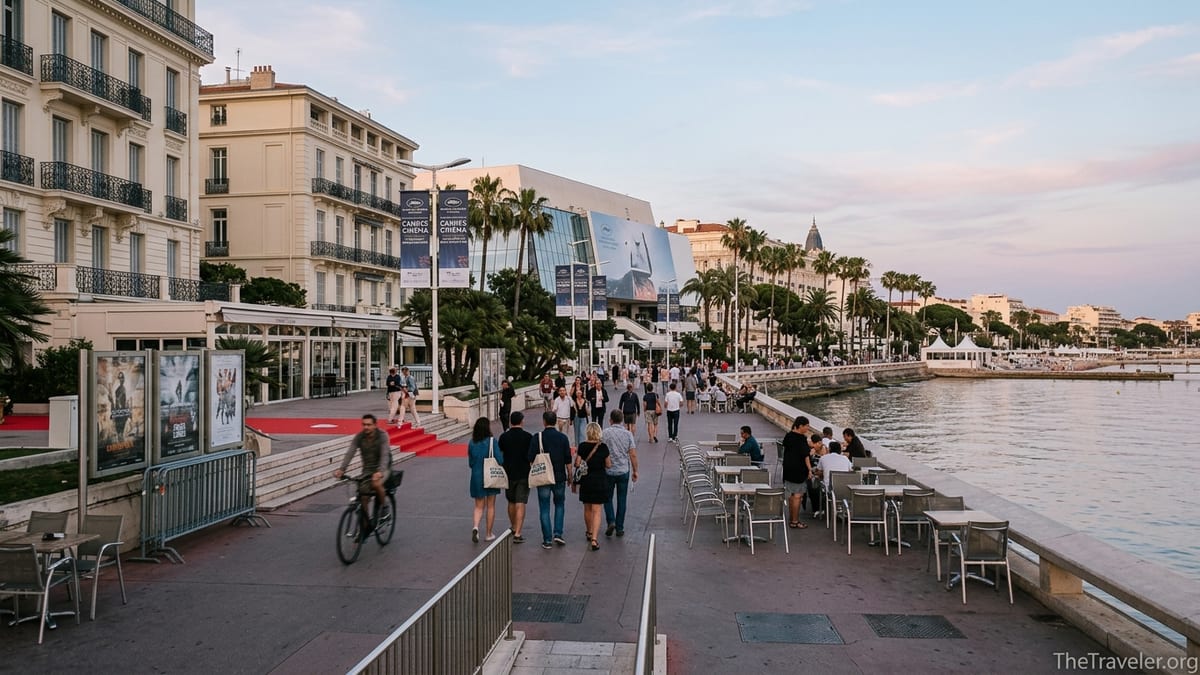
From Festival Backdrop to City of Film
When the international film festival was officially born in Cannes in 1939, it instantly changed the destiny of this small Mediterranean resort. Over time the Festival de Cannes, held each May, became one of the world’s most influential cultural events, drawing stars, producers and journalists from around the globe. The town’s identity shifted from seaside escape to global film capital, and with that came a responsibility: to turn a two week festival into a year round film culture that residents and visitors could actually experience.
Today Cannes is recognized by UNESCO as a Creative City of Film, a title that reflects more than just the famous fortnight on the Croisette. The city supports artist residencies, hosts the Marché du Film for industry professionals and invests in film friendly infrastructure, from screening rooms in the Palais des Festivals to neighborhood cinemas scattered across town. For a traveler, this means that outside festival dates you still find film exhibitions, retrospectives and special screenings that make cinema feel woven into daily life rather than an occasional spectacle.
Within this ecosystem, Cannes Cinéma plays a connecting role. While the Festival de Cannes concentrates global attention on premieres and awards, Cannes Cinéma focuses on the quieter work of programming, education and access. It operates municipal venues, collaborates with schools and often acts as an intermediary between the official festival, independent side sections and local audiences. In practical terms, if you are in Cannes in January or October rather than May, it is probably a Cannes Cinéma event that will get you into a cinema seat.
The Birth and Mission of Cannes Cinéma
Cannes Cinéma emerged in the late twentieth century as the city sought to structure its growing film activity. Official documents describe it as an association that has been active for more than forty five years, with a clear mandate: develop cinema and audiovisual culture in Cannes and its wider region, both through programming and through education. It is approved by the French National Centre for Cinema and Moving Images as an operator of municipal cinemas, which gives it a formal place in the national film landscape.
The association’s mission revolves around a few core ideas. First, film should be accessible. That means operating neighborhood cinemas rather than concentrating everything in the festival palace. Second, film culture is not just about new releases. Cannes Cinéma screens heritage titles, organizes retrospectives and invites filmmakers to speak, so residents can discover classic Italian or Japanese films on the big screen, not just on streaming platforms. Third, image education matters. By working with schools, teachers and young audiences, the association treats cinema as a language to be learned rather than a product to be consumed.
In 2017 Cannes Cinéma moved its offices into the Pôle Culturel Municipal Cannes République, a municipal cultural complex that also houses other arts groups. For visitors this might appear as just another civic building near Avenue de Vallauris, but it underlines how embedded the association is in the city’s public cultural policy. Rather than being just a fan club for the festival, Cannes Cinéma operates like a small local film institute, shaping what people watch and how they talk about cinema across the entire year.
Managing the City’s Municipal Cinemas
One of Cannes Cinéma’s most visible roles is operating three municipal cinemas on behalf of the city: Alexandre III, Miramar and La Licorne. Each site has its own character and is tucked into a different part of Cannes, which can be useful for travelers staying outside the central Croisette area. The city’s official film overview notes that these three municipal venues, managed by Cannes Cinéma, complement two private cinemas and a larger multiplex, giving Cannes an unusually dense network of screens for its size.
Alexandre III, in the eastern part of town near the border with Golfe Juan, often hosts festival spin off screenings and cinephile programs. During the Cannes Film Festival, travelers with cinephile accreditation may find themselves queuing outside Alexandre III for morning screenings of competition titles or Un Certain Regard films with French subtitles. Outside May, it becomes a neighborhood cinema where you might see a French art house release for a price similar to other provincial French cities, often around 8 to 10 euros for a full price evening ticket, with reductions for students and seniors.
Miramar, located close to the Croisette, is frequently used for special events, previews and partnerships with side bar festivals. If you visit in autumn, you may encounter an Italian film week or a cycle devoted to contemporary European cinema organized under the Cannes Cinéma banner. La Licorne, in the La Bocca district to the west, gives residents and curious visitors another option away from the festival center. During the May festival, screenings there count among those accessible to cinephile badge holders, which is one reason seasoned festival goers recommend learning the bus routes between the Croisette and La Bocca.
For travelers, these municipal cinemas offer an approachable gateway into Cannes film life. Instead of trying to navigate invitation only red carpet screenings, you can simply check local listings or posters outside the venues and drop in for an evening show. Programming often blends recent French releases, international art house titles and occasional classic screenings, so even a short stay in Cannes can include a genuinely local cinema experience.
Festivals, Events and a Year Round Calendar
Cannes Cinéma’s calendar reveals how busy the city’s film life remains once the festival is over. Municipal information highlights recurring events such as “Trois jours avec…” in September, “En avant les premières” in October, the Festival du cinéma italien de Cannes in January, the family oriented “P’tits Cannes à you” in autumn and summer programs like “Ciné quartier” and the “Musée éphémère du cinéma.” Each of these has its own atmosphere and is open not only to residents but also to travelers who happen to be in town at the right moment.
“Trois jours avec…” typically takes the form of a three day focus on a filmmaker, actor or national cinema, with screenings, discussions and sometimes masterclasses. For example, a recent edition might dedicate a long weekend to a contemporary French director, showing early short films in the afternoon and a recent feature in the evening, followed by a Q&A. Travelers who enjoy deeper dives into a filmmaker’s work can purchase single tickets for individual sessions rather than full passes, making participation easy even during a brief visit.
The Italian film festival in January brings a slate of new Italian features and occasionally restored classics to Cannes screens, often subtitled in French. Imagine spending a winter evening at Miramar watching a recent Italian drama, then stepping out for a late pasta dinner at one of the nearby restaurants that stay open out of season. For families, “P’tits Cannes à you” offers children’s screenings during school holidays, sometimes accompanied by workshops where kids can try basic animation or sound effects. These details matter for travelers with children, who may be looking for rainy day activities outside peak beach season.
In summer, “Ciné quartier” takes films out of traditional venues and into open air screenings in different neighborhoods. Visitors staying in residential parts of Cannes sometimes stumble across a projection being set up in a local square, with folding chairs, a portable screen and families arriving with picnic blankets. It is a striking contrast to the black tie premieres in May, yet it is part of the same city wide commitment to cinema. Short term visitors can simply follow posters around town or ask at the tourist office to find out which quarter is hosting the next screening.
Education, Young Audiences and Image Literacy
Beyond screenings, Cannes Cinéma is heavily involved in education. As part of the network of regional education to image centers in France, it collaborates with schools, colleges and higher education institutes to introduce students to film language and history. Municipal resource guides for the 2024 to 2025 academic year list workshops, school screenings at the Palais des Festivals and masterclasses during events like the Rencontres Cinématographiques de Cannes, illustrating how systematically cinema is integrated into local curricula.
For a visitor this might seem distant, yet it shapes the atmosphere in Cannes cinemas. School groups frequently attend morning screenings of heritage films or documentaries, accompanied by educators who discuss themes and filmmaking techniques. On a weekday visit to La Licorne outside tourist season, you might share the lobby with teenagers who have just watched a classic French film on 35mm, debating characters and camera angles. This familiarity with cinema as an art form distinguishes Cannes from many resort towns where entertainment is limited to beachfront bars and souvenir shops.
The emphasis on image literacy also extends to young children and out of school groups. Workshops can involve storyboarding short scenes, experimenting with stop motion animation or comparing how the same story is told in different visual styles. Such activities respond to a broader concern in France about how young people consume digital images, aiming to give them tools to interpret advertising, social media clips and news videos. Cannes Cinéma’s role is to coordinate local versions of these national initiatives, ensuring that the city’s film identity is not limited to glamour but includes critical thinking.
Travelers interested in educational aspects of film sometimes time their visits to coincide with the Rencontres Cinématographiques de Cannes, a week during which screenings, lectures and professional training sessions bring together teachers, students and cinephiles. While some sessions are closed, others are open to the general public at modest ticket prices. Sitting in a municipal cinema during such an event offers a revealing glimpse of how deeply cinema penetrates local civic life.
Connecting Locals, Cinephiles and the Cannes Festival
Each May, when the Festival de Cannes takes over the Croisette, Cannes Cinéma’s municipal cinemas become an essential bridge between the official selection and wider audiences. The festival’s cinephile accreditations, including the popular “Three Days in Cannes” program, grant holders access to screenings not only in the Palais des Festivals but also in theaters like La Licorne and Alexandre III. Seasoned festival visitors often recommend focusing on these municipal venues, where queues can be more manageable and the atmosphere slightly more relaxed than on the main red carpet.
For example, a cinephile accreditation holder might spend a morning in La Bocca at La Licorne watching a competition film with French subtitles, then head back towards the center for an afternoon screening at Studio 13 or Les Arcades, which are private cinemas. The official schedule often reruns major titles at these partner venues a day or two after their gala premieres, making it possible for young audiences, students and travelers without industry connections to see high profile films. Cannes Cinéma coordinates some of this local network, ensuring that municipal spaces serve festival audiences as well as residents.
Outside of May, collaborations continue with side sections such as the Quinzaine des Cinéastes or ACID, which sometimes extend their programs in Cannes through special screenings or educational initiatives. You might come across a post festival encore showing at a municipal cinema, allowing you to catch a Directors’ Fortnight title months after the red carpet buzz has died down. In this way Cannes Cinéma keeps the festival’s artistic discoveries circulating among the local community instead of disappearing into the international festival circuit.
For travelers who arrive in Cannes hoping to feel some of the festival’s energy without actually attending the May event, municipal cinemas and Cannes Cinéma programming provide a realistic path. A carefully chosen screening, perhaps of a recent festival discovery introduced by a local critic or teacher, can convey more of the city’s true film culture than a walk past the empty Palais in high summer.
Cineum Cannes and the Modern Multiplex Experience
While Cannes Cinéma focuses on municipal venues, it operates within a broader local exhibition landscape that includes private cinemas and the modern Cineum multiplex. Opened in recent years on the western side of the city, Cineum Cannes is an architecturally striking 12 screen complex that hosts mainstream releases, IMAX presentations and numerous festival related events throughout the year. During certain festivals, entire lineups, including animation showcases like Animazur or national genre events, take place within its spacious auditoriums and foyer.
For travelers, Cineum offers a contrasting experience to the more intimate municipal cinemas. Seating is plush, screens are large and projection is optimized for spectacle films. Ticket prices are comparable to other French multiplexes, with standard adult evening tickets typically in the 11 to 14 euro range, along with discounted rates for students, children and seniors. Online booking is widely used, but during festivals you may see long queues of badge holders forming in the lobby as they wait for genre premieres or special screenings linked to the Marché du Film.
Although Cineum is not run by Cannes Cinéma, the two are part of the same ecosystem. During the Festival de Cannes and other events, shuttles and bus routes link the Croisette, the Palais and the Cineum area, and some cinephile accreditations explicitly include access to screenings hosted there. On a practical level, a visitor might spend the afternoon in a small municipal cinema watching a restored classic programmed by Cannes Cinéma, then take an evening bus to Cineum for an IMAX screening of a major international release. The coexistence of these two models of cinema exhibition, art house municipal screens and a state of the art multiplex, illustrates how broadly the city embraces film.
It is also common for regional festivals and educational programs, in which Cannes Cinéma is a partner, to use Cineum as a venue for school screenings or special sessions. A midwinter animation workshop, for instance, might pair a morning hands on activity led by educators with an afternoon family screening in one of Cineum’s mid sized theaters. Travelers who check listings carefully can sometimes book seats for these public portions of educational events, which offer a particularly local cross section of Cannes residents of all ages.
The Takeaway
Seen from afar, Cannes can appear to be a city that wakes up for two weeks of festival glamour and then returns to being just another Mediterranean resort. A closer look reveals something quite different. Through Cannes Cinéma and its network of municipal cinemas, neighborhood screenings, educational programs and partnerships with larger institutions, cinema is present in Cannes throughout the year and across the city’s social fabric.
For travelers, this means that a visit to Cannes can include much more than a stroll past the Palais des Festivals or a photo on the famous steps. Whether you attend a January screening at the Italian film festival in Miramar, bring children to a “P’tits Cannes à you” workshop at La Licorne or spend a summer evening at an open air “Ciné quartier” projection, you are participating in the same film culture that makes Cannes a UNESCO Creative City of Film. Cineum’s modern multiplex experience adds another layer, while the Festival de Cannes ties everything together each May.
If you are planning a trip, it is worth checking local cinema programs alongside hotel rates and beach weather. A single well chosen screening can open a window onto how Cannes sees itself, not just as a backdrop for celebrities but as a community that has built an entire civic life around moving images. Cannes Cinéma, often working quietly behind the scenes, is one of the main reasons that film in Cannes feels less like a seasonal attraction and more like a shared language spoken year round.
FAQ
Q1. What exactly is Cannes Cinéma?
Cannes Cinéma is a local cultural association that manages several municipal cinemas in Cannes, programs festivals and events, and coordinates film education and image literacy projects throughout the year.
Q2. Which cinemas in Cannes are run by Cannes Cinéma?
The association operates three municipal venues on behalf of the city: the Alexandre III cinema in the east of town, the Miramar cinema near the Croisette and La Licorne in the La Bocca district.
Q3. Can tourists attend Cannes Cinéma events, or are they mainly for locals?
Most Cannes Cinéma events are open to the general public, including visitors. Travelers can buy individual tickets for screenings and often join festivals, retrospectives or open air “Ciné quartier” evenings without any special accreditation.
Q4. How is Cannes Cinéma connected to the Cannes Film Festival in May?
During the Festival de Cannes, municipal cinemas managed by Cannes Cinéma often host screenings for cinephile badges and programs like “Three Days in Cannes,” providing additional venues beyond the Palais des Festivals for official and side section films.
Q5. Are screenings at Cannes Cinéma venues expensive?
Ticket prices are generally in line with other French cities. Full price evening tickets usually cost under 10 euros at municipal cinemas, with reduced rates for students, young people and seniors, making them an affordable option for most travelers.
Q6. Does Cannes Cinéma offer activities for children and families?
Yes, Cannes Cinéma organizes family friendly programs such as “P’tits Cannes à you,” children’s screenings during school holidays, and workshops where kids can discover animation, sound effects and basic film techniques.
Q7. Is it possible to see festival style films outside May thanks to Cannes Cinéma?
Often yes. Through events like the Rencontres Cinématographiques de Cannes and partnerships with side sections, Cannes Cinéma helps bring festival discoveries, classics and auteur films back to local screens throughout the year.
Q8. How can I find out what Cannes Cinéma is showing when I visit?
Program information is typically available in printed leaflets at municipal cinemas, at cultural venues and tourist offices, and on digital listing platforms that cover Cannes screenings for both municipal and private cinemas.
Q9. What is the difference between Cannes Cinéma and Cineum Cannes?
Cannes Cinéma is an association that runs municipal cinemas and cultural programs, while Cineum Cannes is a separate private multiplex with multiple modern screens, including IMAX. Both contribute to the city’s film life, but they are managed independently.
Q10. Do I need to speak French to enjoy screenings at Cannes Cinéma venues?
Many films, especially during the festival, screen in original version with French subtitles. Outside May, some titles are dubbed into French, but others retain original languages, so non French speakers can often find accessible screenings if they check language details in advance.