


On a shore where the word "boardwalk" might as well be a birthright, Brigantine, New Jersey, is the rare Atlantic beach town that never built its identity around one. There is no amusement pier with screaming riders, no line of funnel cake stands along the sand, no late-night thump of music echoing over the dunes. Instead, Brigantine offers something different: a quieter, more residential island where the beach, the dunes, and the low-key rhythm of local life take center stage. For many travelers, that missing boardwalk is not a drawback at all. It is exactly what keeps Brigantine feeling like a hidden holdout of the old Jersey Shore.
Get the latest updates straight to your inbox!
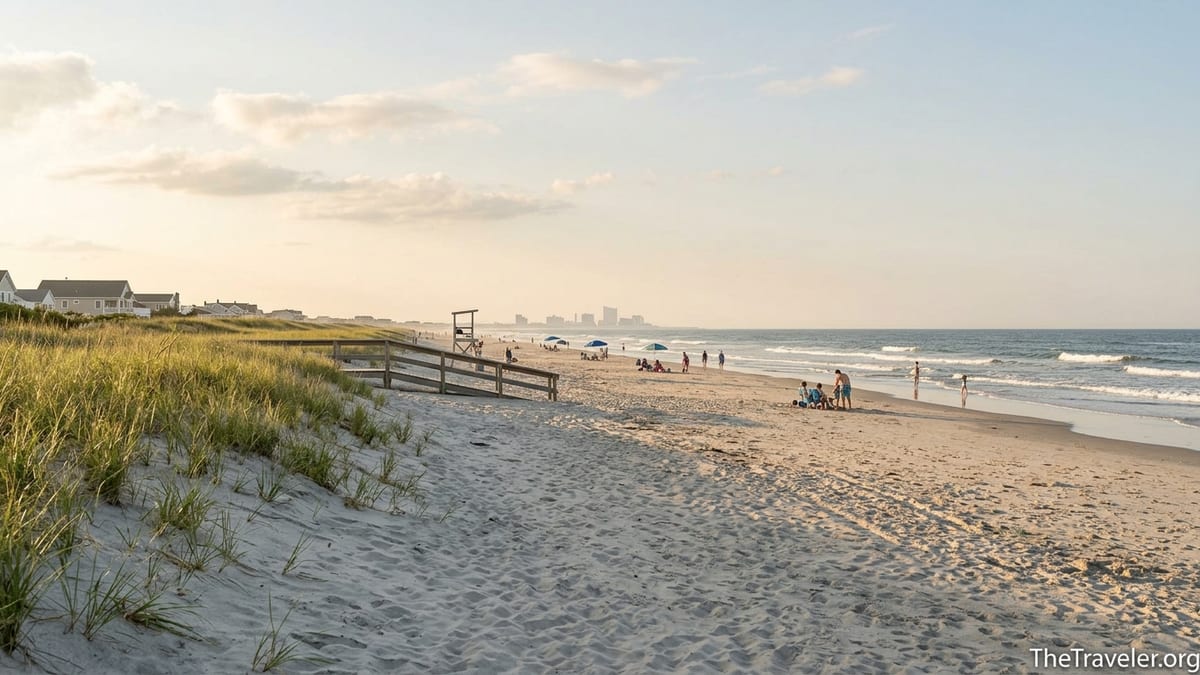
A Jersey Shore Island Without the Circus
Brigantine sits just across Absecon Inlet from Atlantic City, connected by the Brigantine Bridge, yet the contrast could hardly be sharper. On one side, casinos, a famous oceanfront boardwalk, beach bars, arcades, and year-round noise. On the other, a small grid of mostly low-rise homes and condos, a handful of low-key restaurants, and long, open stretches of sand backed by protective dunes. Drive over the bridge and you can literally watch the casino towers recede in the rearview mirror as the island flattens into calm residential streets. Visitors who choose Brigantine are often deliberately choosing to step away from the shore’s more commercial face.
Walk onto Brigantine Beach on a peak summer weekend and you will notice the difference immediately. There are lifeguard stands and beach patrols, but no line of boardwalk snack windows behind you, no ride operators calling out over loudspeakers, and no flashing signage pressing you to buy something. Many entrances are simply wooden walkways that crest the dunes, open to wide, pale sand and a view that is mostly ocean, sky, and a scattering of umbrellas. Even in July, you can usually claim more personal space on the sand than you would in the middle of a more built-up resort town.
Local tourism and real estate sites often describe Brigantine as “minutes from Atlantic City, but miles away in pace.” That phrase has become a kind of shorthand for why people choose it. They want the option of nightlife and restaurants a short drive away, but they do not want slot machines and souvenir shops to be the soundtrack of their beach day. Brigantine’s lack of a full-blown boardwalk is part of what allows that separation to remain so stark, even as development has intensified along much of the New Jersey coast.
What “No Famous Boardwalk” Really Means
When people say Brigantine has no famous boardwalk, they are talking about the classic Jersey Shore image: a miles-long, commercial boardwalk lined with rides, arcades, pizza joints, and T-shirt shops, like the one in Atlantic City or Wildwood. Brigantine does have short stretches of wooden walkways and a simple oceanfront promenade in certain sections, mainly for access and erosion control. But you will not find a named, branded strip that functions as the town’s entertainment spine. The beachfront is dominated by dunes, beach paths, a few condo complexes, and single-family homes, not a carnival of shops.
In practice, this means that if your children are expecting a Ferris wheel and roller coasters right outside the hotel, Brigantine is not the place to promise that. Instead, you might rent a house on the ocean side streets near 34th Street or 43rd Street, where dune walkovers deliver you straight to the sand and evenings are more likely to be about grilling on a deck than playing mini-golf under neon. For many families, that is the appeal. A group that stayed in Brigantine but wanted a taste of the boardwalk scene, for example, could simply drive ten or fifteen minutes over the bridge, park near Atlantic City’s Steel Pier or at Showboat’s entertainment complex, and return to their quiet base later that night.
The lack of a commercial boardwalk also shapes what you see and hear on the beach itself. There are no beachfront loudspeakers piping in music, no sea of cabanas stacked shoulder to shoulder, and very few vendors walking the sand. Beach tags are typically required in high season, and lifeguard chairs are spaced along guarded sections, but the rest feels intentionally minimal. For travelers used to shore towns where every beachfront block seems monetized, Brigantine’s restraint can feel almost radical.
A Quieter Kind of Beach Day
Because there is no major boardwalk to wander, a day in Brigantine tends to be centered on simple pleasures: staking out a spot on the sand, swimming or boogie boarding in the guarded zones, walking the waterline, or reading a book while kids dig elaborate sand forts. The beach is broad enough in many sections that families can spread out without edging into the next group’s towels, and even near popular access points you will see open stretches where it is just you, the gulls, and the surf. For adults who enjoy conversation without shouting over amplified music, this feels like a luxury.
Active travelers often build a bit more into their routines. Mornings might start with a jog or bike ride along Brigantine Avenue, where you pass modest beach cottages, newer townhouses, small motels, and the occasional cafe opening for breakfast. Later in the day, kayakers and stand-up paddlers head for the back-bay side of the island, where rental outfits and marinas offer gear for exploring calm channels and salt marshes. Anglers gravitate toward the southern end near the Cove, where four-wheel-drive beach access (with a permit) allows experienced drivers to set up for a day of surf fishing with Atlantic City’s skyline in the distance.
Families looking for kid-friendly structure tend to create their own rhythms instead of relying on the built-in distractions of a boardwalk. A typical week might mix long sandcastle sessions with a half-day trip to the nearby Edwin B. Forsythe National Wildlife Refuge, where children can climb viewing platforms and watch for herons, ospreys, and migrating shorebirds, or a quick drive to Atlantic City for an afternoon at an indoor arcade or small amusement pier. The difference is that those attractions are an optional outing, not an unavoidable backdrop.
How Brigantine Stays Connected Without Losing Its Calm
One of the reasons Brigantine works so well for many travelers is that it combines that low-key beachfront with access to bigger-city amenities nearby. The Brigantine Bridge deposits you almost directly into the northern end of Atlantic City, where casino hotels, concert venues, and large-scale restaurants cluster along the boardwalk and marina district. A couple might spend the day sunbathing and swimming in Brigantine, then change into nicer clothes and head across the inlet for a dinner reservation and a show before returning to the island for a quiet night.
At the same time, Brigantine itself has enough in-town services that you do not feel stranded. Along Brigantine Avenue, particularly in the central part of the island, you will find coffee shops, ice cream counters, casual pizza places, seafood restaurants, and small local bars that serve both year-round residents and vacation renters. They are not perched directly on the sand the way some shore town boardwalk establishments are, but a short bike ride or drive brings you to most of what you need: groceries, takeout, beach gear, and a few spots to watch a game or listen to live music on a summer weekend.
This balance allows Brigantine to appeal to multi-generational groups. Grandparents who want a calm, early-to-bed atmosphere can relax on ocean-facing balconies or on the sand at the north end, while younger adults can plan evenings in Atlantic City or nearby Ventnor and Longport. Because there is just one main road on and off the island, traffic can back up during peak arrival and departure times, but once you are settled, many visitors find they use the car less than they expect. The compact layout and absence of a sprawling boardwalk strip make walking and biking a pleasant default choice.
Nature, Dunes, and the Feeling of a Real Barrier Island
Without the pressure to wedge businesses onto every oceanfront block, Brigantine has been able to maintain long sections of natural dunes and open beach. The northern end of the island in particular feels more wild, with broader dune fields, protected habitats, and fewer structures crowding the shoreline. You might see shorebirds darting in the wash, dune grasses bending in the wind, and, on lucky days, pods of dolphins visible just beyond the breakers. For visitors used to boardwalk towns where the dunes have been shaved back for ocean views and commercial frontage, this can feel like a reminder that the Jersey Shore is, in fact, a series of barrier islands shaped by wind and tide.
The nearby Edwin B. Forsythe National Wildlife Refuge reinforces this sense of being in the middle of a larger coastal ecosystem. While the main auto tour loop lies a short drive north of Brigantine, many travelers combine a beach morning with an afternoon exploring the refuge’s dikes and observation platforms. Birders bring binoculars for spring and fall migrations, when the marshes fill with flocks of ducks, geese, and shorebirds moving along the Atlantic Flyway. Even casual nature lovers appreciate the contrast: in the morning they may have been body-surfing in the ocean, and by late afternoon they are watching egrets stalk through flooded grasslands.
That proximity to open water and wetlands also shapes Brigantine’s culture. Boaters talk about tides and channels, anglers trade notes on striper runs and flounder seasons, and even vacationers staying in condo complexes begin to notice subtle daily changes: a stronger breeze off the ocean some afternoons, a different pattern of waves after a distant storm. Without major rides or attractions competing for attention, the water and weather become part of the day’s conversation in a way that feels increasingly rare along more heavily developed coasts.
Who Loves Brigantine and Why
The people who fall hardest for Brigantine tend to share a few traits. Many are families who enjoy the shore but feel overwhelmed by high-energy boardwalk towns. Parents with younger children like that they can set up camp on the sand, walk back to a rental house for nap time without fighting through crowds, and return later in the afternoon as the sun softens. For them, the question is not whether there are enough attractions to fill every minute, but whether the place feels safe, manageable, and calm. Brigantine’s residential character, with houses set back behind dunes and relatively little through traffic, checks those boxes.
Couples and groups of friends in their late twenties and thirties often mention a different reason: Brigantine feels like a sweet spot between the wild quiet of more remote beaches and the convenience of a full-service town. They appreciate that there are local bars, coffee shops, and small restaurants, yet very little of the loud, late-night street scene that defines some shore hotspots. If they want to go out late, they organize a rideshare or designated driver trip over the bridge to Atlantic City, then return to an island where the stars are easier to see and the streets mostly empty by midnight.
There is also a loyal contingent of retirees and second-home owners who appreciate Brigantine’s relatively laid-back property scene. While prices have risen in recent years, the island still feels less intensely built-out than certain high-profile towns. Many of these residents describe the pleasure of off-season walks, when the summer crowds thin and they can stroll long sections of beach seeing only a handful of other people. For them, the absence of a busy boardwalk is part of the guarantee that even August remains somewhat manageable, and September and October can be almost meditative.
Planning a Stay in a Town Without a Boardwalk
Because Brigantine’s draw is more about the beach and neighborhood feel than a concentrated tourist strip, planning a stay works a bit differently than in traditional boardwalk towns. Instead of booking a motel steps from the rides, many visitors look for weekly house or condo rentals, especially along oceanside streets or near the central commercial corridor on Brigantine Avenue. A family of four might split a modest three-bedroom rental with grandparents or friends and end up paying less per person than they would for multiple oceanfront hotel rooms in a casino or a resort town further north.
First-time visitors are often surprised at how important it is to decide what kind of beach access they want. The southern end near the Cove appeals to those interested in fishing, boating, and views back toward Atlantic City. The mid-island sections feel more residential and family-oriented, with straightforward dune paths at many street ends. The northern reaches, edging closer to protected areas, feel more secluded and windswept. Since there is no continuous boardwalk tying all of these areas together, you will likely be driving, biking, or walking along neighborhood streets between the beach and whatever restaurants or shops you frequent.
Another practical tip is to think through your desire for classic boardwalk experiences before you arrive. If someone in the group has their heart set on playing skee-ball or trying a classic Jersey pizza slice on a boardwalk one evening, it is better to acknowledge that and fold a side trip to Atlantic City, Ocean City, or another nearby boardwalk town into your plans. That way, you can return to Brigantine without anyone feeling they missed out. Travelers who come in knowing that Brigantine’s charm lies in what it lacks tend to settle into the rhythm more easily.
The Takeaway
On a crowded coast full of flashing lights, loudspeakers, and oceanfront branding, Brigantine’s greatest asset may be what is not there. The island has no famous boardwalk with towering rides and late-night crowds, and that absence shapes nearly every part of the experience. The beachfront remains focused on wide dunes, lifeguarded swimming areas, and open sand rather than commerce. Even at the height of summer, it is possible to find a bit of personal space, to hear the waves more clearly than the conversations around you, and to walk home along quiet streets when the sun dips behind the houses.
For travelers who crave a traditional boardwalk vacation where every evening revolves around arcades and amusement piers, Brigantine will likely feel too subdued. But for families, couples, and groups who want a comfortable base with a real neighborhood feel, easy access to bigger-city attractions across the inlet, and a beach that still feels more like a barrier island than a seaside theme park, that missing boardwalk is the very thing that keeps Brigantine special. It leaves room for dunes, for birds, for thoughtful conversations on the sand, and for the simple luxury of falling asleep to the sound of the ocean without a carnival buzzing just outside the window.
FAQ
Q1. Does Brigantine have any kind of boardwalk at all?
Brigantine has small wooden walkways and a simple oceanside promenade in spots, mainly for beach access and erosion control, but no long commercial boardwalk with shops, rides, and arcades.
Q2. If there is no boardwalk, what do people do in Brigantine at night?
Evenings in Brigantine tend to revolve around low-key activities like cooking at rental homes, visiting casual local restaurants or bars along Brigantine Avenue, taking sunset walks on the beach, or making short drives to Atlantic City for shows, casinos, and boardwalk attractions.
Q3. Is Brigantine a good choice for families with young children?
Yes. Many families appreciate Brigantine’s quieter beaches, lifeguarded swimming areas in season, and residential feel. Parents often like that they can walk back and forth between the beach and a nearby rental without navigating crowded midways or busy commercial strips.
Q4. How far is Brigantine from Atlantic City’s famous boardwalk?
Brigantine is just across Absecon Inlet from Atlantic City, connected by the Brigantine Bridge. Depending on traffic and where you are staying, it typically takes about ten to twenty minutes by car to reach Atlantic City’s boardwalk and casino district.
Q5. Are there still plenty of places to eat and shop in Brigantine without a boardwalk?
Yes. While businesses are not concentrated on a beachfront strip, you will find cafes, ice cream shops, pizza places, seafood restaurants, small markets, and beachwear stores along Brigantine Avenue and nearby side streets, enough to cover most day-to-day needs.
Q6. What type of accommodations are common in Brigantine?
Brigantine is dominated by vacation rentals and residential properties, including single-family homes, duplexes, and condos. There are a few hotel and resort-style options, but most visitors book condominiums or houses, especially for longer stays or larger groups.
Q7. Do I need a car if I stay in Brigantine?
Having a car is very helpful. The island is walkable and bike-friendly in many areas, but there is no central boardwalk district that puts everything at your doorstep, and a car makes grocery runs, restaurant visits, and side trips to Atlantic City much easier.
Q8. Is Brigantine less crowded than other Jersey Shore beaches?
In general, yes. While weekends and peak summer weeks can still be busy, Brigantine’s beaches are often less tightly packed than those in major boardwalk towns, and many visitors specifically mention the extra space and calmer atmosphere as reasons they return.
Q9. What makes Brigantine different from other quiet New Jersey beach towns?
Brigantine combines a laid-back residential vibe with unusually easy access to Atlantic City’s boardwalk, entertainment, and dining. It also has long stretches of dunes and nearby wildlife areas that keep a more natural, barrier-island feel than many towns of similar size.
Q10. Who is Brigantine best suited for?
Brigantine is ideal for travelers who prioritize beach time, space, and a calmer atmosphere over nonstop boardwalk entertainment. It works especially well for families, couples, multi-generational groups, and anyone who likes having big-city attractions a short drive away but not right outside their window.