


More news on this day
Hundreds of Korean passengers were left waiting more than 14 hours at Bangkok’s Suvarnabhumi Airport after torrential rains inundated Thailand’s capital, disrupting flights and highlighting the vulnerability of key Asian hubs to extreme weather.
Get the latest news straight to your inbox!
Overnight delays after record rainfall in Bangkok
Publicly available information indicates that from September 24 to 27, more than 330 millimeters of rain fell on Bangkok and surrounding provinces, flooding major roads and residential districts. Local reports describe water reaching chest height in some neighborhoods, forcing residents to wade through submerged streets and leaving thousands of homes without reliable access to transport.
Thai media and Korean news outlets report that the flooding cascaded quickly into the aviation system. Reduced staffing, blocked access roads and ground handling constraints combined to disrupt departures at Suvarnabhumi, Bangkok’s main international gateway. Several flights operated by Thai Airways bound for South Korea were among those affected.
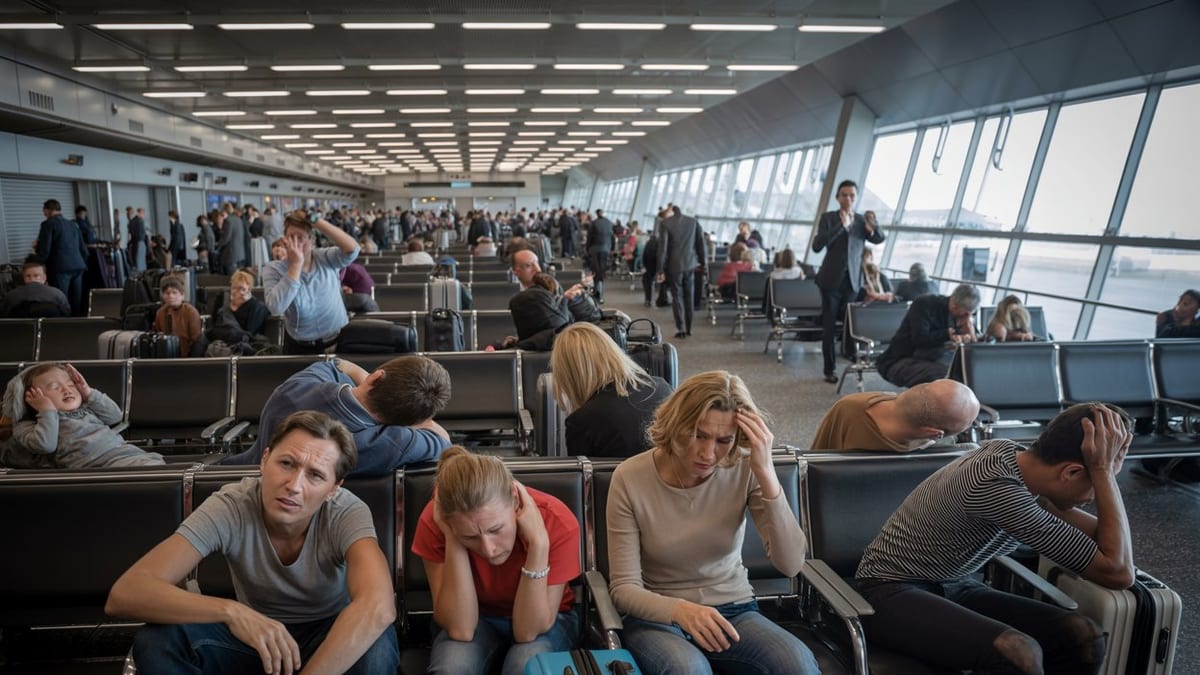
According to coverage from regional outlets, hundreds of Korean travelers scheduled on late night services to South Korea on Sunday, September 27, remained in the terminal through the night and into the following morning as departure times were repeatedly revised. Passengers described departure boards that shifted in increments of one to several hours, stretching what was meant to be a routine red-eye into an unplanned overnight stay in the departure area.
One flight that had been scheduled to leave shortly after 11 p.m. local time did not depart until around 10:40 a.m. the next day, based on timelines reported in Korean press. Another late night service to Korea from Suvarnabhumi also faced significant delays, contributing to the growing number of stranded travelers.
Hundreds stranded amid limited information and staffing
Reports from Korean and Thai news organizations describe scenes of crowded waiting areas, with families, tour groups and independent travelers attempting to rest in gate zones as they waited for updates. Several accounts indicate that check in and gate counters were intermittently unattended overnight, as airport and airline staff struggled to reach the airport through flooded streets.
Passengers interviewed by media outlets recounted that they received a series of rolling delays through airline apps and terminal displays, but experienced long stretches without direct explanations at the gate. Some travelers reportedly sought out airline lounges or service desks elsewhere in the terminal to obtain more detailed information and to confirm that their flights had not been canceled.
The disruption extended beyond those holding Korean passports. However, news coverage has focused in particular on Korean travelers because several delayed services were bound for Seoul and other South Korean cities, and because Korean media closely tracked the developing situation. The overnight wait left many passengers attempting to rest on terminal seating, balancing fatigue and uncertainty while monitoring departure screens.
Accounts compiled in regional press also highlight the knock on effects of the long delay, including missed onward connections in South Korea and unexpected additional accommodation costs for some travelers who had onward domestic flights or early morning commitments after arrival.
Flood damage across Bangkok and surrounding provinces
The airport disruption formed part of a wider emergency across Bangkok and neighboring provinces. Government data cited in local and international coverage indicate that around 4,900 residents were displaced by the flooding and moved to approximately 200 temporary shelters set up at schools and temples in the region. Roughly 52,000 households were reported to have been affected in some way, from inundated ground floors and damaged belongings to prolonged commutes and power interruptions.
Images published by Thai and foreign outlets show submerged streets, stalled vehicles and residents using improvised walkways to move through their neighborhoods. In some districts, shop shelves were reported to have emptied quickly amid short lived panic buying of bottled water and basic food, prompting public appeals to avoid hoarding.
In response to the scale of the flooding, Thai authorities designated Bangkok and several adjacent provinces as disaster zones and announced special public sector leave days to reduce commuter traffic. Publicly available announcements indicate that government offices in Bangkok and three neighboring provinces were instructed to close for two days to ease congestion and allow emergency crews greater access to inundated streets.
While Suvarnabhumi’s runways and terminal buildings themselves have not been reported as flooded in this incident, the surrounding transport grid and staffing shortages significantly constrained airport operations. The episode underscores how even elevated and well drained airport facilities can be affected when the urban infrastructure around them is under severe strain.
Thai Airways operations and response
Most of the passengers stranded overnight at Suvarnabhumi were booked on Thai Airways services to South Korea. News reports state that at least two late night flights bound for Korean destinations experienced delays of between 10 and more than 14 hours as the carrier adjusted schedules in response to the flooding and crew availability challenges.
Publicly available reports attribute part of the disruption to flight and cabin crews being unable to reach the airport on time because of heavily flooded roads. Ground handling teams and baggage staff also faced difficulties commuting, which can slow down key steps such as aircraft turnaround, refueling and baggage loading even when aircraft and gates are physically available.
At the time of writing, Thai Airways has not been widely quoted providing detailed public figures on compensation or assistance for the affected passengers. Korean and Thai coverage notes that many travelers remained airside within the international departures area throughout the night, relying on airport facilities and any vouchers or refreshments offered at the terminal.
Because this disruption was driven by severe weather and flooding rather than technical issues with the aircraft, the level of compensation available to passengers may vary depending on their individual tickets, travel insurance policies and the specific regulations that apply. Travelers are being advised by consumer advocates and travel media to retain boarding passes, receipts and written notices of delay when seeking reimbursement.
What the disruption means for travelers heading to Bangkok
Suvarnabhumi Airport serves as Thailand’s primary international gateway and a major transfer hub for Southeast Asia. Events such as the late September flooding highlight the importance for travelers of monitoring local weather, building extra buffer time into itineraries and understanding airline policies on delays caused by natural events.
Travel advisories issued in the wake of the floods urge visitors to Bangkok to allow additional time for journeys between the city and the airport while cleanup continues, particularly during periods of heavy rain. Public information suggests that roads around the capital can become congested or partially impassable when storm water accumulates, which may lengthen normal travel times to Suvarnabhumi.
Air passengers planning connections through Bangkok in the coming days are encouraged by travel industry guidance to check their flight status frequently using airline apps or airport information channels. For those with separate tickets or tight onward connections, adding an overnight stop or longer layover may reduce the risk of missed flights during the current rainy period.
While reports indicate that flight operations at Suvarnabhumi have continued and that delayed services to South Korea ultimately departed, the experience of hundreds of Korean travelers stranded for more than half a day serves as a reminder that increasingly intense rainfall events can quickly ripple through regional air networks. For visitors, staying flexible and informed is becoming an essential part of travel planning in monsoon affected cities such as Bangkok.