


More news on this day
Unauthorized drone activity over Luxembourg Airport on the evening of 18 September 2026 triggered an abrupt shutdown of air traffic, diverting 19 flights and leaving more than 1,800 passengers facing long, uncertain waits across Europe.
Get the latest news straight to your inbox!
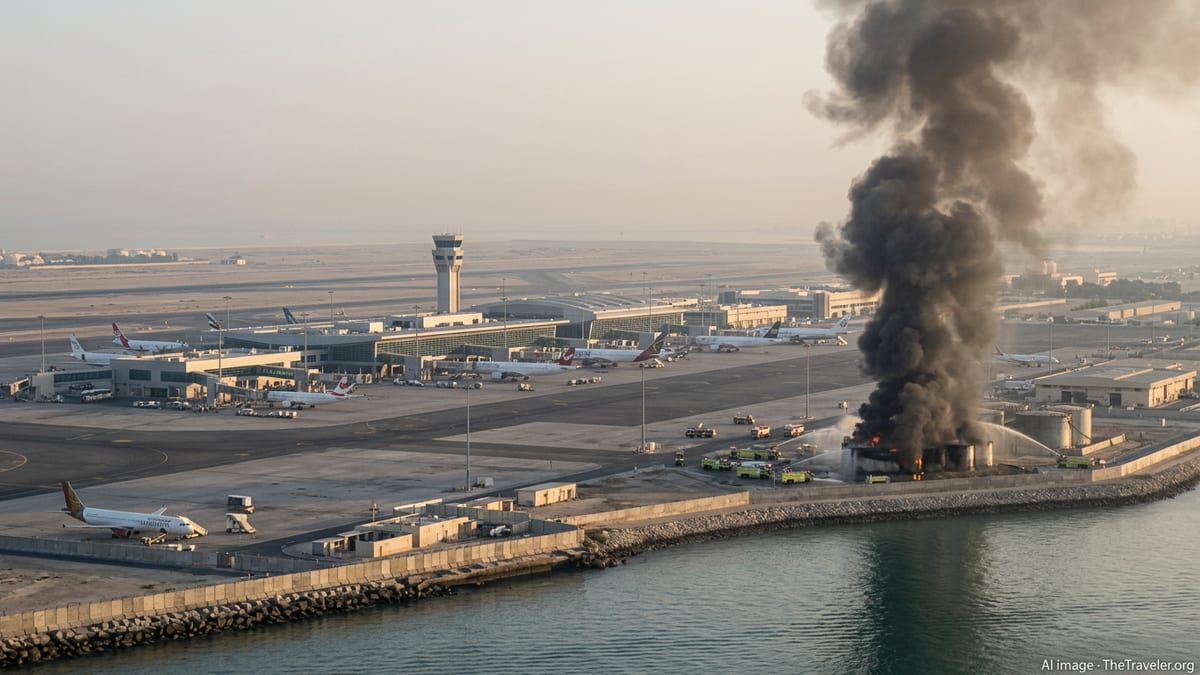
Sudden closure at Findel halts evening arrivals
Publicly available information from Luxembourg’s Interministerial Drone Assessment Unit shows that operations at Luxembourg Airport were suspended on the evening of 18 September after visual sightings of unidentified drones in the airspace over the airport. As a precaution, the airspace was closed to protect passengers, crew, airport staff and aircraft while the situation was assessed.
The government’s situation update indicates that 19 flights bound for Luxembourg were diverted to other airports as a direct result of the closure, a figure echoed in local media coverage. Luxembourg-based carrier Luxair accounted for most of those services, with reports indicating that 17 of its aircraft were forced to divert during the busy evening arrival period.
Luxembourg Airport later reported that inspections of the airspace and infrastructure found no immediate risk to aviation safety, and flight operations resumed at around 1:20 a.m. on 19 September. Even after that reopening, the interruption created a ripple effect that continued into the following day as airlines tried to reposition aircraft and crews.
Luxair and airport statements urged passengers to check flight status directly with their airlines before heading to the terminal, underlining how quickly conditions were changing while diversions and delays were being processed.
Passengers face overnight odysseys and missed connections
Local and regional media have detailed how the shutdown translated into hours of disruption for travelers who suddenly found themselves in the wrong city or stuck on the ground. Coverage from RTL and other outlets indicates that passengers on evening arrivals to Luxembourg were diverted to airports including Brussels, Frankfurt and Amsterdam, where they sometimes waited late into the night for onward transport.
One television report from Belgium described a business traveler returning from Glasgow who left Amsterdam on an evening connection to Luxembourg, only to find the aircraft unable to land once it reached the Grand Duchy’s airspace. The flight was rerouted, and the total journey time stretched to around 22 hours as she navigated additional ground transport back to Luxembourg.
Other news reports highlighted families and weekend travelers who spent the night in unfamiliar airports while waiting for buses or rebooked flights. With crews and aircraft out of position, airlines faced limited options to bring people back to Luxembourg quickly, compounding frustration for those who had expected a short hop home.
For passengers already at Luxembourg Airport when the closure began, the impact took the form of mounting delays and cancellations on departure boards. Social media posts and local coverage showed travelers sitting in crowded gate areas as they waited for clarity, illustrating how drone incidents can transform routine evening operations into lengthy ordeals.
Repeat drone sightings raise concerns over vulnerability
The 18 September disruption was not an isolated episode. Follow up coverage on RTL and other Luxembourg outlets points to at least one further suspension of flights at Findel after additional reports of drone sightings in the days that followed. Although these later interruptions appear to have been shorter, they reinforced concerns among passengers and aviation observers about the vulnerability of critical infrastructure to small unmanned aircraft.
According to the government’s drone assessment updates, the authorities are continuing to analyse the incident in cooperation with international partners, with no definitive conclusions yet published on the origin or intent behind the unauthorized flights. The same updates state that enhanced monitoring of the airspace has been introduced, alongside awareness measures for stakeholders around the airport.
The national Directorate of Civil Aviation had already tightened drone rules in recent years, including permanent restricted zones where flights are prohibited without prior authorization. The recent events have brought renewed public attention to those measures and to the challenge of detecting and neutralizing small drones before they interfere with commercial traffic.
While there is no indication in official communications that the drones caused physical damage, the operational impact on aircraft movements and passenger itineraries has been enough to prompt calls in media commentary for clearer enforcement and faster information flows when incidents occur.
Airlines work to restore schedules amid knock on delays
In the aftermath of the first shutdown, lux Airport issued a separate notice confirming the resumption of operations and warning that delays would persist while airlines worked through the backlog. The operator stated that it was coordinating closely with air traffic services and carriers to restore normal schedules.
Coverage from Luxembourg media indicates that Luxair’s leadership warned of continued disruption into the weekend, citing diverted aircraft and crew as key constraints. With 17 aircraft affected in a single evening, repositioning planes and ensuring rested crews for subsequent flights proved challenging, particularly for early morning departures on 19 September.
Knock on effects included late arrivals to Luxembourg, delayed departures to European destinations and, in some cases, missed connections for passengers traveling onward beyond the Grand Duchy. Public reporting suggests that airlines offered rebooking options and, where required under European passenger rights rules, assistance with accommodation and meals for severely delayed travelers.
For visitors heading to Luxembourg for short breaks or business meetings, the timing of the disruption during a peak arrival window meant lost evenings, compressed schedules and in some cases the need to cancel plans entirely. Travel planners and corporate travel managers tracking the disruption have highlighted the importance of building more buffer time into itineraries that rely on single evening flights into Luxembourg.
What travelers should know about flying to Luxembourg now
As of late September, flight operations at Luxembourg Airport are running, with no ongoing closure reported in official updates. However, the drone incidents have prompted local authorities and the airport operator to remind the public of strict limitations on unmanned aircraft in the vicinity of the airfield, and to underline that new sightings can still lead to short notice suspensions.
For travelers, published guidance from the airport and airlines emphasizes checking flight status frequently on the day of travel and allowing extra time for connections, especially when evening arrivals into Luxembourg are involved. Given the experience of passengers who were diverted with little warning, many travel advisors now recommend avoiding tight onward rail or air connections after late night flights to Findel.
Publicly available information from the Directorate of Civil Aviation notes that drone bans apply in specific geographical zones around the airport, and that unauthorized operations can trigger immediate operational responses. The events of 18 September have shown how quickly those responses can cascade into hours of disruption for travelers both in Luxembourg and across the airline’s route network.
For now, the government’s drone assessment unit reports that it continues to monitor the situation closely, while airlines and airport partners focus on keeping schedules stable. Passengers planning trips to or from Luxembourg in the coming weeks are being encouraged through public communications to stay informed, register for airline alerts and factor potential last minute changes into their travel plans.