


More news on this day
Disney Cruise Line and Royal Caribbean International have both introduced headline-grabbing new ships, showcasing immersive attractions, high-tech entertainment and expanded family offerings. Yet as travelers comparison-shop these latest vessels, many are finding that while Disney leads on storytelling and themed design, Royal Caribbean’s aggressive amenities-to-price ratio is increasingly difficult to ignore.
Get the latest news straight to your inbox!
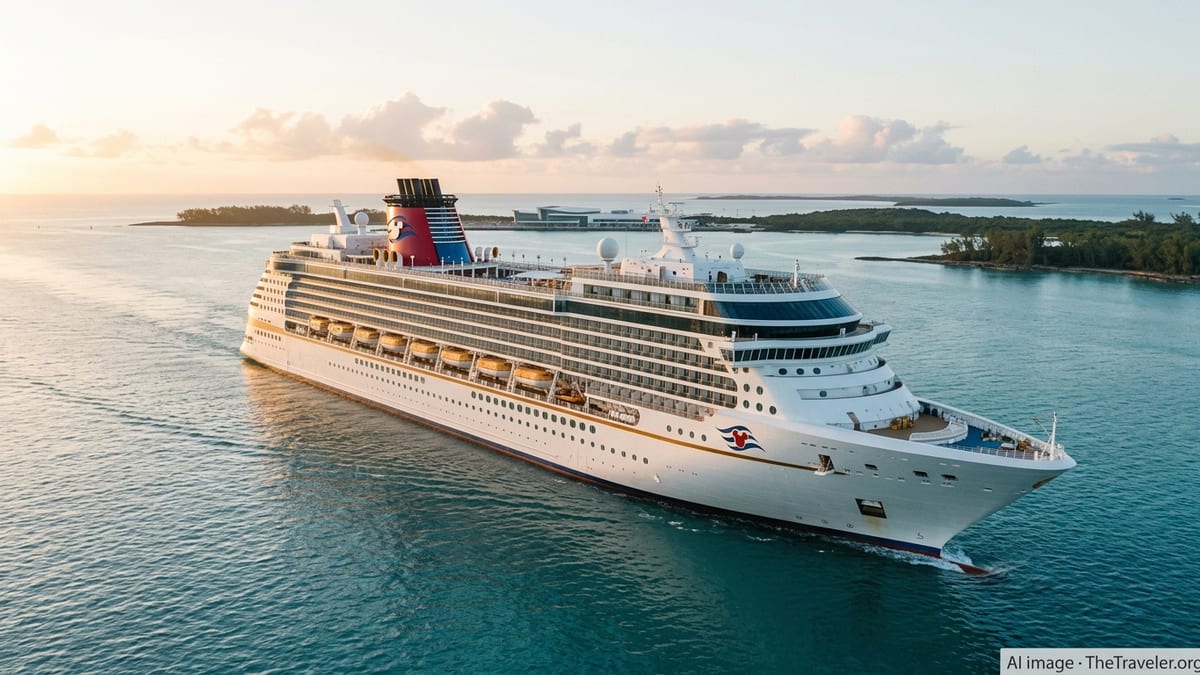
New hardware at sea from Disney and Royal Caribbean
Disney’s latest generation of ships centers on the Wish class, with Disney Wish entering service in 2022 and Disney Treasure debuting in December 2024. Publicly available information shows that both vessels target families with elaborate themed spaces drawn from Disney, Pixar and Marvel franchises, alongside updated youth clubs and spa facilities.
Disney Wish introduced the AquaMouse, billed as the cruise line’s first attraction at sea, blending a water coaster layout with animated show scenes starring Mickey and Minnie. Staterooms were redesigned with family-friendly touches such as split bathrooms and expanded storage, and top-tier suites were positioned in and around the ship’s funnels to underline the premium end of the product.
Disney Treasure, sailing from Port Canaveral on mostly weeklong Caribbean itineraries, builds on that framework with fresh intellectual property. According to published coverage and Disney’s own materials, the ship adds a Coco-themed restaurant, a Jungle Cruise-inspired lounge, and a show based on Moana, as well as a bar concept tied to the Haunted Mansion attraction. The AquaMouse concept returns with a new storyline focused on treasure hunting.
Royal Caribbean, by contrast, has focused recent investment on sheer scale. Icon of the Seas, which entered service in 2024, is widely reported as the world’s largest cruise ship by gross tonnage, and was followed in mid-2024 by Utopia of the Seas, the sixth Oasis-class vessel. Both lean heavily into neighborhood design, multi-deck pool and activity zones and a broad range of cabin types.
Immersive theming versus big-ship spectacle
Travel writers who have sampled the newest Disney and Royal Caribbean ships highlight a clear split in onboard atmosphere. Disney’s appeal remains rooted in narrative detail, from restaurant storylines that evolve over the course of a meal to theater productions that restage animated hits with cruise-specific adaptations. On Disney Treasure, for instance, dining rooms and lounges are tied directly to well-known films, with character-driven entertainment built into the experience.
That approach carries over into the ship hardware. The AquaMouse attraction wraps a relatively compact slide in animated shorts, lighting and audio effects intended to feel closer to a theme park dark ride than a typical cruise-ship waterslide. Rotational dining, in which guests cycle through multiple main restaurants with the same service team, reinforces the sense of a curated story arc across the voyage.
Royal Caribbean’s latest ships, on the other hand, prioritize visual scale and variety over a single intellectual property. Icon of the Seas spreads its attractions into distinct neighborhoods, with different zones for high-thrill waterslides, multi-level pool decks, and family splash areas, alongside a large indoor AquaTheater-style venue. Utopia of the Seas, though slightly smaller, continues the formula with racing dry slides, surf simulators, and a central open-air Boardwalk running through the stern.
Observers note that while character branding is less pervasive, the entertainment footprint is vast. Ice shows, aerial productions, comedy clubs, live music venues and late-night parties run concurrently, creating an environment where guests are choosing among multiple large-scale options rather than following a single narrative thread.
Cabins, space and what is actually included
When comparing new ships from both brands, travelers are increasingly drilling into cabin configurations and what is bundled into the fare. Disney Wish and Disney Treasure emphasize standard staterooms with split bathrooms and family-appropriate sleeping arrangements, something fans regard as a practical advantage for parents sharing space with children. Concierge-level suites add substantial square footage and touches like dedicated lounges and sundecks.
Royal Caribbean’s newest ships counter with breadth of choice, from compact interior cabins to large family suites positioned near activity zones. On Icon of the Seas, promotional materials detail new layout types, including family-oriented balcony cabins with additional bunk space. Utopia of the Seas, operating primarily shorter three and four night sailings, leans on mainstream balcony staterooms and a handful of high-end suites aimed at groups marking celebrations.
Inclusions are another dividing line. Reports indicate that both lines bundle core dining in main restaurants and buffets along with standard entertainment such as stage shows and youth programming. However, the mix of complimentary versus pay-extra venues can differ markedly by ship and sailing. Royal Caribbean’s recent marketing highlights that many waterpark-style attractions, multiple pools and evening shows are folded into the base fare, with specialty dining, certain classes and some entertainment experiences offered at a surcharge.
Disney, meanwhile, tends to include its main theatrical productions, character meet-and-greets and youth clubs without additional fees, but specialty dining, some experiences and premium venues still carry extra charges. For passengers focused on character access and brand-specific entertainment, that structure can be perceived as strong value, even if starting fares are higher.
Pricing trends put Royal Caribbean’s value in focus
As the newest hardware from both cruise lines has opened for booking, price comparisons have become a central part of the conversation. Independent pricing trackers and traveler reports consistently show that headline-grabbing ships such as Icon of the Seas and Disney Wish command premiums over older tonnage in their respective fleets, particularly during school holidays and peak Caribbean seasons.
Yet when itineraries and dates are aligned, Royal Caribbean’s ships often come in lower on a per-person, per-night basis than Disney’s. Sample fares shared by cruise bloggers and on public forums indicate that entry-level cabins on short Utopia of the Seas sailings, for example, can price significantly below comparable-length vacations on Disney Treasure, especially once third and fourth guests are factored into the booking.
That difference compounds when onboard spending is considered. Royal Caribbean frequently promotes package deals on beverages, specialty dining or Wi-Fi, and travelers who book during sales or off-peak periods report being able to contain extras within a predictable budget. Disney passengers, by contrast, often note that while core experiences are strong, there are fewer discounting opportunities and limited scope to reduce the premium associated with the brand.
Industry analysts suggest that Royal Caribbean’s larger passenger capacity and diversified pricing across many cabin categories allow it to advertise lower lead-in fares without stripping out high-profile amenities. For cost-conscious families weighing multiple seven-night Caribbean options, the calculation increasingly favors Royal Caribbean when measured strictly in terms of activity count and square footage per dollar spent.
How travelers are choosing between the new ships
With both brands now fielding new, attention-grabbing vessels, the decision for many travelers is coming down to priorities. Families deeply invested in Disney characters and storytelling are often willing to pay more for the integrated experience of Disney Wish or Disney Treasure, from themed dining rooms to youth clubs staffed around familiar franchises.
Other travelers, including repeat cruisers and multigenerational groups, are gravitating toward Royal Caribbean’s newest ships for the breadth of included activities and the ability to secure shorter getaways at relatively lower price points. Utopia of the Seas in particular, with its focus on three and four night cruises paired with calls at Royal Caribbean’s private destination in the Bahamas, is being framed as a high-impact option for those looking to maximize entertainment value in a long weekend.
Online discussions and early reviews suggest that few guests feel shortchanged on either product in terms of things to do. Instead, the dividing line is often whether a party values branded immersion or sheer variety at a given budget. In that equation, Royal Caribbean’s big new ships tend to win on value calculations, while Disney’s newest entrants retain an edge in curated storytelling and brand affinity.
For now, the parallel launches have raised expectations across the mainstream cruise sector. Competitors watching both rollouts are being pushed to reconsider how much hardware, theming and entertainment they can deliver at each price tier, as travelers compare not just ships within a single fleet, but the overall proposition across cruise lines and vacation types.