


More news on this day
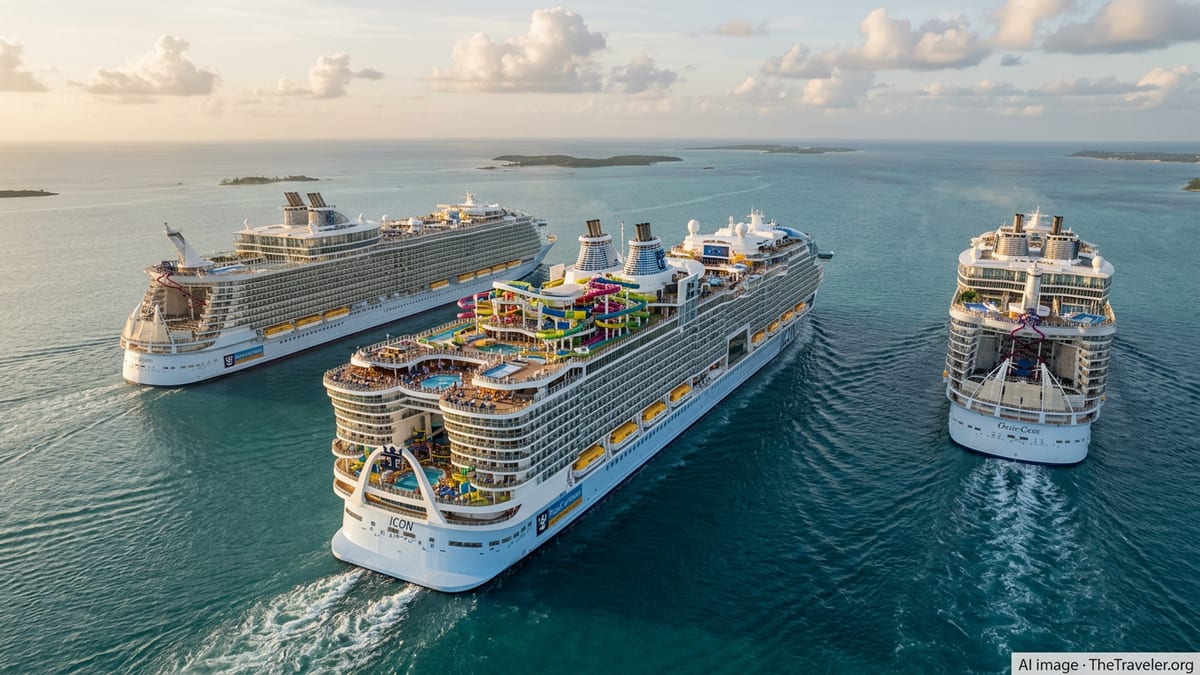
Royal Caribbean International has officially welcomed its newest mega-ship, Legend of the Seas, into the fleet, marking a major milestone for the line’s rapidly expanding Icon Class ahead of the vessel’s 2026 debut in Europe and the Caribbean.
Get the latest news straight to your inbox!
Delivery Ceremony Marks Fleet Milestone in Finland
The handover of Legend of the Seas took place at the Meyer Turku shipyard in Turku, Finland, where the 250,800-gross-ton vessel has been under construction. Published coverage of the event describes a formal delivery ceremony at the yard in mid-June 2026, confirming the ship as the 30th in Royal Caribbean’s active fleet and the third in the Icon Class.
Legend of the Seas follows Icon of the Seas and Star of the Seas, continuing a design program that has produced what are currently among the largest cruise ships in operation. According to publicly available specifications, the new ship is designed to carry more than 5,600 guests at double occupancy and over 7,000 passengers at maximum capacity, reflecting Royal Caribbean’s focus on high-density, resort-style vessels.
The delivery also caps a long construction timeline that included extensive sea trials in the Baltic Sea beginning in April 2026. Reports indicate that these trials tested propulsion, maneuverability and hotel systems before the vessel was cleared for handover to the cruise line.
Industry analysis notes that Legend of the Seas represents another step in Royal Caribbean Group’s broader newbuild strategy, which pairs dramatic onboard attractions with incremental improvements in fuel efficiency and environmental performance compared with older classes.
Third Icon Class Ship Raises the Size and Amenities Bar
Royal Caribbean positions Legend of the Seas as the “biggest and boldest” Icon Class ship to date, emphasizing a mix of large-scale water attractions, expanded dining and immersive entertainment. The ship will feature Category 6, billed in promotional materials as the largest waterpark at sea, with multiple high-thrill water slides, as well as seven pools and numerous whirlpools spread across different decks.
Public information released by the line highlights a record 28 distinct dining options on board, a figure that includes main dining rooms, specialty venues and quick-service outlets. The configuration is intended to disperse crowds across the vessel and support weeklong itineraries for families and multigenerational groups.
Legend of the Seas continues the Icon Class concept of themed “neighborhoods,” with eight areas dedicated to different styles of experiences, from family-focused zones to nightlife and entertainment districts. A reimagined Royal Promenade remains the central thoroughfare, framed by bars, lounges and retail spaces designed to operate as a day-to-night hub.
Entertainment offerings are expected to be a key differentiator. According to cruise industry coverage, the ship will introduce a new Broadway-style production based on “Charlie and the Chocolate Factory,” alongside an AquaTheater show, an ice-skating production, and multiple live music venues intended to provide a festival-style atmosphere at sea.
European Debut in July 2026 Before Caribbean Season
Following delivery, Legend of the Seas will undertake final preparations before beginning passenger service in July 2026. Royal Caribbean’s published deployment details show the ship initially homeporting in Barcelona and Rome (Civitavecchia), operating seven-night Western Mediterranean itineraries.
These summer sailings are scheduled to visit marquee ports such as Naples, Palma de Mallorca and other popular Western Mediterranean destinations. The deployment continues the pattern established by Icon and Star of the Seas, which both launched in Europe before repositioning to North America.
After its inaugural Mediterranean season, Legend of the Seas is slated to reposition across the Atlantic to Fort Lauderdale in November 2026. From there, the ship will operate weeklong Western and Southern Caribbean cruises, including calls at Royal Caribbean’s private island destination, Perfect Day at CocoCay, on select itineraries.
Travel trade publications note strong early demand for the ship’s inaugural program, with some sailings selling quickly after opening for sale. The mix of European city ports and Caribbean beach destinations positions Legend of the Seas as a flagship option for guests seeking new hardware combined with established, high-demand routes.
Sustainability Features and Technology on Board
Legend of the Seas also plays a role in Royal Caribbean Group’s stated ambition to move toward lower-emission cruise operations. Publicly available technical information indicates that the vessel is powered primarily by liquefied natural gas and incorporates fuel cell technology and energy-efficiency measures similar to those found on Icon and Star of the Seas.
The ship’s design features are reported to include advanced waste heat recovery, air lubrication systems to reduce hull friction, and optimized hull shaping, all intended to improve overall fuel consumption compared with earlier large-ship classes. While LNG is still a fossil fuel, industry analysts describe it as a transitional option that can reduce certain emissions relative to conventional marine fuels.
Royal Caribbean has previously outlined a roadmap toward introducing a net-zero cruise ship by 2035, and Legend of the Seas is presented as another step along that trajectory. Its combination of LNG propulsion and incremental technological upgrades is seen within the sector as part of a gradual evolution rather than a single breakthrough.
Cruise commentators point out that the environmental profile of such mega-ships continues to be closely watched by regulators and destination ports, particularly in Europe, where emissions rules in certain areas are tightening. Legend of the Seas will be operating in this evolving regulatory environment from its first commercial season.
What Legend of the Seas Means for Royal Caribbean’s Competitive Position
With Legend of the Seas now officially in hand, Royal Caribbean further consolidates its position in the large-ship segment of the global cruise market. The Icon Class has been central to the line’s strategy of drawing in first-time cruisers and families looking for a resort-style experience at sea, and the addition of a third vessel expands that capacity significantly.
Analysts following the cruise sector note that the timing of the delivery aligns with a broader recovery in travel demand, as major brands report solid booking trends for 2026 and beyond. Legend of the Seas gives Royal Caribbean additional high-yield capacity to deploy on popular routes where demand for new ships is typically strongest.
The ship’s entry into the fleet also sets the stage for subsequent Icon Class deliveries. Future vessels, including the recently discussed Hero of the Seas, are expected to continue the trajectory of large-scale, feature-rich hardware aimed at maintaining Royal Caribbean’s brand profile in key markets.
For travelers, the official addition of Legend of the Seas to the Royal Caribbean roster signals that the 2026 and 2027 cruise seasons will bring another wave of headline-grabbing mega-ship itineraries, reinforcing the company’s focus on size, amenities and destination variety as primary selling points.