


More news on this day
Rail passengers across south London and the Sussex corridor faced severe disruption after major incidents on the Brighton Main Line led to a rare “do not travel” warning for services through the Croydon area.
Get the latest news straight to your inbox!
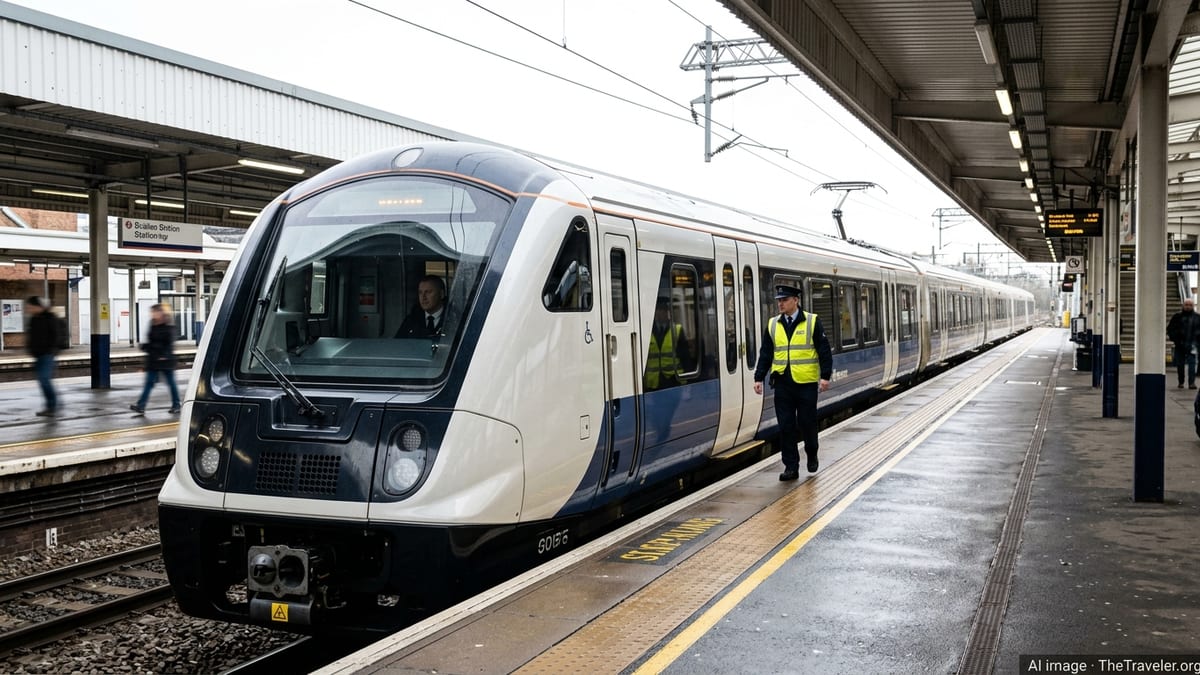
Major incidents bring trains to a standstill
Services through the Croydon bottleneck were heavily curtailed after reports of structural damage to a bridge near Purley triggered the closure of all lines through the station. Information published by specialist rail news outlets describes emergency inspections and repairs that halted trains on one of the busiest stretches of track in the country.
Live travel information from rail operators indicates that, at the height of the disruption, no trains were able to run via Purley in any direction, affecting Southern, Thameslink and Gatwick Express services linking London with Gatwick Airport, Brighton and other south coast destinations. In response, journey planners and operator alerts advised customers not to travel if their route required passing through the Croydon and Purley area.
Online journey updates showed that some trains were terminated short of their planned destinations or diverted away from the affected corridor, while others were simply cancelled. The knock-on impact extended well beyond south London, with passengers as far away as the Sussex coast reporting that services to and from Brighton had become extremely limited.
By late Sunday, rail update pages suggested that a limited service was beginning to resume, although major disruption was expected to continue into the evening as trains and staff were left out of position and engineering teams continued checks on the infrastructure.
‘Do not travel’ message echoes along Brighton Main Line
The most striking element of the disruption was the widespread use of a “do not travel” message across official information channels. Based on publicly available journey alerts and social media monitoring by rail users, the wording was applied to journeys involving the core Brighton Main Line between London, East Croydon, Purley and Gatwick Airport.
Such language is generally reserved for the most serious incidents, when operators believe they cannot provide enough capacity or certainty to move passengers even with delays. Recent examples across the national rail network have typically involved severe signal failures, major infrastructure damage or industrial action. In this case, the combination of a bridge safety issue near Purley and resulting congestion around Croydon pushed the local network into gridlock.
Comments from commuters sharing their experiences on travel forums and community platforms described packed replacement buses, long queues for alternative services and confusion at intermediate stations where live departure boards changed rapidly as trains were cancelled or rerouted. Several contributors reported being advised by journey planners and rail staff to abandon planned trips or delay travel until at least the following day.
Despite the stark tone of the warning, a handful of routes were still able to operate. Reports from passengers indicated that some Southern services between London Bridge and Caterham ran via alternative lines, although with delays, underscoring the patchy and unpredictable nature of the reduced timetable.
Knock-on effects for airport and leisure travel
The timing of the disruption, coinciding with busy summer weekends and the start of major events and holiday getaways, compounded the impact. Gatwick Airport, which relies heavily on rail links via East Croydon and Purley, experienced particular difficulties as travellers struggled to reach early morning and late evening flights.
Public journey information shows that with the main line closed through Purley, operators were forced to depend on already congested alternative routes, rail replacement buses and local tram and bus services. Passengers travelling from Brighton and other south coast towns toward London reported extended journey times and complex itineraries involving multiple changes.
Travel industry observers noted that this latest episode of disruption feeds into a wider pattern of vulnerability on the Croydon corridor. Parliamentary debates and transport policy documents have repeatedly highlighted East Croydon and its surrounding junctions as among the most critical pressure points on Britain’s rail network, with a high proportion of national passenger journeys funneled through a small number of tracks.
Local hospitality and tourism businesses are likely to feel the effects beyond the immediate disruption period. Previous “do not travel” alerts elsewhere in the country have been associated with lost bookings and reduced footfall, particularly when rail problems coincide with weekends or school holidays.
Alternative routes and passenger rights
Throughout the incident, publicly available guidance from train operators and travel planners focused on highlighting alternative options. Passengers were directed toward local bus and tram links within Croydon, as well as South Western Railway services between Epsom and London Waterloo, which remained available for some journeys that would normally use Southern services via East Croydon.
Rail users attempting to travel between London and the south coast were advised to check individual operator websites and real-time journey planners repeatedly, as timetables were adjusted at short notice. Some services were re-routed via slower suburban lines, adding significant time to journeys but preserving limited connectivity for those who needed to travel.
The incident also renewed attention on passenger rights when a “do not travel” message is in force. National Rail conditions of travel and consumer advice services state that customers who choose not to travel because of severe disruption are generally entitled to a full refund, even on advance tickets, and may qualify for compensation if they attempt the journey and experience long delays.
Consumer groups have long argued that clearer communication is needed when such warnings are issued, so that passengers understand whether to abandon their plans entirely or seek an alternative route. The Croydon disruption is likely to prompt fresh scrutiny of how operators phrase and time their alerts in order to minimise confusion.
Long-standing pressures on the Croydon rail hub
The latest shutdown has once again drawn attention to the structural challenges facing rail operations through Croydon. The Brighton Main Line and Thameslink corridor converge in this area, funnelling commuter, airport and long-distance services through a constrained set of tracks and junctions that have been described in parliamentary discussions as some of the busiest and most complex in the country.
Government documents and industry reviews have pointed to the Croydon area remodelling plans, a proposed package of upgrades intended to simplify junctions north of East Croydon and increase line capacity. However, these schemes require significant investment and would themselves involve years of disruptive works, leaving passengers caught between short-term reliability issues and the prospect of long-term engineering closures.
Recent months have already seen a series of planned weekend closures and engineering projects on routes between East Croydon, Gatwick Airport and the south coast, with operators warning of limited timetables and replacement buses. For regular commuters and leisure travellers alike, the latest unplanned stoppage adds to a growing sense of uncertainty around the reliability of the corridor.
While services began to recover later on Sunday and on subsequent days, travel advisors continue to urge passengers to check live updates before setting out, particularly for early morning peak services and airport connections. With infrastructure under sustained pressure and further engineering works scheduled across the summer, rail users on the Croydon routes are being warned to expect more disruption and to build additional time into their journeys.