


More news on this day
World Cup 2026 visitors landing in Miami are stepping into an air travel system already stretched thin, as Uruguay’s late arrival from Mexico and mounting strains on major global airlines converge to create a turbulent start to the tournament for fans and teams alike.
Get the latest news straight to your inbox!
Uruguay Reaches Miami After Mexico Charter Snag
Uruguay’s national team finally landed in South Florida on Sunday night after a delay of roughly two hours departing from Mexico, according to multiple news reports covering the team’s final approach to its World Cup opener against Saudi Arabia in Miami Gardens. Publicly available information indicates the squad’s charter flight from Cancún to Miami encountered last minute documentation and permit problems, leaving players and staff waiting at their training base in Playa del Carmen while aviation and tournament organizers worked to clear the aircraft for the short hop to the United States.
Regional media in Latin America report that the disruption centered on administrative issues tied to operating the charter into U.S. airspace rather than weather or mechanical concerns. Some outlets describe conflicting explanations between airline error and paperwork shortcomings linked to tournament logistics, but all agree on the same outcome: a departure pushed back by several hours on the eve of Uruguay’s match. The team’s pre game schedule, including media appearances, was compressed as a result.
The episode has drawn attention not only because it affected one of South America’s traditional football powers, but also because it unfolded in one of the busiest air corridors feeding the World Cup. The Cancún to Miami route is a key bridge for both fans and teams traveling between Mexican base camps and U.S. venues, and any sign of frailty in those operations is viewed as an early stress test for the tournament’s complex tri national footprint.
While Uruguay was ultimately able to complete its journey with enough time to prepare in Miami, aviation analysts note that a similar paperwork lapse affecting a later flight or a more congested airport could have produced far more disruptive consequences, particularly for fans with tight connections or same day game itineraries.
Miami Braces as Global Carriers Crowd a World Cup Hub
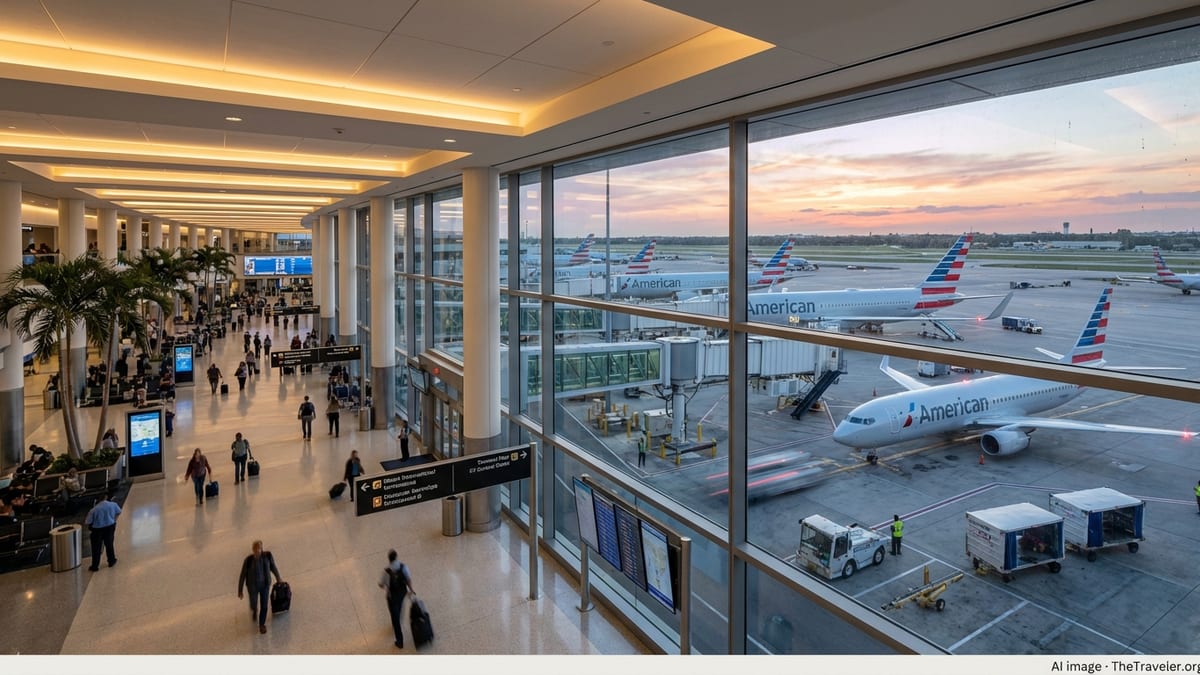
Miami International Airport entered the World Cup period as one of the most heavily trafficked gateways in the United States, with recent passenger data from local aviation authorities listing an extensive roster of foreign carriers operating at the hub, including Emirates, Aeroméxico, Lufthansa, Qatar Airways, Air France and Iberia. These airlines are now funnelling additional tournament related traffic into South Florida alongside American Airlines, which dominates domestic and regional operations at the airport.
Published statistics from the Miami Dade Aviation Department highlight how international volume has grown steadily, aided by expanded service from Latin America, Europe and the Middle East. For World Cup 2026, Miami’s proximity to Caribbean and Latin American fan bases, combined with its direct links to key European and Gulf hubs, has turned the city into a natural staging point for supporters following multiple national teams across the three host countries.
The result is a crowded and highly interconnected network in which delays on a charter in Mexico, a missed connection in a European hub or a rerouted long haul flight from the Gulf can quickly ripple into South Florida arrival banks. Industry observers note that many of the carriers feeding Miami also rely on tight connection windows and shared codeshare arrangements, particularly within alliances that include American Airlines and partners such as Iberia and Qatar Airways, increasing the risk that schedule disruptions spread across several brands.
At the same time, airlines are working within capacity constraints that already existed before the tournament. Aircraft shortages, crew scheduling limits and ongoing recovery from earlier global disruptions have left many networks operating close to the edge, reducing the margin for error when unexpected events, like Uruguay’s charter delay, occur during a peak travel window.
A Strained Global Network From Europe to the Gulf
Beyond Miami, World Cup bound passengers are also dealing with a more fragile long haul landscape linking Europe and the Middle East to North America. Public reports on airline performance show that carriers such as Aeroméxico, Iberia and Lufthansa have recently posted strong on time records, yet even high performers have had to adjust routes and schedules in response to shifting airspace restrictions, weather events and regional tensions.
In the Gulf region, travel forums and airline statements over recent months describe periods of sharply reduced operations for major players including Emirates and Qatar Airways following temporary airspace closures and security concerns. While many flights have since resumed, backlogs, complex reroutings and more conservative scheduling have left some itineraries longer and more vulnerable to missed connections than they appear on paper.
Travel industry guidance circulated in early 2026 has repeatedly urged passengers to build in additional time when routing through Middle Eastern hubs, particularly when their final destination is in North America for events such as the World Cup. For fans bound for Miami, that can mean arriving a day earlier than originally planned, avoiding very tight connections between Gulf carriers and U.S. or European partners, or choosing routings that stay within a single airline group where possible.
European gateways face their own pressures. Carriers such as Air France, Lufthansa and Iberia are balancing seasonal leisure demand with tournament related flows, while still managing crew shortages and air traffic control bottlenecks described in various operational updates over the past year. This complex backdrop increases the likelihood that an isolated disruption, such as a delayed inbound from the Middle East or Latin America, triggers knock on delays across transatlantic banks into U.S. cities like Miami.
What Travelers Are Not Being Told About World Cup Risk
While airlines and tournament organizers highlight increased capacity, special charter services and festive branding around World Cup 2026, consumer advocates point out that less emphasis has been placed on the fragility of the underlying system. Publicly available complaint and performance data compiled by U.S. regulators and aviation analytics firms show that even under normal conditions, carriers including American Airlines, foreign partners and competitors such as Aeroméxico, Emirates, Lufthansa, Qatar Airways, Air France and Iberia generate thousands of customer submissions each year related to delays, cancellations and misconnections.
Industry experts note that many of the contingency practices travelers assume are standard, such as being shifted quickly to another airline during disruptions, have become more limited. Recent advisories shared in frequent flyer communities indicate, for example, that some major carriers have tightened rules around rebooking passengers on partner airlines during mass disruption events, preferring to keep travelers within their own networks even when that means longer waits for new seats.
Travel discussion forums focused on American Airlines and Qatar Airways also describe cases in which passengers holding complex itineraries across multiple alliance partners encountered difficulties when one segment was canceled. Without a single airline taking full responsibility for the entire journey, some travelers reported extended delays in securing alternative routings, particularly on long haul connections to and from the Middle East and South Asia.
Against the backdrop of the World Cup, this quieter shift in industry practice means that fans who experience delays similar to Uruguay’s Mexico Miami holdup may find fewer easy options than in past tournaments. Same day reaccommodation through another carrier may not be available, and large numbers of affected passengers could quickly overwhelm airport staff and call centers, especially at a hub like Miami already operating near capacity.
Practical Steps for Fans Arriving in Miami
For travelers heading to World Cup matches in Miami, publicly available aviation and consumer guidance suggests a more cautious approach than usual. Booking nonstop flights where possible, allowing generous connection times, and avoiding last flight of the day options into South Florida are all strategies commonly recommended by travel advisors and seasoned frequent flyers observing current conditions.
Passengers connecting through Gulf or European hubs on carriers such as Emirates, Qatar Airways, Lufthansa, Air France, Iberia or other long haul operators may wish to schedule overnight layovers or extended transfer windows, particularly if a critical match or tour departure depends on a timely arrival. Fans using Aeroméxico or other Latin American airlines to bridge between Mexican bases and Miami are also encouraged to monitor flight status closely and be prepared for late schedule changes, as illustrated by Uruguay’s charter experience.
Consumer data compiled by transportation authorities highlights the importance of understanding each airline’s rebooking and refund policies before departure. Travelers who know in advance whether their tickets permit same day changes, alliance wide reaccommodation or only limited credit options are better positioned to make quick decisions if flights are delayed or canceled during the tournament.
Ultimately, Uruguay’s delayed arrival in Miami serves as a high profile reminder that World Cup 2026 is unfolding within an air travel ecosystem still working through earlier global shocks while managing unprecedented demand. For passengers, the lesson is less about any single airline and more about treating even short regional hops as potential pressure points in an intricate, globally connected network.