


More news on this day
For years, the safest answer to preflight timing has been to arrive at the airport “as early as possible,” leading many anxious travelers to show up four hours or more before departure. As U.S. air travel rebounds and airport lines fluctuate, that extra cushion is under new scrutiny, with some airports now warning that arriving too early can actually slow the system for everyone.
Get the latest news straight to your inbox!
Standard Guidance: Two Hours, Three Hours, Not Four
Publicly available information from the Transportation Security Administration continues to point to a familiar baseline: about two hours before departure for domestic flights and three hours for most international trips. That guidance, echoed by airline check in pages and many airport advisories, is designed to cover typical waits at check in, bag drop and security rather than worst case scenarios.
Major U.S. carriers, including those based at large hubs, generally align with that approach. Domestic passengers are often told to be at the airport around two hours in advance, while long haul and transborder travelers are urged to plan on roughly three hours, especially when passport checks and visa verification are required. These are recommendations, not hard rules, but they shape how most travelers plan their day.
Individual airports also publish their own advice. Hubs such as Hartsfield Jackson Atlanta recommend at least two hours for domestic and three for international departures, while Denver suggests passengers be inside the terminal a minimum of two hours before boarding during peak holiday periods. Regional airports, where security lines are shorter and terminals smaller, may list slightly shorter windows.
The result is a loose consensus rather than a strict standard. For the average U.S. traveler on a routine domestic flight, four hours remains well beyond what agencies and airlines currently describe as necessary.
Why Some Travelers Still Aim for Four Hours
Despite official guidance, many passengers continue to arrive three and a half or four hours early, especially during busy summer and holiday periods. Memories of earlier seasons marked by long security queues and missed flights have encouraged a “better safe than sorry” mindset, even when conditions at a given airport have improved.
High profile coverage of crowded checkpoints and occasional system outages has added to that cautious approach. Stories of travelers stuck in lines that snake through terminal corridors, unable to reach the gate before boarding closes, have pushed some to build in extra margin. When traffic congestion, parking shortages and construction work are added to the picture, the appeal of arriving extremely early is clear.
International journeys can drive even more conservative planning. Travelers navigating unfamiliar airports, facing additional document checks or connecting to long haul flights may decide that four hours of lead time is a reasonable insurance policy, particularly if they are traveling with young children or heavy baggage. For these passengers, the cost of waiting at the gate can feel smaller than the risk of missing a once daily flight.
In practice, however, that level of caution often reflects individual risk tolerance rather than the conditions most airports currently describe. With more live wait time data and traffic information now available, many hubs argue that a blanket four hour rule is no longer the most efficient choice.
Airports Push Back Against Overly Early Arrivals
In recent months, some U.S. airports have begun urging passengers not to show up excessively early, particularly at the very start of the day. Published coverage of spring 2026 travel patterns highlights examples of airports asking travelers to avoid arriving four hours before departure if security checkpoints are not yet open or if data show that lines are moving quickly.
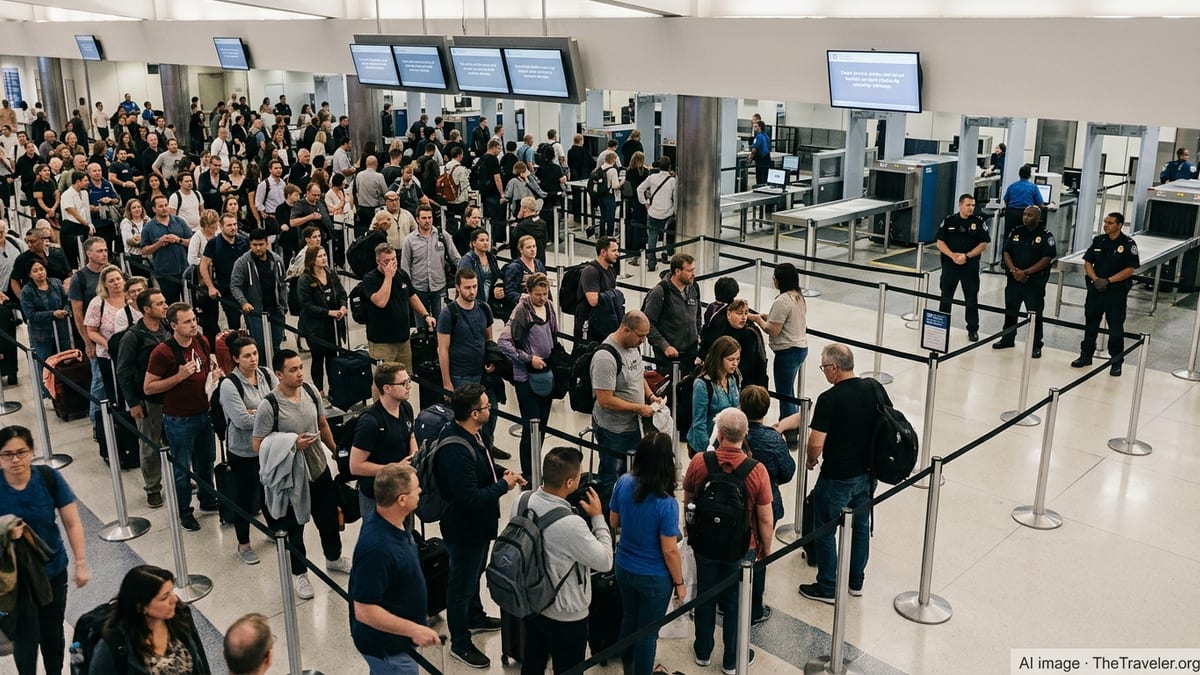
According to these reports, airports are concerned that large numbers of extra early passengers can create their own crowding problem. When travelers line up long before opening time, queues can build in front of closed security lanes, clogging check in areas and straining limited space. Once screening begins, staff must work through a backlog that exists partly because so many people arrived earlier than recommended.
Some airports have instead promoted narrower “sweet spot” arrival windows, such as about 90 minutes ahead for certain off peak domestic flights, or around two and a half hours for busy morning departures. Others emphasize the use of mobile apps and terminal displays that show real time security wait times, encouraging travelers to adjust their arrival based on current conditions rather than fears of worst case delays.
The underlying message is that arriving somewhat early remains important, but that arriving extremely early is not always helpful. At airports where staffing and checkpoint capacity have stabilized, managers are signaling that uniform four hour arrival habits may no longer match how the system is designed to run.
Factors That Matter More Than an Arbitrary Number
Experts and recent travel guidance increasingly frame airport arrival time as a personalized calculation built from several variables. Among the most important are whether travelers need to check bags, the size and layout of the departure airport, the time of day, and whether they hold programs such as TSA PreCheck or Global Entry that can reduce screening times.
Check in deadlines in airline conditions of carriage typically fall well short of four hours before departure. Many major U.S. airlines stop accepting checked baggage between 45 and 60 minutes before domestic departures and somewhat earlier for international flights. Some also decline to accept checked bags more than a set number of hours in advance, which means turning up four hours early may not even allow travelers to complete the first step of their journey.
Real time data is playing a growing role. Several large airports, including hubs in Texas, Colorado and Ohio, now publish checkpoint wait times on their websites or in mobile apps, allowing travelers to see whether security is running smoothly before they leave home. When paired with traffic information and terminal parking updates, those tools make it easier to tailor arrival time instead of relying on a generic four hour target.
Travel season is another key factor. Federal aviation forecasts show that peak days around summer holidays and major events can involve significantly more flights and passengers, increasing the likelihood of longer queues. During those windows, nudging arrival times closer to the upper end of airline and airport recommendations may be prudent, particularly for families or infrequent flyers. On quieter midweek mornings, by contrast, a full four hour buffer is less likely to be necessary.
When, If Ever, Four Hours Makes Sense
There are still situations where a four hour arrival can be justified. Very large international hubs with complex terminal layouts, third party check in agents and additional document checks can involve longer processing times, especially when departing to destinations that require detailed visa screening. Travelers making separate onward connections on nonaligned airlines may also choose extra time to manage potential complications.
Passengers with additional needs, such as those requiring mobility assistance or traveling in large groups, often build in more time to navigate the airport. Inclement weather, construction that disrupts access roads or major events that bring surges of travelers to a city can similarly tilt the balance toward earlier arrival, even if it means a longer wait at the gate.
For most domestic travelers, however, the emerging picture points to a more moderate strategy. Publicly available guidance supports arriving early enough to comfortably clear the steps between curb and gate, but stops short of advising four hours as a standard practice. Instead, airports and airlines are leaning on clearer communication, live data and seasonal advisories so passengers can adapt their plans.
As the busy travel seasons of 2026 progress, the tension between anxious early birds and efficiency minded airport planners is likely to continue. The common thread is that showing up with no margin remains risky, while a carefully chosen window, informed by local conditions, increasingly beats a blunt four hour rule.