


More news on this day
Heightened tensions between Iran, the United States and key Gulf allies are rapidly reshaping travel across the Middle East, as Washington urges Americans to reconsider nonessential trips and closely monitor evolving security risks while Iranian missiles target bases and infrastructure in several states.
Get the latest news straight to your inbox!
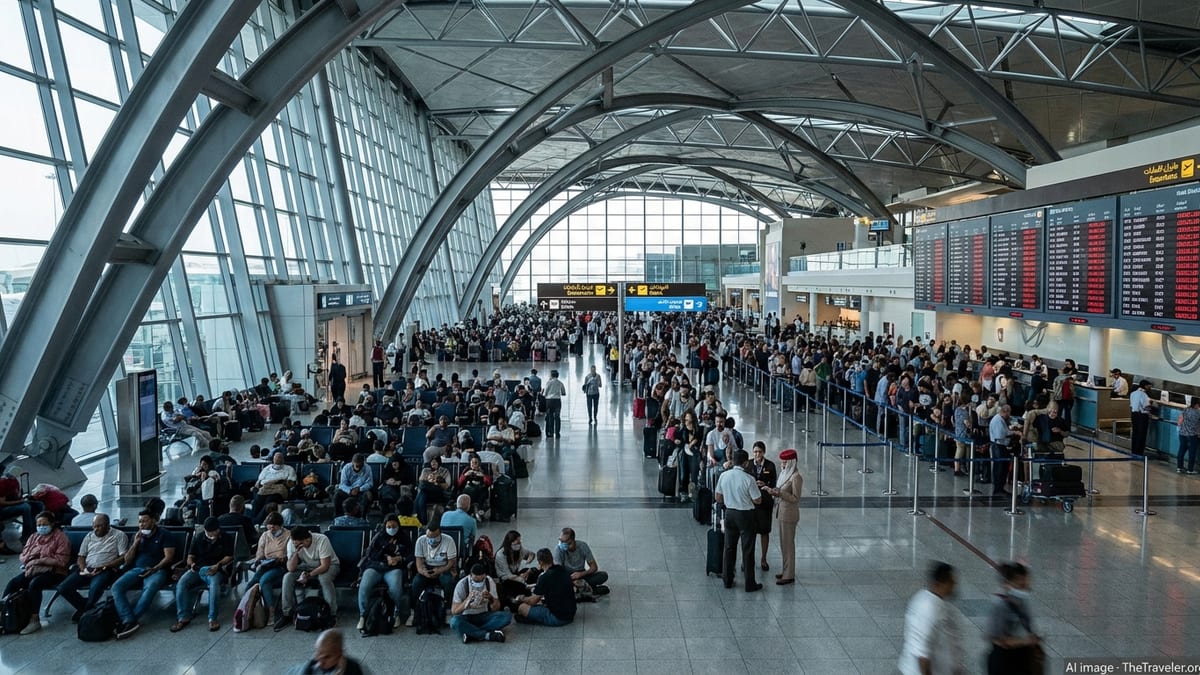
Fresh US Warnings as Iran Targets Gulf States
Publicly available information shows that the United States has renewed calls for its citizens to reconsider travel to or through much of the Middle East following a fresh round of Iranian strikes on Gulf countries that host American military facilities. Live coverage by regional and international outlets describes missile and drone attacks against sites in Bahrain and other Gulf states, alongside ongoing United States operations against Iranian targets.
Reports indicate that a recent Iranian barrage struck areas around Sheikh Isa Air Base in Bahrain, triggering air raid sirens and renewed concerns about the vulnerability of densely populated coastal regions and major transport hubs. The strikes come on the heels of consecutive nights of United States attacks on Iranian military infrastructure, contributing to fears of wider escalation.
According to open-source reporting, Iranian officials have warned that Gulf countries seen as facilitating United States operations could face further retaliation. This dynamic leaves major airline hubs and tourism centers under an unusually high level of scrutiny, as governments and carriers weigh operational safety against the economic importance of maintaining connectivity.
The overall picture emerging from live blogs and rolling news coverage is of a fast-moving military confrontation that spills across borders, blurring the line between conventional battlefield risks and those faced by civilian travelers using airports, highways and sea routes throughout the region.
State Department Advisories Elevate Regional Risk Map
Travel advisories published by the United States government already classified many Middle Eastern destinations at Level 3, defined as “Reconsider Travel,” even before the latest Iranian strikes on Gulf states. Recent notices for Bahrain, Saudi Arabia and the United Arab Emirates highlight the threat of armed conflict, terrorism and potential missile and drone attacks that could affect civilian areas and aviation corridors.
Publicly accessible advisory language notes that hostilities between the United States and Iran have led to repeated threats against sites across the Persian Gulf, with particular concern for airports, transport hubs and locations associated with Western interests. In parallel, aviation bulletins from regulators such as the Federal Aviation Administration advise United States carriers to exercise heightened caution in the airspace over and near the Gulf.
Separate government guidance categorizes Iran, Iraq, Lebanon, Syria, Yemen and Gaza as Level 4 “Do Not Travel,” reflecting long-standing security concerns that have intensified with the latest phase of the conflict. The combination of Level 3 and Level 4 warnings effectively covers most of the region that many American travelers transit when flying between North America, Europe, Africa and Asia.
For travel planners and tourism businesses, these advisories amount to a redrawn risk map. Destinations once marketed as safe stopover hubs and winter-sun escapes now appear in the same advisory tiers as active conflict zones, complicating insurance coverage, corporate duty-of-care decisions and individual trip planning.
Impact on Flights, Hubs and Itineraries
In recent months, live reporting and industry analyses have described widespread disruptions to air travel as the confrontation with Iran has expanded. Temporary closures and capacity reductions at major Gulf hubs have had a ripple effect across global networks, forcing airlines to reroute traffic, adjust schedules or, in some cases, suspend services entirely.
Dubai, Abu Dhabi and Doha have historically served as critical junctions for travelers connecting between the Americas or Europe and destinations in South and East Asia. Conflict-related disruptions in these hubs can translate into longer journeys, higher fares and fewer options for passengers attempting to avoid the most volatile parts of the region.
Travel and hospitality research circulated in the industry suggests that some carriers and tour operators are actively steering customers away from itineraries that require transits through the Persian Gulf, opting instead for routes via Europe, Central Asia or direct links where aircraft range allows. This trend appears particularly pronounced in corporate travel policies, where risk managers are reassessing previously routine routings through Gulf airports.
The cruise and ferry sectors are also adjusting. Operators with itineraries touching Gulf ports or Red Sea gateways are reviewing port calls and, in some cases, revising or canceling sailings. Travel buyers and individual tourists are urged by publicly available guidance to remain flexible, be prepared for last-minute changes, and confirm that airlines and tour providers have contingency plans in place.
Americans in the Region Face Tough Choices
Beyond would-be tourists, tens of thousands of American citizens live and work across the Middle East, from energy and aviation professionals in the Gulf to aid workers and educators in Levant countries. Earlier in the conflict cycle, published coverage documented United States messages urging citizens in more than a dozen states to depart “as soon as possible” using commercial options while they remained available.
Follow-up reporting has shown how quickly those options can close. After previous rounds of strikes between the United States, Israel and Iran, commercial air links were sharply curtailed, leaving some travelers stranded and relying on complex overland routes or third-country transit. That experience continues to inform current guidance, which stresses that departure decisions should be made before flight schedules deteriorate.
For Americans who remain in Gulf states despite reconsider-travel advisories, consular updates and public security alerts emphasize situational awareness, careful route planning and close attention to local instructions. Guidance often highlights the importance of avoiding large gatherings, limiting nonessential movements during periods of heightened tension and registering travel plans in available online systems so that updates can be delivered quickly.
At the same time, industry observers note that not all Americans in the region can or wish to leave. Long-term residents, dual nationals and business owners frequently face complex personal and professional obligations. For them, the latest strikes and warnings translate into a renewed emphasis on contingency planning rather than immediate evacuation.
What This Means for Future Middle East Travel
For prospective visitors, the unfolding confrontation is reshaping perceptions of the Middle East as a travel destination. Tourism boards and hospitality brands in Gulf states have invested heavily in presenting cities such as Dubai, Abu Dhabi, Doha and Riyadh as stable, aspirational gateways that stand apart from regional turmoil. Analysts now suggest that repeated missile alerts and airspace disruptions risk undermining that narrative.
Travel market assessments released over recent weeks point to a likely short-term decline in discretionary travel to and through the region from North America and parts of Europe, particularly among older travelers and families. Younger, more experienced travelers may be more willing to continue visiting, but often with enhanced insurance coverage, backup plans and closer monitoring of security developments.
Looking ahead, the degree to which the Middle East recovers its role as a central global aviation and tourism hub will depend on how long the strikes and counterstrikes between Iran, the United States and Gulf states continue, and whether infrastructure and airspace can be reliably insulated from further attacks. If tensions persist, airlines may invest more in alternative hubs, and some travelers could permanently adjust their preferred routes away from the Gulf.
For now, the message emerging from advisories and live news coverage is clear: Americans contemplating trips to the Middle East are urged to reconsider nonessential travel, scrutinize itineraries that transit high-risk areas, and stay ready to adapt plans quickly as the security situation and flight operations change with little warning.