


Doha’s Hamad International Airport has grown into one of the world’s major transit hubs, with millions of passengers connecting each year between Europe, Asia, Africa, and Oceania. The good news for travelers is that security, immigration, and transit at Hamad are generally efficient and clearly signed, but the experience can still feel confusing if it is your first time. This guide walks you step by step through what actually happens when you land, connect, or enter Qatar in 2026, using real-world examples to show how the rules work in practice.
Get the latest updates straight to your inbox!
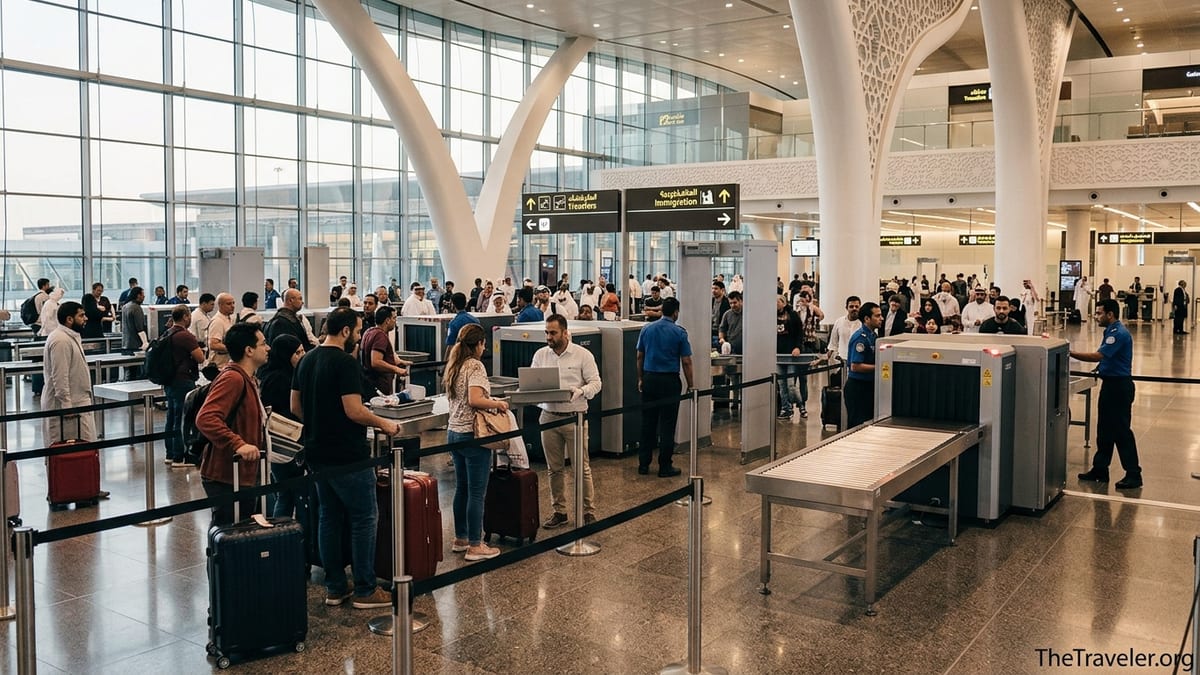
How Hamad International Airport Is Laid Out for Transit
Hamad International Airport is designed primarily as a transfer hub, which means the entire terminal is built around keeping connecting passengers airside. All Qatar Airways and oneworld flights currently use a single integrated terminal, so you do not change buildings when you connect. Gates are grouped into concourses labeled A through E, linked by long, bright corridors, moving walkways, and the central retail and dining area dominated by the giant Lamp Bear artwork. For most travelers this means you step off one aircraft, follow “Transfers” signs in English and Arabic, clear a quick security check, and walk directly to your next gate without going through passport control.
Because the airport is so transfer-focused, the minimum connecting times can be surprisingly short. Many itineraries are sold with connections of around 50 to 90 minutes, and these are routinely achievable in normal conditions. On a typical London to Bangkok trip on one ticket with Qatar Airways, your checked bags are tagged all the way to Bangkok at Heathrow. At Doha you will simply follow the purple transfer signs, clear transit security, check the flight information screens for your next gate, and walk there. You would only interact with immigration if you deliberately choose to enter Qatar or if you have booked separate tickets that force you to collect and re-check your luggage.
For travelers nervous about tight connections, it helps to know that Hamad’s transfer area is compact compared with many other mega hubs. Even if you arrive at the far end of Concourse E and depart from Concourse A, you are likely facing a 15 to 25 minute walk, not an airport train ride across multiple terminals. Many connecting passengers build in a slightly longer layover, around three hours, to allow time for a shower in a lounge, a proper meal, or a quick browse in the duty-free area while still keeping a generous buffer before boarding.
Arrival Security and Immigration: Entering Qatar
If Doha is your final destination or you are planning a stopover, you will follow the “Arrivals / Baggage Claim” signs instead of the transfers route. From the aircraft you walk through the main concourse into the immigration hall, a long space with separate lines for visa-free nationalities, GCC residents, other visitors, and Qatari citizens. There are self-service e-gates for some residents and frequent travelers, but most visitors will still pass an officer at a manned desk. At busy times, such as late evening bank arrivals from Europe, you may see lines build up, so a 30 to 60 minute wait is not unusual.
Qatar continues to run one of the more open visa regimes in the region. As of mid 2026, citizens of over 100 countries, including the United States, United Kingdom, Canada, most of Europe, Australia, New Zealand, Japan, South Korea, and Singapore, can enter visa-free or with what is effectively a free visa on arrival for stays typically up to 30 days, often extendable once online. Visitors from some other countries, such as India or the Philippines, may also be eligible but might need proof of hotel booking via the official stopover program or meet specific conditions that airlines check before boarding. Rules change periodically, so airlines and travel agents strongly advise checking the Visit Qatar visa page or your airline’s travel requirements tool a few days before flying.
In practice, a typical first-time visitor from Germany arriving on a Qatar Airways evening flight will queue in the “Visa-free entry” lane, present their passport, onward or return ticket, and occasionally proof of accommodation. The immigration officer may ask simple questions about the length and purpose of the stay. Once stamped in, you descend the escalators to baggage claim, where large digital screens show which carousel is assigned to your flight. Customs follows, but formal inspections are relatively rare for tourists; most passengers walk through the green channel unless they have items to declare.
Understanding Security Screening at Hamad
Hamad International Airport has invested in advanced screening systems, particularly for transfer passengers. Many of the security lanes now use upgraded CT scanners that provide a 3D image of cabin baggage, which can reduce the need for passengers to remove laptops and other electronics. In the transit area, this often translates into a quicker, less disruptive process: you place your bags in trays, walk through a metal detector or body scanner, and collect your items at the other side without unpacking your entire backpack. When lanes are busy, staff may still ask you to take out laptops or liquids to speed up any manual inspections.
For arriving passengers heading into Qatar, the main security controls happen before departure from your origin country, but there are still behind-the-scenes checks. Checked baggage for inbound and transfer flights passes through multiple layers of automated screening before it reaches the carousel or your onward aircraft. If an item triggers an alert, bags may be pulled aside for hand inspection, and in rare cases passengers may be summoned over the public address system to open a suitcase. This is more likely if you are carrying restricted items such as professional camera batteries, unusual electronics, or large quantities of powders or liquids.
Departing from Doha, you will encounter front-line security after check-in. Economy passengers typically use the central departures hall checkpoints, while premium-class and some elite-status passengers may have access to dedicated fast-track lanes. For instance, a business-class traveler flying from Doha to Singapore with Qatar Airways might check in at a dedicated counter, proceed to a premium security channel with shorter lines, and be airside within 15 to 20 minutes even in peak evening hours. Important items like laptops, power banks, and medication should stay in your cabin baggage, since retrieving them from checked luggage after screening is rarely possible once bags enter the system.
Transit Without Entering Qatar: What Really Happens
The majority of passengers at Hamad International Airport are simply connecting between two international flights. If you are flying, for example, from New York to Delhi on a single Qatar Airways ticket, your connection is considered international to international transit. When you disembark in Doha, signs soon split between “Transfers” and “Arrivals / Baggage Claim.” Follow “Transfers,” where airport staff and screens show your departing gate. At many gates you will pass through a dedicated transfer security checkpoint directly off the jet bridge or just inside the terminal corridor, then you emerge into the main airside departures area.
Crucially, you generally do not go through passport control or need any sort of Qatar visa for a standard airside transit, provided you remain in the terminal and your layover is under 24 hours. This holds regardless of nationality in most cases. For a traveler from a country that does not enjoy visa-free entry into Qatar, such as some African or South Asian states, a 6-hour layover in Doha is still typically permitted without an entry visa as long as you have a confirmed onward ticket and remain airside. Airlines sometimes request proof of the onward journey at check-in to ensure you meet transit requirements.
Because many passengers arrive with relatively short connections, the airport makes an effort to move them quickly. On a one hour and fifty minute layover from Oslo to Bangkok via Doha, for example, a typical sequence would be: off the aircraft, walk to the transfer security checkpoint, place cabin bags and metal items through the scanner, clear within five to ten minutes, check the nearest flight information display for your Bangkok gate, and walk directly there. It is not uncommon to complete this whole process in 30 minutes, leaving time for a coffee stop before boarding. Nonetheless, if your incoming flight is severely delayed, Qatar Airways ground staff can meet you at the gate holding signs for specific onward cities and sometimes escort you via priority channels.
Whether you must clear security again during transit can vary slightly between flights, depending on where you arrive and depart from within the terminal. Some passengers report walking straight into the main concourse without passing another scanner when arriving from certain low-risk origins, while others always go through a checkpoint. For planning purposes it is safest to assume that you will encounter at least one security lane between flights, so pack your liquids in 100 ml containers and keep them easily accessible in your carry-on.
Leaving the Airport on a Transit or Stopover
Doha’s location makes it tempting to leave the airport on a longer layover for a quick city visit. Whether this is possible depends on your nationality, visa rules on the day you travel, and the length of your connection. Many visa-free nationalities, such as citizens of France, Canada, or Malaysia, can enter Qatar for a short stay without arranging a visa in advance. A traveler with an 8-hour daytime layover from Paris to Bangkok could, for example, clear immigration, take a taxi or metro to the Corniche, stroll around Souq Waqif, and return to the airport with time to spare.
Travelers who do not qualify for visa-free entry but still want to leave the terminal sometimes use Qatar Airways’ transit visa or a stopover package booked via the airline’s official stopover program. In practice, this might look like a passenger from a South Asian country booking a two-night Doha stopover at a city hotel bundled with their long-haul ticket. The package handles the visa arrangements under the current rules, and at immigration they present both their passport and hotel confirmation. Because requirements change and some nationalities have seen on-arrival options suspended in recent months, it is important to verify your specific situation with official sources or your airline shortly before you fly.
If you simply want to freshen up, you may not need to pass immigration at all. Hamad has airside facilities including pay-per-use lounges with showers, quiet rest areas, and a transit hotel located inside the terminal where rooms can be rented in blocks of hours. For example, a traveler on a 2 hour 30 minute layover to Melbourne might head straight from transfer security to a nearby lounge that sells shower access, spend 30 to 40 minutes there, then walk to the departure gate. Because boarding for long-haul flights often starts about 45 minutes before departure, it is wise to be back near your gate at least an hour before scheduled takeoff.
Real-World Tips for a Smooth Security and Immigration Experience
Small preparations before you land in Doha can significantly improve your experience at security and immigration. For travelers planning to enter Qatar, having your passport, completed arrival details, return or onward ticket, and hotel booking ready on your phone or printed can shave minutes off your time at the desk. If you fall under a category that requires hotel registration through an official stopover program, airline staff at your departure airport will normally check this before they issue a boarding pass, so double-check your confirmation email and keep it handy in both paper and digital form.
At security, packing your carry-on with checkpoints in mind makes life easier. Put laptops, tablets, and power banks in an easily accessible section of your bag, and keep liquids in a clear resealable bag that you can pull out in seconds. For example, a traveler carrying a DSLR camera, two lenses, and multiple film rolls might place all film in a small pouch and politely ask officers for a hand inspection if they are worried about repeated X-ray exposure. While policies can differ by shift, many passengers report that security staff will accommodate reasonable requests when lines are not extremely busy.
Families and less mobile passengers can take advantage of assistance services. Wheelchair support can be booked in advance via your airline and often means an attendant meets you at the aircraft door, helps you through transfer security or immigration, and escorts you to your next gate. Parents with young children can use family lanes at security when available, and baby-changing rooms are spread throughout the terminal. For a family of four arriving from Manchester for a week in Doha, this might mean prebooking assistance for a grandparent, using the family line at passport control, and taking an airport taxi large enough for luggage and strollers into the city.
The Takeaway
Hamad International Airport is designed to make connections and arrivals as straightforward as possible, but the combination of visa rules, security technology, and airline procedures means that every traveler’s path through the airport is slightly different. Understanding the basic flows helps you anticipate what will happen: transit passengers usually stay airside, clear at least one security checkpoint, and walk to their next gate, while visitors entering Qatar pass immigration, collect bags, and exit through customs into a modern arrivals hall with clear onward transport options.
Because Qatar’s visa policy and airline stopover programs continue to evolve, it is wise to check your specific entry eligibility and any hotel booking requirements shortly before travel, especially if you are relying on visa-free access or visa on arrival. Building in a realistic connection time, organizing your carry-on for security, and keeping key documents accessible will go a long way toward ensuring your experience of Doha’s hub is closer to the smooth, quiet efficiency that frequent flyers regularly praise. With a bit of planning, security, immigration, and transit at Hamad become just another well-organized step on your journey rather than a source of stress.
FAQ
Q1. Do I need a visa to transit through Doha if I am not leaving the airport?
Most passengers do not need a visa for an airside transit through Hamad International Airport, regardless of nationality, as long as they remain in the terminal and depart on a confirmed onward flight within 24 hours. Airline staff may still check that you have a valid ticket and meet entry rules for your final destination before allowing you to board your initial flight.
Q2. Will I have to go through security again when connecting in Doha?
In most cases, yes. Even if you are arriving from another international flight, you should expect at least one security checkpoint between flights. Sometimes this is located directly after you exit the aircraft, and other times it is in the main transfer area. Pack your cabin bag so that laptops and liquids are easy to remove if requested.
Q3. How long should I allow for a connection at Hamad International Airport?
Many through-tickets are sold with connections of 50 to 90 minutes, which are generally workable in normal conditions. If you prefer a more relaxed connection that allows for a quick meal or shower, consider aiming for at least two to three hours, especially on overnight itineraries or if traveling with children or mobility challenges.
Q4. Can I leave the airport on a long layover in Doha?
Yes, if your nationality allows visa-free entry to Qatar or you have obtained the appropriate visa or stopover package. With a daytime layover of six to eight hours, many travelers clear immigration, visit nearby sights such as the Corniche or Souq Waqif, and return in time for their onward flight. Always confirm your current visa status and allow ample time for immigration, transport, and security on the way back.
Q5. What documents will immigration officers usually ask for when entering Qatar?
Typically you will be asked to present your passport, sometimes your boarding pass, and often proof of onward or return travel. Depending on your nationality and the current rules, officers may also request to see a hotel booking or other proof of accommodation, and they may ask a few routine questions about the purpose and length of your stay.
Q6. What happens to my checked baggage during a transit in Doha?
If your flights are on a single ticket and your bags are tagged through to your final destination, you will not see your checked baggage in Doha. It is automatically transferred between aircraft and passes through behind-the-scenes security screening systems. You normally only need to collect and re-check bags if you are entering Qatar, finishing a journey on one ticket and starting a separate ticket, or have been specifically told to do so by your airline.
Q7. Are there separate security lanes or fast track for premium passengers?
Yes. Business and first-class passengers on many airlines, along with some elite frequent flyers, often have access to dedicated check-in and security lanes that can significantly reduce waiting times. If you hold a premium ticket or status, look for signs indicating priority or fast-track security in the departures hall or ask airport staff where to go.
Q8. Is Hamad International Airport safe and well regulated?
Hamad International Airport operates under international aviation safety and security standards and is regularly audited by global aviation bodies. It features modern screening equipment, trained security personnel, and multiple layers of baggage and passenger checks. While no airport can be entirely risk-free, Hamad is widely regarded as a safe and well-managed hub by major airlines and regulators.
Q9. Can I get my camera film or special equipment hand-checked at security?
It is sometimes possible, but it is not guaranteed. If you are carrying undeveloped camera film or sensitive equipment, arrive with extra time, inform security staff politely, and ask whether a hand inspection is possible. When lanes are not extremely busy, officers may agree, but if traffic is heavy they may require items to go through standard screening.
Q10. What should I do if my connection time becomes very short due to a delay?
If your incoming flight is delayed and your connection looks tight, inform the cabin crew before landing so they can alert ground staff. In Doha, airline representatives sometimes meet delayed flights to help passengers with short connections, offering guidance or directing them to faster transfer routes. If you miss your onward flight on a through-ticket, go directly to your airline’s transfer desk in the terminal; they will usually rebook you on the next available service under their misconnection policy.