


Airport lounge access has quietly become one of the most valuable travel perks, especially now that many economy cabins feel more crowded and airports busier than ever. Two programs appear again and again on premium and mid-tier credit cards around the world: DragonPass and LoungeKey. They look similar at first glance, but work quite differently once you dig into how you get them, how you pay, and which lounges you can actually enter on a busy travel day.
Get the latest updates straight to your inbox!
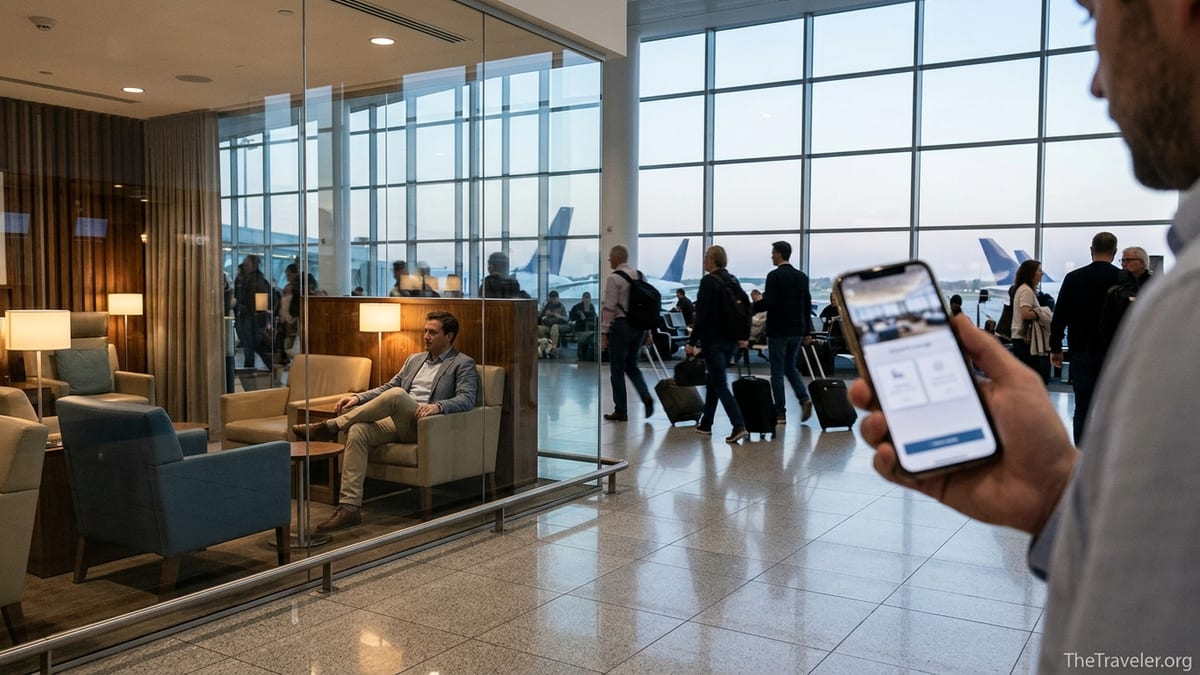
What DragonPass and LoungeKey Actually Are
DragonPass and LoungeKey are both global airport lounge access programs. They give you entry to independent and contract lounges regardless of the airline or cabin you are flying, as long as the lounge participates in their network. For a traveler flying economy from New York to London on a low-cost carrier, they can still sit in a quiet lounge with Wi-Fi and snacks if they hold the right card linked to DragonPass or LoungeKey.
DragonPass started in China and has grown into a broad airport services platform. In 2026 it offers access to more than 1,000 lounges worldwide plus extras such as airport restaurant discounts, spa deals, chauffeured transfers and sometimes fast track security at select airports. Many banks in Asia and Europe use DragonPass as the engine behind their “airport privileges” programs, from Singapore’s UOB Visa Infinite Metal card to packaged accounts at major UK banks.
LoungeKey is run by Collinson, the same company behind Priority Pass. Instead of selling memberships directly to travelers, LoungeKey is designed to sit behind payment cards, mainly premium Mastercard and sometimes Visa products. If you hold an eligible card, such as certain World Elite Mastercards in Europe or Latin America, you may have LoungeKey access simply by presenting that card at a participating lounge or generating a digital pass in the LoungeKey app.
In practice, both schemes feel similar at the door. Whether a sign reads “DragonPass accepted here” or “LoungeKey welcome,” the agent will either scan a QR code from the app or swipe your card, then confirm if you and any guests have complimentary visits or need to pay a per-visit fee.
How You Get Each Service: Direct vs Card-Tied Access
One of the biggest practical differences is how you obtain membership. DragonPass can be bought directly by individual travelers and is also bundled with many credit cards and premium bank accounts. You might download the DragonPass app, create an account and buy a standard membership yourself, or you might activate a membership given to you by your bank, such as through a Visa Airport Companion or DragonPass Premier+ benefit.
Imagine a Canadian traveler with a mid-tier rewards card that includes four DragonPass visits per year. They register through their bank’s benefits portal, link their card inside the DragonPass app, and then see four complimentary visits available. When they fly from Toronto to Cancun with a connection in Dallas, they can use one visit in Toronto and another in Dallas, with the app automatically tracking usage.
LoungeKey, by contrast, is not something you can simply go out and buy. There is no standalone LoungeKey membership you can purchase online. Access is always tied to an eligible credit or debit card. For example, an Indian traveler holding a HDFC Bank Mastercard World credit card might get LoungeKey access to many domestic and some international lounges, but only as long as they maintain that specific card in good standing. If they cancel or downgrade the card, the LoungeKey access disappears.
This structural difference matters if you like to separate your lounge program from your card strategy. With DragonPass, you can keep a personal membership even if you switch banks. With LoungeKey, you are effectively committing to whichever card gives you the access and must weigh annual fees, interest rates and reward structures as part of your lounge decision.
Network Size, Coverage and Real-World Lounge Examples
Both DragonPass and LoungeKey now cover hundreds of airports worldwide, with networks often quoted in the low-thousands of participating locations. Marketing numbers vary and sometimes include non-lounge services, so it is safer to think in terms of coverage at the routes you actually fly rather than chasing headline figures.
Consider a traveler based in London who regularly flies through Heathrow, Gatwick and occasionally Manchester. In 2026, they might find that LoungeKey opens multiple Plaza Premium and independent lounges across Heathrow terminals, while DragonPass covers many of the same spaces plus a few different contract lounges at Gatwick or in regional UK airports. A France-based comparison by a travel rewards site in 2026 highlights that in some hubs LoungeKey has slightly more lounges, while at other airports DragonPass has the edge. The only reliable way to check is to open each program’s app and search airport by airport.
Coverage can also vary at secondary airports. A European digital bank that used DragonPass until recently had members praising access at lesser-known airports where LoungeKey and Priority Pass were not yet present. On the other hand, some Revolut Ultra customers complained when their benefit shifted from DragonPass to LoungeKey, because specific lounges they used in Scandinavia were no longer available, even though overall network size was similar. These case studies illustrate that “larger network on paper” does not always mean “better for your home routes.”
It is also important to understand that capacity constraints apply to both programs. At peak times, such as early evening transatlantic banks at New York JFK or morning departure waves in Singapore, some lounges limit entry for all third-party passes, whether DragonPass, LoungeKey or even Priority Pass. Travelers on forums frequently report being turned away despite their membership, especially at popular contract lounges that must prioritize business class and elite customers of specific airlines.
Pricing, Guest Fees and How Much You Can Expect to Pay
The way you pay for access is another crucial difference. DragonPass sells a handful of membership tiers directly. A typical structure involves a modest annual fee that includes a small number of free visits, with additional visits charged at a flat rate per person per visit. The precise figures move over time and by region, but for a ballpark example, you might see a plan with a moderate annual fee and then roughly 30 to 40 US dollars charged each time you or a guest enters a lounge beyond your bundled visits.
When DragonPass is offered through a bank, the pricing can be even more attractive. Some Asian and Middle Eastern Visa Infinite cards include unlimited DragonPass visits for the primary cardholder and a guest, effectively rolled into the card’s annual fee. Other products, such as certain Indonesian or Philippine credit cards, include two to six free visits per year, then bill any extra visits at a negotiated discounted rate, which you see in local currency inside the DragonPass app. In these arrangements you never pay DragonPass directly; the charge posts to your card statement as a lounge visit.
LoungeKey works almost entirely through card pricing. Many premium cards that include LoungeKey offer a set number of free visits per year, then charge a similar 30 to 40 US dollars per additional visit, again processed as a transaction on your card. In some markets, such as Brazil or India, certain World Elite Mastercards include unlimited LoungeKey visits for the cardholder but charge for guests from the first entry. In others, like parts of Europe, cards may include four or six shared visits per year between the main and supplementary cardholders.
For a concrete scenario, picture a couple flying from Los Angeles to Tokyo with a connection in Honolulu, holding a single premium Mastercard with LoungeKey and four annual complimentary visits. If both travelers enter a LoungeKey lounge in Los Angeles and then again in Honolulu, they use up all four free visits in one one-way trip. Their return journey would then trigger per-visit fees, which might easily total more than one hundred dollars. With DragonPass, a similar pattern could occur if a bank has only granted four complimentary visits on the account. The lesson is the same: check your remaining visit allowance in the app before you start a trip, and budget for guest charges.
Apps, Digital Experience and Extras Beyond Lounges
Both programs rely heavily on their mobile apps and digital passes. DragonPass offers a dedicated app where you can register, view your membership, search lounges, and in many cases prebook access. Recent updates have focused on making registration easier, showing pricing more clearly, and allowing you to purchase additional passes instantly if your complimentary quota runs out. For an occasional traveler stuck on a long layover, being able to buy a single lounge visit within the app, without queuing at a desk, can be invaluable.
The DragonPass ecosystem also extends well beyond lounges. In some airports you can use it to book discounts at sit-down restaurants instead of entering a lounge, which is useful if you are traveling with children who prefer a proper meal. There are offers for spa treatments, airport gyms, chauffeured cars and meet-and-assist services in selected locations. For example, a traveler connecting in Doha at night might choose to book a discounted hotel-style nap pod or a quick massage through DragonPass instead of entering a crowded contract lounge.
LoungeKey has a simpler, more focused proposition. The LoungeKey app and website let you search for participating lounges, check opening hours and entry rules, and in some cases generate a digital QR code for scanning at the door if your bank has enabled that feature. The experience can feel fragmented because much of the account management still happens through the issuing bank or card app. For instance, a European cardholder might need to visit their bank’s app to see how many free LoungeKey visits remain, while the LoungeKey app itself simply confirms that their card is eligible.
Neither program has a perfect track record on data accuracy. Travelers regularly report outdated opening hours or temporarily closed lounges still appearing as available in both apps. After the pandemic, changes in contract lounge operators and airline agreements have made it harder for any aggregator to keep every listing up to date. In practice, it is wise to cross-check by looking at the most recent reviews in your lounge app shortly before travel and to always have a backup plan in case your chosen lounge is full or unexpectedly closed.
Which Travelers Are Better Off With DragonPass
DragonPass tends to appeal most to travelers who either receive it as part of a bank relationship or want a standalone membership they control. If you have a premium or packaged bank account in Asia, the Middle East or parts of Europe, there is a good chance your institution partners with DragonPass to deliver lounge access as part of a wider suite of travel benefits. In those cases, you are getting lounge access layered on top of other perks such as travel insurance or foreign exchange discounts, often for a single account fee.
As an example, consider a frequent regional business traveler based in Singapore with a high-tier card from a local bank. Their DragonPass benefit might provide unlimited access to participating lounges across Southeast Asia, so they can work quietly in Kuala Lumpur, Jakarta or Bangkok even on cheap point-to-point tickets. Because DragonPass also offers dining and spa discounts in some of those airports, they can choose a proper restaurant when lounges are crowded, without paying full price.
Standalone DragonPass memberships can also work for travelers who do not want to open another credit card just to get lounge access. A self-employed photographer who travels periodically from the United States to Asia may prefer to purchase a limited DragonPass membership, budgeting for a handful of lounge visits per year at predictable prices. Even if their home airport has more options on other programs, the flexibility to buy and top up their membership when needed can be useful.
DragonPass can be less attractive if your primary airports are strongly aligned with another network. For example, if you mostly fly from US hubs where many independent lounges have exclusive deals with Priority Pass or a bank-branded club, DragonPass might give you fewer choices than a premium card with a different lounge partner. That said, for many long-haul travelers connecting through global hubs, DragonPass will still cover enough lounges to make long layovers more comfortable.
Which Travelers Are Better Off With LoungeKey
LoungeKey is often the better fit when you already hold, or plan to hold, a premium card that quietly includes it as a bundled benefit. Many World Elite Mastercard products around the world include LoungeKey access as part of an overall travel package, sometimes without even advertising the brand heavily in marketing materials. If you are already considering such a card for its cash back, airline miles or travel insurance, LoungeKey access is a valuable extra that can save you the cost of a separate lounge membership.
Take a European traveler who frequently flies low-cost carriers from airports such as Milan, Barcelona or Warsaw. They might hold a mid-fee World Elite Mastercard that offers LoungeKey access with six complimentary visits a year. Even if they never learn the details of LoungeKey’s network globally, they simply present their card at participating lounges on their usual routes and enjoy a quiet space before boarding. In this situation, choosing LoungeKey vs DragonPass is secondary to choosing the right card; the lounge program rides along as a useful add-on.
LoungeKey may also suit couples or families who can distribute access across multiple cards. In some markets, supplementary cardholders receive their own LoungeKey privileges. A family of four might obtain two primary and two supplementary cards on the same account, effectively doubling the pool of complimentary visits. This approach works best when the issuing bank clearly tracks visits per card within its app so you know who has what remaining.
The main drawback with LoungeKey is lack of independence. If your bank changes its lounge partner, downgrades benefits or increases the card’s annual fee, you cannot keep LoungeKey separately. Recent examples of card issuers switching from DragonPass to LoungeKey or vice versa have left travelers needing to re-check coverage at their home airports. If you dislike that kind of uncertainty, you may prefer a lounge strategy that you can manage directly, even if it costs a bit more upfront.
The Takeaway
DragonPass and LoungeKey are both powerful tools for upgrading your airport experience, but they solve slightly different problems. DragonPass is a flexible, partly direct-to-consumer platform that also partners with banks and allows you to buy or top up your own membership. LoungeKey is a card-tied benefit that lives entirely inside credit and debit products, especially Mastercards, and cannot be purchased on its own.
If you want control and are willing to manage a separate membership, DragonPass is usually the better choice. You can shop for the most suitable plan, use the app to buy extra visits when needed, and in many regions enjoy restaurant, spa and ground transport discounts on top of lounge access. For travelers whose banks already bundle DragonPass into premium accounts, it can be a high-value perk that meaningfully improves long layovers and irregular journeys.
If you primarily care about maximizing value from a strong rewards credit card, LoungeKey may be more attractive. When included on a card you would hold anyway for its points, cash back or travel insurance, LoungeKey turns otherwise wasted airport time into something more pleasant without any extra subscription. The trade-off is that your lounge access lives and dies with that card, and you have less freedom to tailor your lounge strategy independently.
For most travelers, the smartest move is to work backwards from your actual routes. Open the DragonPass and LoungeKey apps, search the airports you use most, and compare which specific lounges each program opens there. Then layer in your card options, visit allowances, and likely travel frequency. Whether the DragonPass dragon or the LoungeKey lock ends up on your phone, the goal is the same: a quieter seat, a power outlet and a snack while the rest of the terminal hums around you.
FAQ
Q1. Can I have both DragonPass and LoungeKey at the same time?
Yes, many frequent travelers end up with both, for example a bank account that includes DragonPass and a premium Mastercard that includes LoungeKey. You can keep both apps on your phone and choose whichever offers the better lounge options at a given airport.
Q2. Which program has more lounges worldwide in 2026?
Exact figures shift, but both operate in the low-thousands of locations when you count lounges and other services. Some independent analyses suggest LoungeKey may currently edge DragonPass in raw lounge count, while DragonPass compensates with more restaurant and non-lounge options in some regions. Always check coverage at the specific airports you use most rather than relying on headline numbers.
Q3. Is DragonPass or LoungeKey better for United States travelers?
For US-based travelers, coverage depends heavily on your home airport. Many US lounges have exclusive relationships with Priority Pass or bank-branded clubs, so neither DragonPass nor LoungeKey will open every door. However, at big international hubs with strong contract lounge presence, such as Los Angeles, New York or Miami, both programs can still provide useful options, especially for international flights.
Q4. Do I need a premium credit card to use DragonPass?
No. While many people receive DragonPass through a premium card or bank account, you can also buy a standalone membership directly. That can be useful if you prefer to keep a simple, no-fee card in your wallet but still want occasional lounge access on long journeys.
Q5. Can I access airport restaurants instead of lounges with these programs?
With DragonPass, often yes. In several airports DragonPass partners with restaurants where you receive a credit toward food and drinks instead of entering a lounge. LoungeKey focuses more on traditional lounges, although some participating locations may operate as hybrid lounge-restaurant spaces.
Q6. What happens if the lounge is full when I arrive?
Both DragonPass and LoungeKey access is subject to capacity. If a lounge is full, staff may ask you to wait or decline entry entirely, especially at peak times. This is common at popular hubs and during busy travel periods, regardless of which program you use.
Q7. How do guest fees work with DragonPass and LoungeKey?
Guest policies vary by card and membership. Some DragonPass and LoungeKey arrangements allow at least one complimentary guest, while others charge a per-visit fee for every additional person. Fees are typically similar to the standard paid entry price and are billed to your linked card or deducted from your visit allowance.
Q8. Can I share my membership with family members?
Officially, memberships are individual, but many banks let you add supplementary cardholders who receive their own lounge access through DragonPass or LoungeKey. A family might therefore hold multiple cards under the same account, effectively multiplying the total number of complimentary visits available each year.
Q9. Will my lounge access change if my bank switches providers?
Yes. If your bank decides to move from DragonPass to LoungeKey or the other way around, your coverage and even the number of free visits may change. When banks announce such shifts, it is wise to review your typical routes in the new provider’s app and adjust your card strategy if necessary.
Q10. Is it worth paying separately for a lounge program if I rarely travel?
If you fly only once a year, it may be more economical to buy a single paid lounge visit or choose a card that includes a couple of complimentary entries instead of a full membership. For travelers who take several international trips annually, though, a well-chosen DragonPass plan or a card with LoungeKey access can quickly pay for itself in comfort and convenience.