


More news on this day
A commuter rail journey north of London turned into a mass-casualty incident on Friday evening when two southbound passenger trains collided near Bedford, killing a driver and injuring 99 people, according to updated figures from multiple news reports.
Get the latest news straight to your inbox!
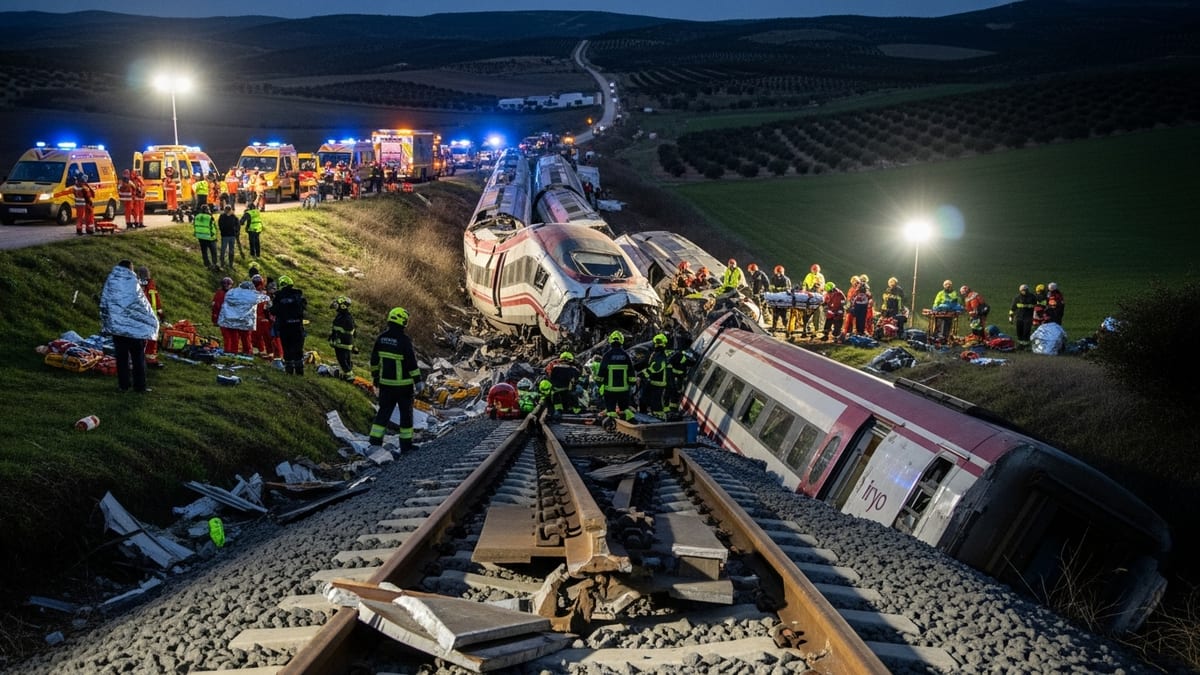
Evening Collision On Busy Commuter Corridor
Publicly available information indicates the crash occurred on June 19, 2026, at around 5:15 p.m. local time on one of the main north–south rail arteries linking the Midlands with central London. Two London-bound passenger services came together near Bedford, a key commuter hub roughly 90 kilometers north of the capital.
Reports describe one train traveling from Corby to London St Pancras and another from Nottingham to the same London terminus. Both were heading south when they collided on the approach to Bedford, leaving several carriages badly damaged and at least one derailed.
Initial tallies spoke of “dozens” of casualties, but subsequent coverage from several outlets now refers to 99 injured passengers, reflecting the scale of the impact in tightly packed commuter coaches at the height of the evening rush.
The line where the collision occurred is one of the busiest in Britain, carrying high-frequency intercity and regional services. The incident immediately brought traffic on the route to a standstill and triggered a large-scale emergency response across the Bedford area.
Driver Killed, Passengers Suffer Serious Trauma
According to published coverage from national and regional news organizations, the sole fatality in the crash was the driver of one of the trains. The individual has not yet been publicly named, but rail industry reports identify the person as a serving driver for the operator running the affected services.
Ambulance and hospital updates cited in the media indicate a wide range of injuries among the 99 people hurt. Around a dozen passengers are reported to have sustained very serious trauma, including suspected fractures and head injuries, while more than 20 others suffered serious but not life-threatening wounds. The remainder are described as having minor injuries, many linked to being thrown against seats, tables, and interior fittings at the moment of impact.
Passengers quoted in multiple news reports describe a sudden, violent jolt and scenes of confusion in the immediate aftermath. Accounts refer to people being thrown forward, windows breaking, smoke or dust filling carriages, and bloodied faces as travelers tried to help one another and make their way to exits along damaged cars.
Hospitals in and around Bedford and north London were placed on heightened alert shortly after the collision. Local media report that staff prepared for a potential influx of dozens of patients, with some cases transferred to major trauma centers in the wider region.
Emergency Response And Rail Disruption
Fire, police, and ambulance crews from across Bedfordshire and neighboring counties converged on the scene within minutes, supported by specialist hazardous incident teams. Air ambulance helicopters were deployed to assist with rapid evacuation of those with the most serious injuries.
Images and video shared by news organizations show long lines of emergency vehicles positioned along the tracks and in nearby fields, with responders working in confined spaces between carriages to reach trapped or immobilized passengers. Temporary triage areas appear to have been established trackside before patients were moved to waiting ambulances and helicopters.
National Rail and the operating company suspended services on the affected section of line for the rest of Friday and into Saturday, according to travel advisories. Rail planners warned of major disruption on routes connecting London, Bedford, Leicester, and other East Midlands destinations, with cancellations, diversions, and replacement buses in place.
Travel reports aimed at commuters advise that knock-on delays could continue while damaged trains are removed, track and signaling are inspected, and investigators carry out detailed site examinations. Early estimates suggest it may take some time before full normal service is restored through the Bedford corridor.
Investigators Focus On Signaling And Train Movements
Public statements and briefings reported by national media indicate that the Rail Accident Investigation Branch has opened a formal inquiry into the Bedford collision. Investigators are expected to examine signal data, train movement records, and communication logs from the control center and both train cabs.
Railway experts cited in coverage suggest that potential lines of inquiry include whether one train struck the rear of a slower or stationary service, the condition of the track and signaling system at the time, and the performance of built-in safety technologies designed to prevent trains from closing too quickly on the same section of line.
Modern British passenger trains are generally equipped with crash-energy management features intended to absorb impact forces and protect those on board. The fact that there was a single confirmed fatality, despite the forceful collision and large number of casualties, is already being noted in industry commentary as a potential sign that these systems mitigated an even worse outcome.
Investigators will also review maintenance records and any recent work on the signaling or track in the Bedford area, as well as interviewing staff and passengers. A preliminary report typically emerges within weeks in such cases, followed by a more detailed set of findings and any recommended safety changes at a later date.
Spotlight On Rail Safety For Commuters And Visitors
The crash near Bedford is drawing renewed attention to rail safety at a time when Britain’s rail network is heavily used by commuters, domestic travelers, and international visitors. Long-distance trains to and from London’s St Pancras station serve not only regional cities but also connect with high-speed services bound for continental Europe.
Travel coverage notes that serious train collisions remain relatively rare in the United Kingdom compared with road fatalities, and that rail is statistically one of the safest modes of intercity travel. Nevertheless, high-profile incidents such as the Bedford crash often prompt calls for fresh reviews of signaling systems, driver training, and infrastructure investment on busy corridors.
Passenger groups and commentators are already raising questions in the media about what additional safeguards might be needed on high-traffic stretches like the Bedford route. Topics under discussion include automatic train protection technologies, real-time monitoring of train spacing, and the resilience of older infrastructure to heavy modern traffic.
For travelers planning journeys through the area in the coming days, publicly available rail updates advise checking departure boards and operator notices before setting out, allowing extra time for connections, and being prepared for last-minute changes in route or transport mode while the Bedford line continues to recover from one of the most serious rail collisions in Britain in recent years.