


More news on this day
Air travelers across Europe faced a fresh wave of disruption on June 20 as monitoring data showed 201 flights cancelled and 1,992 delayed, affecting operations in Germany, Türkiye, Russia, France, Norway, the Czech Republic, Ireland and other countries, and disrupting services for major carriers including Rossiya, Lufthansa and Turkish Airlines at hubs such as Barcelona, Munich, Moscow and Istanbul.
Get the latest news straight to your inbox!
Ripple Effects Across Key European Airports
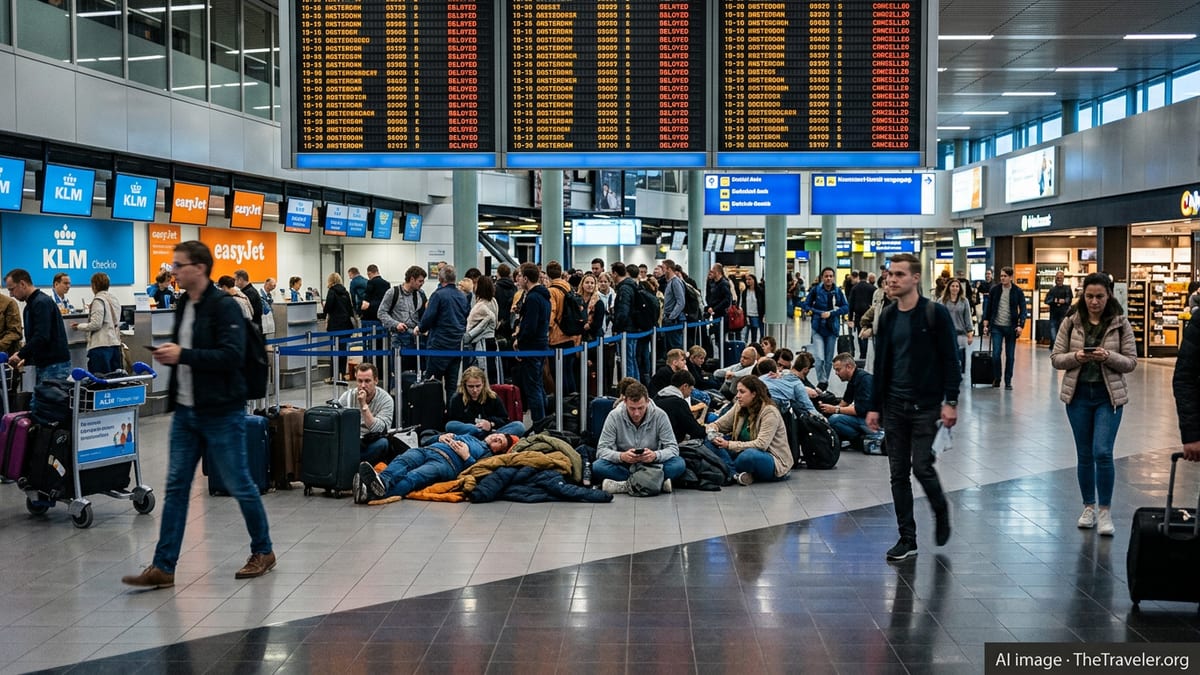
Data aggregated from real time tracking platforms and airport information boards on June 20 indicates that disruption was spread across the continent rather than concentrated in a single country, with cancellations and delays reported from large hubs to smaller regional airports. Major European gateways including Munich, Barcelona, Istanbul and Moscow saw clusters of affected flights, leading to long queues, missed connections and schedule knock on effects throughout the day.
Germany recorded one of the higher concentrations of issues, with Munich and other airports reporting both ground delays and arrival holdups that pushed some services beyond the three hour threshold commonly used to classify severe disruption. In Türkiye, Istanbul’s main airports experienced a similar pattern, with late inbound aircraft and traffic management constraints contributing to rolling delays.
In Russia, public tracking data showed Rossiya and other domestic and international carriers facing schedule pressures at Moscow airports, where periods of temporary suspension earlier in the season had already demonstrated how quickly congestion can build when capacity is constrained. France, Norway, the Czech Republic and Ireland also reported a mix of weather related delays, airspace flow restrictions and knock on effects from earlier rotations, combining to add to the continental total.
While the overall number of cancelled flights, just over 200, is modest compared with peak summer travel volumes, the much larger pool of nearly 2,000 delayed services created widespread inconvenience. Travel forums and social media posts from June 20 described passengers facing multi hour waits, rebookings and uncertainty about onward connections, particularly at large transfer hubs.
Airlines Most Affected, From Network Carriers To Regionals
The disturbances were spread across a wide range of airlines, from major network carriers to regional and leisure operators. Publicly available flight status boards pointed to notable interruptions for Lufthansa in Germany, Rossiya in Russia and Turkish Airlines in Türkiye, each operating extensive networks that amplify the impact when a single aircraft or crew rotation is disrupted.
Lufthansa, which operates dense short and medium haul schedules from hubs such as Munich and Frankfurt, appeared among carriers with multiple delayed departures. As is typical on busy travel days, even short ground holds or air traffic control restrictions can cascade through its timetable as aircraft arrive late for subsequent legs. Some services were ultimately cancelled when timing and crew duty limits left no room to recover.
In Türkiye, Turkish Airlines flights into and out of Istanbul saw clusters of delays that echoed broader regional pressures reported earlier in 2026, including high demand, tight fleet utilization and changing overflight patterns around conflict zones. Low cost and hybrid carriers based in Türkiye also reported scattered cancellations this year related to operational and demand driven schedule adjustments, a backdrop that adds to passenger anxiety when new disruptions appear.
Rossiya, serving domestic Russian routes as well as international sectors, was among the carriers showing cancelled and heavily delayed flights at Moscow airports. Previous interruptions at key Russian gateways earlier in 2026 had already underscored how local operational decisions, including temporary suspensions, can reverberate through regional networks and affect travelers heading onward to Europe or Asia.
Structural Strains In Europe’s Air Traffic System
Beyond the immediate numbers for June 20, recent analyses of European air traffic performance highlight structural issues that continue to drive delays. Eurocontrol and industry reports published in 2026 describe how a large share of disruption in the region stems from air traffic management constraints, late arriving aircraft and capacity mismatches rather than isolated technical faults.
Industry commentary on the long running EU261 compensation regime notes that, despite years of strong passenger protections, overall delay statistics in Europe have not significantly improved. Sector groups point to fragmented airspace management, staffing pressures in control centers and airports, and the rapid rebound of demand as factors that leave little slack in the system when weather, strikes or technical events occur.
Recent months have also brought localized episodes that foreshadow days of broader disruption, from temporary suspensions at individual Russian airports to short notice seasonal cancellations by European and Turkish carriers as they recalibrate capacity and respond to fuel costs. Each incident underscores how quickly a single bottleneck can propagate across interconnected networks, particularly during holiday periods.
The June 20 figures for cancellations and delays therefore fit into a wider pattern of volatility in European aviation. For travelers, this means that disruptions are increasingly experienced not as rare, isolated events but as a recurring risk that must be factored into itinerary planning, especially when tight connections or multi leg routings are involved.
Passenger Rights And What Travelers Can Expect
For many of those affected by the 201 cancellations and nearly 2,000 delays, attention quickly turns to rights and remedies. In the European Union and associated countries, the EU261 framework continues to set minimum standards for assistance and financial redress in the case of significant delays, cancellations and denied boarding on eligible flights.
Under these rules, passengers on covered flights may be entitled to meals, refreshments, hotel accommodation, rebooking or refunds, and in some circumstances cash compensation that can reach several hundred euros, depending on distance and length of delay. National enforcement practices and airline responses can vary, however, leading many travelers to seek guidance from consumer organizations or specialist claims companies.
Outside the EU, other regimes apply. Türkiye, for example, operates its own passenger protection regulations, while Russia and other states have distinct national rules that govern compensation, care and rerouting. This patchwork can be confusing for passengers whose journeys span multiple jurisdictions, particularly when flying with non EU carriers or on itineraries that start or end outside Europe.
Reports from travel forums in 2026 show that passengers frequently encounter difficulties securing timely responses or clear information when flights are disrupted, especially during large scale events that flood airline call centers and digital channels. Consumers are often advised in public guidance to document delays carefully, keep boarding passes and receipts, and submit claims in writing if immediate assistance or compensation is not forthcoming at the airport.
Planning Ahead As Summer Travel Peaks
The June 20 wave of disruptions arrives as Europe heads into the busiest stretch of the summer travel season, when airports and airlines already operate close to capacity. With further traffic growth expected in July and August, analysts caution that even routine operational issues could trigger outsized impacts on certain days, particularly at slot constrained hubs.
Travel advisory services and aviation analysts increasingly recommend that passengers build additional buffer time into itineraries, especially when connecting through major hubs such as Munich, Barcelona or Istanbul, or when traveling to and from airports that have recently experienced suspensions or chronic congestion. Booking longer connection windows, avoiding the final flight of the day where possible and monitoring flight status well before departure are among the most commonly suggested strategies.
For airlines and infrastructure providers, the latest figures reinforce calls to invest in staffing, technology and coordination to reduce reaction times when disruptions occur. Industry commentary in 2026 has emphasized the need for better cross border air traffic management, more resilient schedules and clearer, more consistent communication with passengers when problems arise.
While there is no indication that the cancellations and delays recorded on June 20 reflect a single underlying incident, the scale of the disruption across multiple countries and airlines serves as a reminder of the fragility of Europe’s tightly coupled air transport system. For travelers heading through Barcelona, Munich, Moscow, Istanbul and other key hubs in the coming weeks, preparedness and flexibility may be as important as a confirmed booking.