


More news on this day
A train collision has left 28 people in hospital, nine of them reported in critical condition, in an incident that is renewing concern about rail safety standards, emergency preparedness and the condition of key transport corridors used by both residents and visitors.
Get the latest news straight to your inbox!
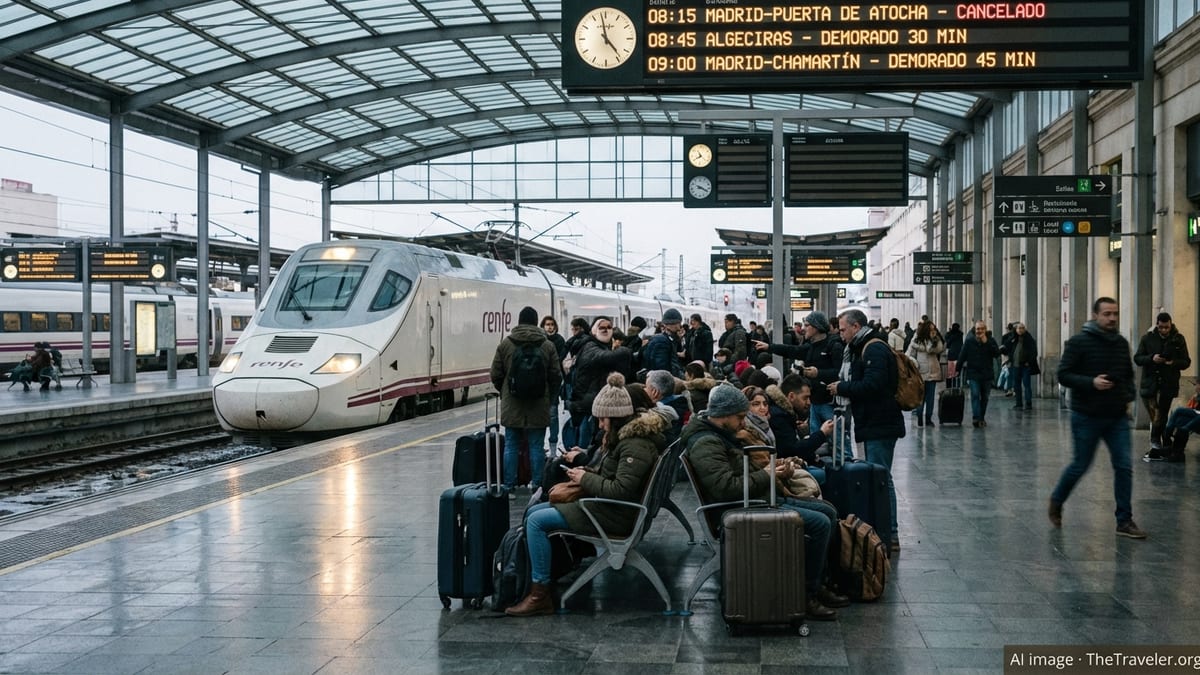
Collision underscores vulnerability of busy rail corridors
Initial reports indicate that the crash occurred on a heavily used section of track linking urban centers with surrounding regions, a route that serves daily commuters as well as tourists connecting to airports, coastal areas and cultural destinations. The collision involved a passenger service and another rail movement on or near the same line, leaving several carriages damaged and prompting a large-scale medical response.
Publicly available information shows that 28 people were taken to nearby hospitals for treatment following the impact. At least nine individuals are described as being in critical condition, with injuries consistent with high-energy trauma such as fractures, head injuries and internal damage that are frequently seen in serious rail incidents.
The affected line is considered a strategic corridor for both domestic travel and international visitors, forming part of wider networks that link major cities and regional hubs. Disruption on this scale can quickly ripple across timetables, with knock-on delays and diversions affecting travelers far from the crash site.
Rail analysts note that while serious collisions remain relatively rare compared with the vast number of journeys completed each day, incidents of this kind highlight how a single failure, whether human, mechanical or infrastructure-related, can have severe consequences for passengers.
Hospitals treat mass-casualty inflow as critical cases monitored
According to published coverage, emergency medical teams transported the injured to multiple hospitals in the region to prevent any one facility from being overwhelmed. Trauma units have been managing a mix of moderate and serious injuries, while nine patients remain in critical condition under intensive monitoring.
Medical staff typically prioritize life-threatening complications such as head and spinal injuries, internal bleeding and complex fractures in the first hours after a crash. In similar rail incidents elsewhere, some patients’ conditions have evolved over days as complications emerged, which means the current tally of critical cases may shift as doctors reassess their status.
Hospitals in transport hubs are often prepared for sudden mass-casualty events, running regular drills to coordinate emergency departments, surgery teams and intensive care units. Public information about this crash suggests that such contingency plans were activated quickly, helping to stabilize many of those hurt in the collision.
Family members and friends of the injured have been gathering at medical facilities, relying on hospital information points and official public updates, while consular representatives are expected to track the condition of any foreign nationals among those hospitalized.
Investigators examine speed, signaling and human factors
Rail accident investigations in comparable cases typically focus first on the condition of the track and trains, as well as on any available signaling and data recorder information. Published reports on this collision indicate that inspectors are working to reconstruct the sequence of events leading to the impact, including train speed, braking patterns and adherence to line-side or in-cab signals.
Human factors, including driver workload, fatigue and communication between dispatchers and train crews, are often central to such inquiries. International case studies show that misunderstandings over track permissions or misinterpretation of signals can contribute to rear-end or side-impact collisions, even on lines with modern safety systems.
Mechanical issues, such as malfunctioning points, signal failures or braking problems, are also under scrutiny. Investigators may compare maintenance records with physical evidence from the crash site and download data from onboard systems to determine whether any equipment failed in the moments before the collision.
While the formal investigation is at an early stage, the outcome is expected to guide potential upgrades to infrastructure, operating procedures and staff training, with the aim of reducing the risk of similar incidents on busy passenger routes used by both local residents and visitors.
Travel disruption and advice for passengers in the region
The collision has led to temporary suspensions and diversions on the affected line, according to regional transport updates. Trains have been rerouted where possible, but many services are experiencing significant delays as rail operators work to clear damaged rolling stock, inspect the track and restore signaling equipment.
Travelers in the area are being encouraged, through public advisories, to check real-time information from rail operators and national transport agencies before setting out. Replacement buses are being deployed on some sections, though journey times have increased, particularly on routes feeding major tourism centers and airports.
For visitors with pre-booked itineraries, tour operators and accommodation providers are adjusting transfers and check-in times where feasible. Travel insurance policies that include disruption related to transport accidents may help cover additional costs such as extra nights in hotels or alternative transport, though travelers are advised to review policy conditions carefully.
Local businesses that rely on rail-borne tourism may experience short-term declines in footfall while services remain reduced. However, experience from previous incidents in Europe, North America and Asia suggests that once investigations permit the full reopening of lines, passenger volumes can rebound quickly if travelers are reassured about safety improvements.
Rail safety debate intensifies amid rising passenger numbers
As images of the collision and its aftermath circulate widely, the incident is feeding into a broader debate about rail safety and investment. Passenger numbers on many regional and intercity networks have been rising in recent years as travelers seek lower-carbon alternatives to driving and flying, particularly on medium-distance routes popular with tourists.
Transport specialists point to the importance of continuous investment in modern signaling, automatic train protection systems and robust inspection regimes for tracks, level crossings and rolling stock. In several recent international cases, upgraded safety technology has been credited with preventing collisions or reducing their severity when trains have exceeded speed limits or encountered obstacles on the track.
Publicly available information following this crash indicates that authorities are likely to review whether existing safeguards on the affected route were adequate for current traffic levels. This may include assessments of emergency escape routes from trains, the positioning of barriers and fencing near the line, and protocols for communication during unusual operating conditions.
For travelers, the incident is a stark reminder to remain aware of safety guidance on board, including the location of exits, instructions for moving between carriages and the importance of following crew directions during disruptions. Even so, comparative data from multiple countries continue to show that rail travel remains one of the safest modes of long-distance transport, despite the severe impact of rare but high-profile collisions such as this one.