


More news on this day
Hundreds of passengers faced lengthy delays at San Diego International Airport on Friday, September 4, after drone activity near the airfield and a high-altitude research weather balloon triggered ground stops, diversions, and cascading schedule disruptions at the height of Labor Day weekend travel.
Get the latest news straight to your inbox!
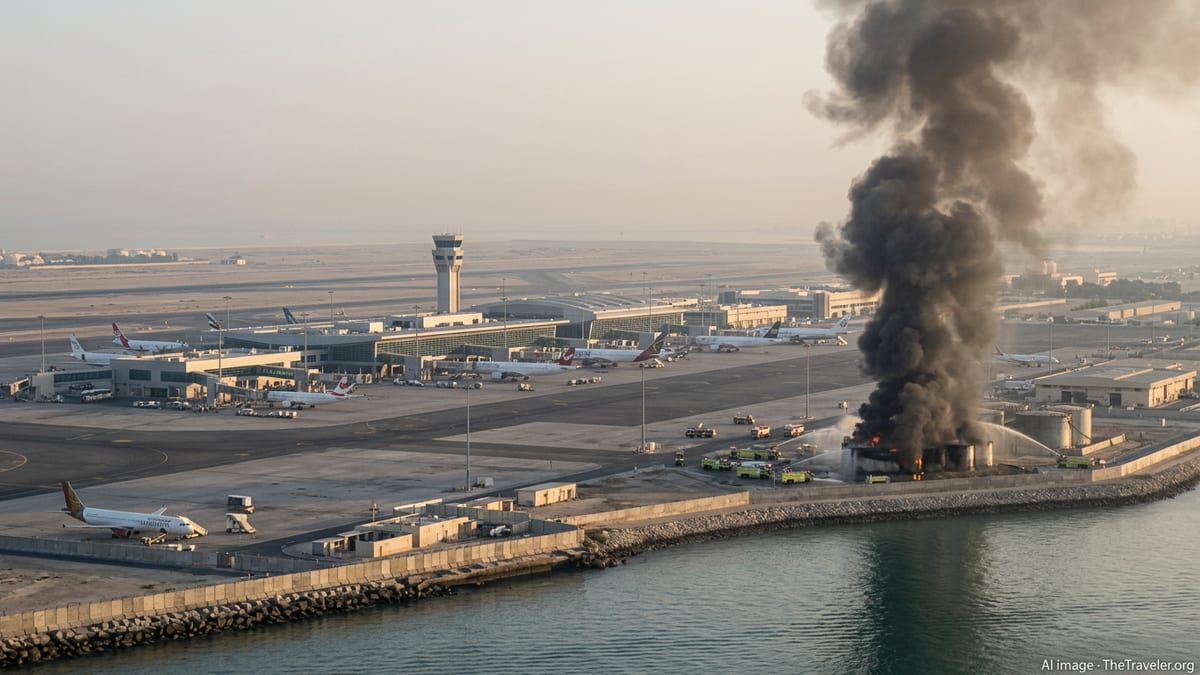
Ground stop halts traffic as drones reported near SAN
Publicly available flight-tracking data and traveler accounts indicate that departures and arrivals at San Diego International Airport (SAN) were brought to a standstill on Friday afternoon following reports of at least one drone operating close to the airfield. Multiple passengers posting on airline and local forums described a ground stop that lasted more than two hours, with one traveler relaying a pilot announcement that a drone had been hovering just above the airport’s control tower and that no planes were permitted to depart.
Further posts on airline-specific discussion boards suggest that at least two drones were eventually reported in the vicinity of the airport. One traveler on a Southwest Airlines flight referenced an update indicating that a second drone had joined the first before the ground stop was lifted, while another passenger cited a three-hour delay attributed to what they described as a “drone incident” around San Diego airport earlier in the day.
Reports on local community channels referenced a helicopter search over the area as air traffic controllers worked to confirm that the immediate airspace around the field was clear. Comments from affected passengers suggest that the ground stop was lifted shortly after 3 p.m. Pacific time, but many departures remained significantly behind schedule through the evening as airlines repositioned aircraft and crews.
High-altitude weather balloon adds to confusion
Complicating the situation, a bright, stationary object visible high above San Diego on Friday afternoon prompted widespread speculation on social media. Users shared images of a reflective point of light over Mission Bay and eastern neighborhoods, initially guessing that it might be a drone, satellite, or unidentified object. Flight-tracking enthusiasts later identified the object as a long-distance, high-altitude research weather balloon transiting the region at around 60,000 feet.
Local discussion threads indicate that the balloon had been tracked for days across the Pacific and had become a talking point among residents as it passed near the city. While some travelers initially linked the visible object in the sky with the flight disruptions at SAN, several aviation-focused contributors noted that the balloon’s altitude and transponder-equipped flight plan placed it well above the airport’s approach and departure paths.
Comments in online aviation communities emphasized that the low-altitude drones near the airport, rather than the high-flying balloon, matched the timing of the ground stop and subsequent delays. Nonetheless, the simultaneous presence of both a conspicuous weather balloon and reports of drones appeared to fuel confusion among travelers and residents trying to understand why flights were being held or diverted.
Hundreds of delays ripple across holiday weekend traffic
Data aggregated by commercial flight-tracking services on Friday afternoon showed San Diego ranking among the most delayed major U.S. airports, with users citing figures that placed SAN as the second worst in the country for on-time performance that day. One widely shared estimate referenced every departure facing delays of two to four hours during the peak of the disruption.
These interruptions built upon an already strained travel period. The day before the drone and balloon reports, San Diego had seen what local observers described as “nearly every flight” arriving or departing late, citing congestion in Southern California airspace and operational constraints in and out of SAN. The cumulative effect meant that Friday’s ground stop quickly cascaded into missed connections, aircraft out of position, and extended waits for both inbound and outbound travelers.
Passengers documenting their journeys on social platforms described flights to San Diego being diverted to Los Angeles, extended sits on taxiways, and late-night arrivals. Several commenters referenced sitting at the gate for more than three hours while awaiting clearance to depart, and others noted that they only learned of the drone-related ground stop when gate agents or flight crews displayed national airspace system advisories or airport delay maps.
Unmanned aircraft rules under renewed scrutiny
The disruption at San Diego International Airport added fresh attention to ongoing debates about how best to manage unmanned aircraft near commercial airfields. Federal airspace notices that were already in effect around SAN this month highlighted recurring unmanned aircraft activity within a few nautical miles of the airport, identifying specific time windows when numerous small drones could be operating at low altitude for approved purposes.
Local emergency planning documents for San Diego County point to restrictions on civilian drone flights near sensitive operations and during emergencies, while Federal Aviation Administration publications outline temporary flight restrictions and enforcement tools intended to keep unauthorized drones away from active runways and approach corridors. Aviation commentators reacting to Friday’s events questioned how a small number of devices could so quickly halt movements at a busy single-runway airport and called for wider adoption of drone-detection and geofencing technology.
Some contributors to online discussions cited commercially available drone-detection systems and manufacturer-integrated tracking capabilities as possible tools to identify operators more rapidly when devices appear in restricted airspace. Others argued that additional public education and more visible enforcement are needed, noting that even a short-lived drone incursion can prompt conservative responses from air traffic managers and result in hours of downstream delays for travelers.
Advice for travelers using San Diego in coming days
With the busy Labor Day weekend still under way, travelers scheduled to fly into or out of San Diego International Airport are being urged by airlines and travel advisers to monitor their flight status closely. Many carriers allow customers affected by significant delays to rebook onto later services or alternate routes, and some passengers on Friday reported being offered options to connect through other hubs when direct flights to SAN were held.
Given the recent pattern of congestion and weather-related advisories in Southern California, aviation observers recommend building extra time into itineraries that rely on tight connections through San Diego or nearby West Coast airports. Checking both airline apps and independent flight-tracking services before heading to the airport can provide early notice of systemwide programs or localized ground stops that may not yet appear on departure boards.
Travelers concerned about airspace disruptions from drones or other objects can also review general guidance issued by federal regulators and local authorities, which outlines how temporary flight restrictions are communicated and how incidents can affect commercial traffic. While Friday’s drone and balloon sightings appear to have been resolved without injuries or reported damage, the episode underlines how sensitive busy air corridors remain to even brief incursions by small unmanned aircraft.
Sources: FlightAware flight tracking data; FAA Air Traffic Control System Command Center advisories; NOTAM summaries for KSAN; San Diego community flight delay reports; San Diego County emergency operations planning documents