


Toronto Pearson International Airport (YYZ) is Canada’s busiest hub and, for many travelers, the first introduction to Toronto and often to Canada itself. If you are landing here for the first time, the scale of the airport, its two main terminals, and the many transport options into the city can feel overwhelming. This guide walks you through what to expect at Pearson, from arrivals and connections to UP Express, taxis, rideshare, parking, airport hotels, and practical tips for exploring Toronto on your first visit.
Get the latest updates straight to your inbox!
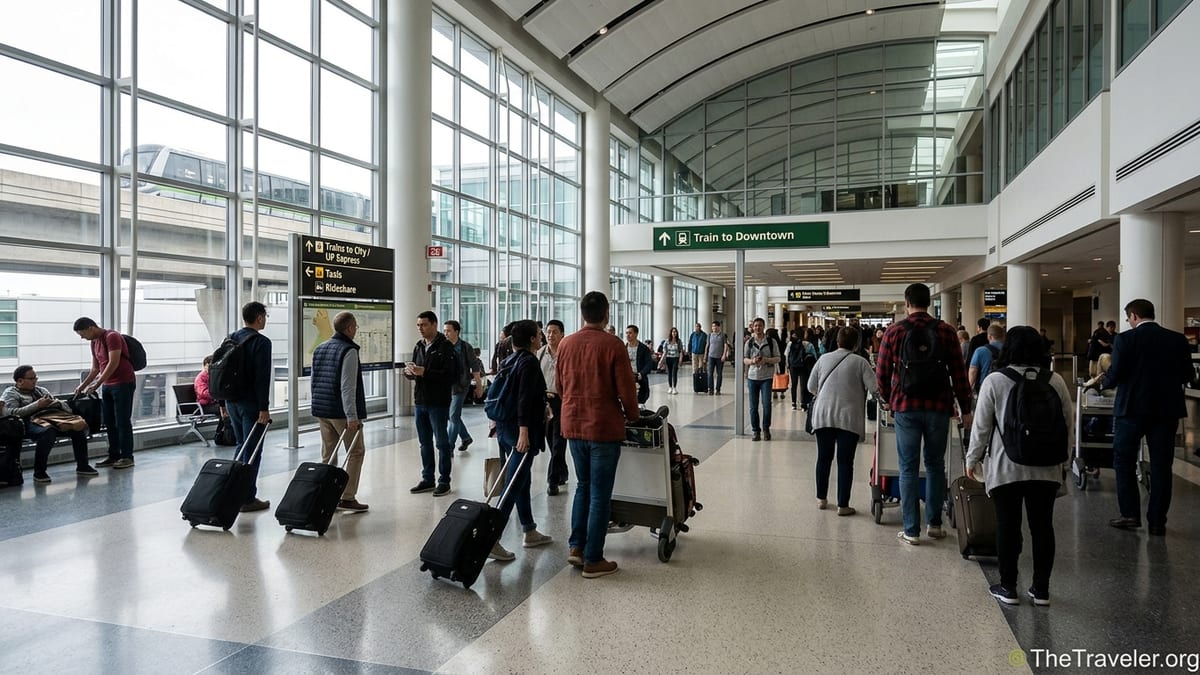
Understanding YYZ: Layout, Terminals and How They Work
Toronto Pearson has two passenger terminals: Terminal 1 and Terminal 3. There is no Terminal 2. Most Air Canada and Star Alliance flights operate from Terminal 1, while WestJet and many international and leisure airlines use Terminal 3. Both terminals handle domestic, US, and international flights, so your departure or arrival terminal depends more on airline than destination. Your airline’s confirmation or boarding pass always lists the correct terminal, and digital signs on the access roads repeat this information as you approach.
Terminals 1 and 3 are linked by a free elevated people-mover called the Terminal Link train. It runs every few minutes, 24 hours a day, and connects Terminal 1, Terminal 3, and Viscount Station, where the long-term Value Park Garage, Value Park Lot, and the Alt Hotel are located. In practice, this means that if you land with Air Canada in Terminal 1 but have booked the in-terminal Sheraton Gateway Hotel or a WestJet connection in Terminal 3, you simply follow signs for the Terminal Link and ride the train across in a matter of minutes without going outdoors.
Inside each terminal, departures and arrivals are on different levels. In Terminal 1, departures are generally on the upper level and arrivals on the lower level, with large hanging signs and floor markings to guide you. Terminal 3 works similarly. Both terminals have multiple piers and concourses, so arriving at a distant gate can mean a brisk 10- to 15-minute walk to immigration or security. Moving walkways help with the distance, but if mobility is a concern, you can request wheelchair or transportation assistance in advance via your airline.
Because Pearson is a major connecting hub, wayfinding signage is heavily multilingual and icon-based. If you are connecting, look immediately for signs that say “Connections” or “Flight Connections” rather than “Exit.” These will direct you along the correct path, whether you are connecting from a domestic to an international flight, or from an international arrival to a US-bound preclearance gate.
Arrivals: From Plane Door to Curb
On arrival at Pearson, the first big step is clearing border and customs formalities. If you are arriving on an international flight, you will typically walk from your gate to Canada Border Services Agency checkpoints. Many travelers now complete their customs declaration in advance using the ArriveCAN mobile app, which speeds up the process by generating a QR code you scan at a kiosk. At busy times, such as late afternoon when many transatlantic flights arrive, queues can build, so planning 60 to 90 minutes from gate to curb is sensible if you have onward ground transport booked.
After immigration, you collect checked baggage from the carousels and proceed through customs. Officers may ask brief questions about your stay and what you are bringing into Canada. Once you exit the secure area into the public arrivals hall, you will see ground transport signs for taxis, rideshare pickups, hotel shuttles, public buses, and the Terminal Link train. If someone is meeting you, common meeting points are the Tim Hortons outlets in each terminal or the large arrivals information boards near the exit doors.
For those with tight connections, especially from international to domestic flights, Pearson’s layout is designed to keep you airside when possible. For example, if you are arriving from London and connecting onward to Vancouver on Air Canada, follow the “Connections” signage rather than exiting to public arrivals. You will go through a dedicated security and document-check area before re-entering the domestic departure gates. Airline agents at the gate of your arriving flight can confirm the best route if you are uncertain.
Late-night and early-morning arrivals are common at Pearson, particularly from Europe and Latin America. While the terminals remain open 24 hours, many shops and restaurants close overnight. If you arrive at 01:30 and need food, you may find only a few fast-food outlets and convenience-style kiosks still operating airside or near arrivals, so it is wise to grab a snack before landing if you expect to arrive during these off-peak hours.
Departures and Security: How Early to Arrive and What to Expect
For departures, Pearson recommends arriving at least three hours before an international flight and two hours before a domestic or US-bound flight, with some airlines suggesting more during holiday peaks or major events. In practice, mid-morning weekday departures to popular US or European destinations can see long lines at security and US preclearance, so erring on the early side provides a buffer against delays, especially if you need to check bags or return a rental car.
Check-in areas in both terminals are divided by airline. At Terminal 1, for example, Air Canada has large, clearly marked check-in zones with self-service kiosks where you can print boarding passes and bag tags before dropping luggage at staffed counters. At Terminal 3, WestJet and partner airlines use similar kiosks. If you are flying with only carry-on luggage and have checked in online, you can often bypass these areas entirely and head straight to security, scanning your mobile boarding pass at the checkpoint.
Security screening at Pearson uses standard international procedures, including removing laptops and liquids from hand luggage where required, though some lanes may use newer scanners that allow certain electronics to stay in your bag. Families with young children and passengers with mobility or medical needs can request additional assistance. During busy periods, staff sometimes open overflow lines, and there are dedicated queues for premium cabin passengers and holders of trusted traveler programs such as NEXUS for certain checkpoints.
Once airside, both terminals offer a mix of Canadian and international food brands ranging from Tim Hortons and A&W to full-service restaurants and airport lounges operated by airlines and third parties. For example, Air Canada’s Maple Leaf Lounges in Terminal 1 serve hot meals and provide shower facilities, while several credit card–affiliated lounges in both terminals offer quieter spaces to work or rest. Allow extra walking time to your gate, as some international gates sit at the far ends of the concourses and boarding for long-haul flights can begin 45 to 60 minutes before departure.
Getting To and From Downtown: UP Express, Taxis and Rideshare
The most predictable way to reach downtown Toronto from Pearson is the Union Pearson Express (UP Express), a dedicated airport train linking Terminal 1 with Union Station in the city center. Trains typically run every 15 minutes during the day, with a journey time of about 25 to 28 minutes. As of mid-2026, a standard adult one-way fare from Pearson to Union is a little over 12 Canadian dollars, with a discounted fare of roughly 9 dollars for passengers tapping a PRESTO transit card. Children under a certain age often travel free with a paying adult, making it attractive for families.
To board the UP Express from Terminal 1, follow signs for “Trains to City” after exiting customs or security. The station is integrated into the terminal, so you remain indoors. If your flight arrives or departs from Terminal 3, you first ride the free Terminal Link train to Terminal 1 and then connect to the UP Express. At Union Station, you step into the heart of downtown, within walking distance of major hotels and attractions like the CN Tower and Scotiabank Arena, or you can transfer to the Toronto subway, streetcars, and GO Transit commuter trains.
Taxis are plentiful at both terminals, and only licensed airport taxis and limousines can pick up passengers at the official ranks. Fares operate on flat-rate pricing zones rather than running purely on the meter, which protects visitors from surprises. For example, a typical flat rate for a standard taxi from Pearson to central downtown Toronto often falls in the range of 70 to 100 Canadian dollars, depending on the exact address and vehicle type, with set supplements for limousines or larger vehicles. You line up at the marked taxi areas outside arrivals and speak to an attendant, who directs you to the next available licensed car.
Rideshare services such as Uber and Lyft also operate at Pearson, but pickup locations differ from taxis. At Terminal 1, recent changes have moved rideshare pickups to specific zones signed in the arrivals area and sometimes on an upper level to reduce congestion. After you request your ride in the app, it will direct you to a numbered or lettered zone, where your driver meets you. At Terminal 3, designated rideshare zones sit near the arrivals curb. For a solo traveler or couple with light luggage off-peak, a rideshare to downtown can sometimes be cheaper than a taxi, but in rush-hour traffic a family of four may find the flat-rate taxi or even UP Express more cost-effective and predictable.
Parking, Car Rentals and Airport Hotels at Pearson
If you are driving to Pearson, the airport offers several parking options at different price points. The closest are the terminal garages at Terminal 1 and Terminal 3, connected directly to the buildings and ideal for short trips or pickups. These premium garages charge higher daily maximums, but you can often book discounted multi-day stays online in advance, which can make them competitive for long weekends. For budget-conscious travelers, the Value Park Garage and Value Park Lot, located near Viscount Station, provide lower daily rates, with the free Terminal Link train shuttling you to both terminals in a few minutes.
Car rentals are clustered in and around Pearson, with major brands like Avis, Budget, Enterprise, Hertz, and National operating on-site facilities. In Terminal 1, rental car counters are accessible via the parking garage area, while at Terminal 3, you follow signs across to the adjacent garage. Many off-airport rental companies also run shuttles that collect passengers from designated pickup points at each terminal. For example, a traveler planning a road trip around Ontario might land in Terminal 3, collect bags, follow “Car Rentals” signs to the garage level, and pick up a pre-booked compact SUV for the drive to Niagara Falls.
For layovers and early flights, Pearson has two particularly convenient airport hotels. The Sheraton Gateway Hotel in Toronto International Airport is a full-service property directly attached to Terminal 3 and connected to Terminal 1 via the Terminal Link train. Guests walk from check-in to their room without stepping outside, making it popular with airline crews and travelers on overnight connections. Typical nightly rates reflect the convenience and can be higher than off-airport options, but many guests find the ability to roll out of bed and be at check-in within minutes worth the premium.
The Alt Hotel Toronto Airport sits beside the Value Park Garage at Viscount Station, one stop away from both terminals on the free Terminal Link. It offers modern, design-forward rooms at generally lower prices than the Sheraton while still functioning as an on-airport option. A traveler arriving at midnight with a noon flight the next day might choose the Alt to save on room cost, riding the Terminal Link for two minutes to reach the hotel, sleeping, then returning in the morning without dealing with road traffic or off-airport shuttles. Numerous other hotels, including major chains, cluster along nearby Airport Road and Dixon Road and typically run their own shuttle buses to Pearson.
Making Connections at YYZ: Domestic, US, and International
Because Pearson is a major hub, many first-time visitors experience it as a connecting airport. The amount of time you need to connect depends on your routing. For a purely domestic connection, such as Calgary to Toronto to Montreal, 60 minutes can be sufficient if your flights are on the same ticket and airline, though 90 minutes provides more comfort. You normally arrive, follow signs for domestic connections, proceed through security if required, and walk to your new gate without clearing customs.
International to domestic connections, such as London to Toronto to Halifax, require clearing Canadian immigration and customs in Toronto before rechecking bags. Some airlines allow you to drop your luggage immediately after customs at dedicated connections belts, then proceed to security and your domestic gate without entering public arrivals. In these cases, a two-hour minimum connection is advisable. If your flights are on separate tickets or different airlines, you should plan extra time, as you may need to collect bags, exit fully to arrivals, and check in again from scratch.
US-bound connections are slightly different because Pearson hosts US preclearance facilities. This means that if you are flying from Toronto to a US city like New York or Chicago, you clear US customs and immigration in Toronto before departure. On arrival in the United States, you are treated as a domestic arrival and can connect more easily. However, preclearance can add time at Pearson, so airlines frequently suggest arriving earlier or allowing longer for connections. For example, connecting from a European flight to a US-bound flight via Toronto may require three hours or more, especially at peak times when queues build at US immigration.
To avoid confusion, always pay close attention to signage for “International Connections,” “Domestic Connections,” or “US Connections” after you leave your arriving gate. If in doubt, ask an airline or airport staff member before you pass an “Exit to Canada” sign. Once you leave the secure area to public arrivals, you may not be able to re-enter via the shorter connections route and could have to repeat parts of the process, costing valuable time.
First-Time Tips for Experiencing Toronto Beyond the Airport
For many travelers, Pearson is the gateway to exploring Toronto itself. Once you arrive downtown, Toronto is a walkable, transit-friendly city built along the shore of Lake Ontario. From Union Station, where the UP Express arrives, it is a short walk or quick streetcar ride to popular neighborhoods like the Entertainment District, home to the CN Tower and Ripley’s Aquarium, or the Distillery Historic District, known for cobblestone streets, galleries, and patios. New visitors often appreciate staying in hotels near Union Station or along the subway’s Line 1, such as in the Financial District or near Yonge and Bloor, as this makes getting back to the airport straightforward.
Toronto’s weather can surprise first-time visitors. Winters are cold and often snowy, with January daytime temperatures commonly below freezing and strong winds off the lake. In summer, especially July and August, heat and humidity can be intense, and brief thunderstorms are not unusual. Pearson operates in all seasons, but weather can slow arrivals and departures, so leaving extra time in your schedule during winter or peak summer thunderstorm periods is wise. Packing layers, a light waterproof jacket, and comfortable shoes will make both your airport experience and city sightseeing more pleasant.
For everyday payments, credit cards are widely accepted across Toronto, including on the UP Express and most airport vendors. Contactless payments using major credit card brands and mobile wallets are common. If you plan to use public transit extensively, consider buying or loading a PRESTO card, which works on the Toronto Transit Commission (TTC), GO Transit, and the UP Express, often at reduced fares compared with standard single tickets. For example, riding UP Express with PRESTO typically costs a few dollars less per trip than buying a paper ticket.
Visitors concerned about safety will generally find Toronto Pearson and the downtown core well policed and monitored. As in any large city and major airport, it is sensible to keep valuables secure, avoid leaving bags unattended, and be cautious if sleeping overnight in public seating areas. If you have a long overnight layover and want proper rest, booking the Sheraton Gateway or Alt Hotel can be far more comfortable than trying to sleep in the terminal, and these properties are used by many solo travelers and airline crew, which contributes to a feeling of security.
The Takeaway
Toronto Pearson International Airport can feel intimidating at first glance, but once you understand its basic layout and transportation options, it becomes a manageable and even efficient gateway to Canada’s largest city. Two main terminals, linked by a frequent free train, handle the bulk of flights, while the UP Express offers a fast, predictable link to downtown and licensed taxis and rideshares cover door-to-door needs.
By allowing enough time for arrivals and departures, paying attention to connection signage, and considering the convenience of on-airport hotels or pre-booked parking, you can significantly reduce stress on travel days. From Pearson, Toronto’s neighborhoods, waterfront, and cultural institutions are only a short train ride away, making the airport not just a transit point but the beginning of a wider Canadian journey.
FAQ
Q1. How long does it take to get from Toronto Pearson to downtown by UP Express?
Travel time on the UP Express between Pearson and Union Station is typically about 25 to 28 minutes, with trains usually departing every 15 minutes during most of the day.
Q2. Is it better to take a taxi or the UP Express from Pearson to downtown?
The UP Express is usually faster and more predictable during rush hour and costs around the low teens in Canadian dollars per adult. A taxi offers door-to-door convenience and a flat rate, which can be worthwhile for families or those with heavy luggage, but it is more expensive and subject to traffic.
Q3. Which airlines use Terminal 1 and which use Terminal 3 at Toronto Pearson?
In general, Air Canada and most Star Alliance partners operate from Terminal 1, while WestJet and many other international and leisure carriers use Terminal 3. Always check your booking or boarding pass to confirm.
Q4. How early should I arrive at Pearson before my flight?
Plan to arrive at least three hours before international departures and two hours before domestic or US-bound flights. During busy holiday periods or if you need special assistance, adding extra time is advisable.
Q5. Are there hotels directly connected to Toronto Pearson Airport?
Yes. The Sheraton Gateway Hotel is attached to Terminal 3, and the Alt Hotel is next to Viscount Station on the Terminal Link train, putting both effectively on airport property and reachable in minutes from either terminal.
Q6. What are the parking options at Toronto Pearson?
Pearson offers terminal garages at Terminals 1 and 3 for the closest access, as well as lower-cost Value Park Garage and Value Park Lot near Viscount Station, all linked to the terminals by the free Terminal Link train.
Q7. Can I use rideshare services like Uber or Lyft at Pearson?
Yes. Uber and Lyft operate at Pearson, with designated pickup zones at both terminals. After requesting a ride in the app, you follow signs and on-screen instructions to the correct pickup area.
Q8. How much time do I need for a connection at Pearson?
For domestic-to-domestic connections on one ticket, 60 to 90 minutes is often adequate. International or US-bound connections typically require two to three hours, depending on immigration and security requirements.
Q9. Is Toronto Pearson open 24 hours, and can I stay overnight in the terminal?
The terminals operate 24 hours a day, and some travelers do stay overnight on seats or benches. However, services are limited late at night, and many people find booking the Sheraton Gateway or Alt Hotel more comfortable for long layovers.
Q10. What is the easiest way for a first-time visitor to reach central Toronto from Pearson?
For most first-time visitors, the UP Express train from Terminal 1 to Union Station is the easiest and most straightforward option, delivering you directly into downtown where you can walk or use local transit to reach your hotel.