


More news on this day
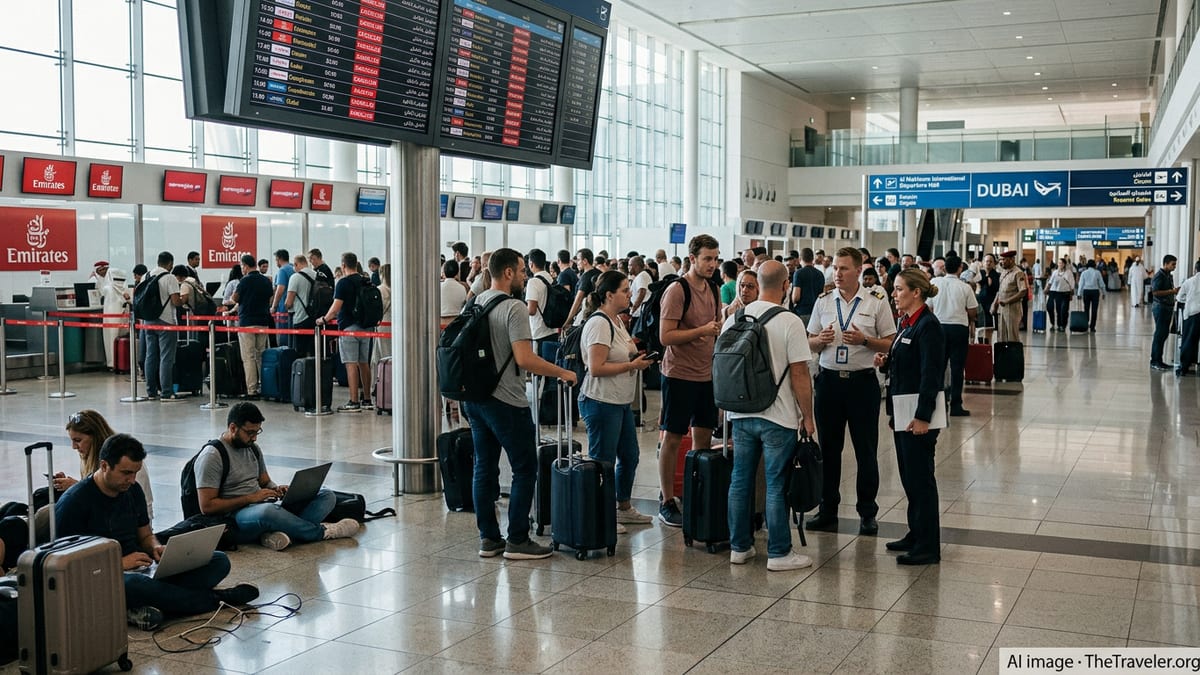
Dubai International Airport is again at the center of global travel disruption, with live operational data on 8 July 2026 showing 10 flight cancellations and 158 delays in a single day, creating ripple effects across airports in the United Arab Emirates, Kuwait, Saudi Arabia, the Netherlands, the United States and other key markets.
Get the latest news straight to your inbox!
Fresh disruption on top of an already fragile network
Real time statistics for Dubai International Airport indicate that, as of 8 July 2026, 10 flights have been cancelled and 158 delayed, a level of disruption that is significant even for one of the world’s busiest hubs for international traffic. While these figures may shift during the day, they offer a snapshot of how fragile aviation operations through Dubai remain.
The latest problems arrive after months of intermittent suspensions, rolling cancellations and capacity cuts linked to regional airspace restrictions across the Gulf and wider Middle East. Publicly available information shows that airspace closures and rerouted corridors earlier in 2026 forced carriers to thin schedules through Dubai and neighboring airports, with knock on effects that have not fully subsided.
Background coverage of the 2026 disruptions describes periods when foreign airlines halted Dubai operations entirely and when the airport functioned on a reduced schedule. Although most carriers have since restored at least part of their networks, many continue to operate with slimmer timetables and limited routing options, leaving less margin to absorb fresh delays when conditions deteriorate.
Industry trackers and travel advisories continue to flag Dubai as an operational hotspot, noting that even on days without headline suspensions, weather, congestion and ongoing regional security concerns can combine to trigger last minute timetable changes. Today’s concentrated wave of delays and cancellations underscores that pattern.
Knock on effects across the UAE, Kuwait, Saudi Arabia and the wider Gulf
Because Dubai serves as a primary connecting hub for the United Arab Emirates and a gateway for the wider Gulf, any instability there tends to propagate quickly across neighboring airports. Reports focused on the Middle East in 2026 highlight how previous airspace restrictions have simultaneously affected Dubai, Abu Dhabi and Sharjah, with airlines shuffling aircraft and crews between these airports to maintain core routes.
Current travel and logistics updates for the region point to a mixed picture. Dubai and Abu Dhabi are operating, but with the possibility of selective cancellations and longer than usual delays. Kuwait and key Saudi Arabian airports such as Jeddah, Riyadh and Medina remain particularly sensitive to changes in regional risk assessments, which can lead to rapid timetable adjustments when carriers reroute or temporarily suspend overflights.
For travelers, this means that a disruption originating in Dubai can quickly cascade. A delayed departure from Dubai may cause a missed onward connection in Kuwait City or Riyadh, while aircraft arriving late into Abu Dhabi can force schedule reshuffles that affect passengers who are not transiting Dubai at all but are still moving within the Gulf.
Regional observers note that many Gulf airports are also handling altered routings for flights that would normally pass through other parts of Middle Eastern airspace. This additional traffic can tighten runway and gate capacity, making the overall system more prone to secondary delays when a major hub like Dubai experiences a difficult operating day.
Impact on routes to Europe, the Netherlands and North America
The operational strain at Dubai is not confined to the Middle East. Because the airport links Gulf carriers and their partners with major European and North American hubs, disruptions quickly spill onto long haul routes, including those serving the Netherlands and the United States.
Recent travel alerts from European airlines show that some carriers have suspended or reduced their Dubai services for parts of the 2026 summer, rerouting passengers via alternative hubs or trimming frequencies. Others have kept Dubai flights on the schedule but caution that journeys may operate with altered flight times, extended connections or equipment changes, especially when aircraft and crew are out of position due to earlier disruptions.
For the Netherlands, Amsterdam remains a key interchange point for travelers flying to or from Dubai and onward to North America and other regions. When delay statistics at Dubai spike, connecting banks in Amsterdam and other European hubs can be thrown off balance, leading to tighter minimum connection times, rebookings onto later transatlantic services, or overnight stays if inbound flights arrive too late.
On US routes, the effects are similar. Publicly available information on airline schedules indicates that carriers linking Dubai with major US gateways, such as New York, Washington, Chicago and the West Coast, may need to adjust departure and arrival times at short notice. Long haul operations are particularly sensitive, as a late departure from Dubai can easily translate into missed domestic connections for passengers arriving in the United States.
What today’s numbers mean for passengers flying through Dubai
For travelers with itineraries touching Dubai on 8 July 2026, the reported figure of 10 cancellations and 158 delays signals an elevated risk of disruption, but the exact impact will depend on the time of day, airline and routing. Some flights may depart close to schedule, while others could experience multi hour waits at the gate or in the air due to slot restrictions and congestion.
Passenger rights and remedies vary by airline and jurisdiction. Informational resources from consumer advocacy organizations emphasize that travelers starting or ending their journey in the European Union or United Kingdom, or flying on EU and UK carriers, often benefit from specific compensation and care obligations when flights are significantly delayed or cancelled, although exemptions may apply in cases linked to extraordinary circumstances.
In the Gulf, contractual conditions of carriage and local regulations typically govern what support passengers can expect, such as rebooking on the next available service, meal vouchers, hotel accommodation for overnight delays, or refunds if travel is no longer possible. Travelers are advised by multiple public information sources to review their airline’s disruption policy and to keep boarding passes and receipts in case of later claims.
Because the situation remains fluid, airlines and airports are updating digital channels frequently. Flight status tools and app based notifications can change multiple times in the hours before departure as carriers react to evolving capacity, crew availability and airspace conditions.
Practical steps for travelers in the coming days
Travel guidance published in response to the 2026 Middle East disruptions stresses preparation and flexibility for anyone transiting Dubai or connecting Gulf hubs. On days with significant delay statistics, arriving at the airport earlier than usual can help cushion against unexpectedly long check in, security and immigration lines, which often lengthen when multiple departures bunch together after an operational pause.
Travelers with onward connections should pay particular attention to minimum connecting times. If schedules are tight, publicly available advice suggests asking the airline in advance about options to move to an earlier feeder flight or a later connecting flight where inventory allows, reducing the risk of misconnection if the first leg is delayed.
Travel insurance with trip interruption and missed connection coverage can also be valuable in the current environment. Policy wording varies, but some products may reimburse additional accommodation, meals and rebooking costs when delays exceed a specified threshold or when flights are cancelled outright for covered reasons. Insurance providers generally require documentation from airlines, so retaining confirmations and written notices is important.
Looking ahead, aviation analysts note that while today’s disruption in Dubai is acute, it is part of a broader pattern of instability in regional air travel in 2026. Travelers planning journeys through the Middle East over the coming months may wish to factor in longer layovers, maintain flexible itineraries where possible, and stay informed through official airline and airport channels as conditions evolve.