


More news on this day
A Tennessee Department of Transportation worker was killed on July 8 in a collision involving a train and a vehicle on State Route 179 near Stanton in Haywood County, drawing attention to the risks transportation crews face when working close to active rail lines.
Get the latest news straight to your inbox!
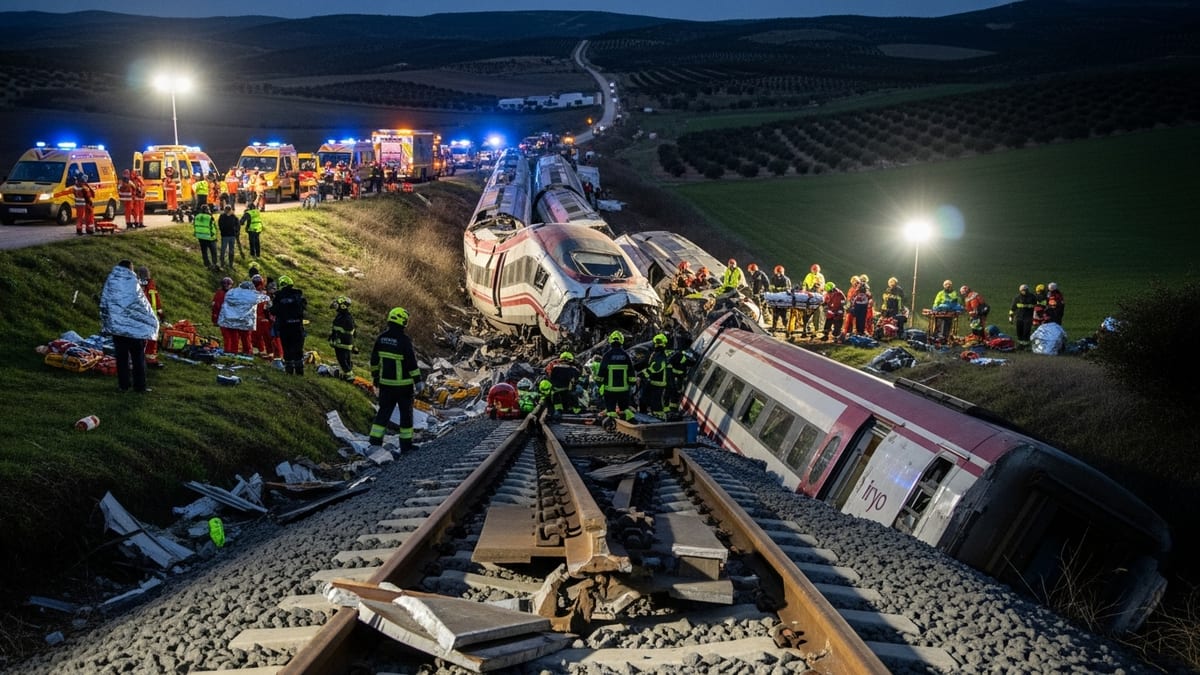
Deadly collision on State Route 179 near Stanton
Published reports indicate the crash occurred on State Route 179 in the town of Stanton, a small community in West Tennessee. Initial coverage from regional outlets describes a collision between a train and a vehicle in or near an active work area where a Tennessee Department of Transportation crew was present.
Publicly available information shows that one TDOT worker died as a result of the impact. Early reports do not specify the type of vehicle involved or whether it was part of the work zone operation or a separate road user. Details on the train, including its operator and direction of travel, had not been widely released by midday on July 8.
According to published coverage, investigators are reviewing the circumstances surrounding the crash. As of the latest reports, no broader disruption to passenger service in the region had been confirmed, but rail traffic in the immediate area was temporarily affected while responders and investigators worked at the scene.
Information circulated so far does not indicate additional deaths or injuries, although that has not been conclusively ruled out. Further updates are expected as state agencies and rail officials complete a more detailed review of what happened at the crossing.
TDOT expresses grief as worker identity withheld
Regional news coverage notes that transportation officials acknowledged the death of a crew member in a public statement distributed to local media. The statement emphasizes that the department is mourning the loss of one of its own and extends condolences to the worker’s family and colleagues.
Out of respect for relatives, the worker’s name and specific role within the crew had not been widely released in early reporting. It is common practice in similar incidents for agencies to delay identification until family notifications are complete and preliminary investigative steps are underway.
The loss adds to the emotional toll faced by road and infrastructure workers who routinely operate in high-risk environments, from interstate shoulders to rail-adjacent corridors. TDOT’s message, as summarized in local coverage, reflects that sense of loss while indicating that additional details will be shared at a later time.
Transportation employees across Tennessee and beyond are likely to follow developments closely, as fatal incidents in work zones and near rail lines often lead to renewed discussion of safety practices, training, and staffing levels.
Rail and roadway work zones under renewed scrutiny
The collision near Stanton highlights the particular vulnerabilities of workers stationed close to railroad crossings and rights-of-way. Publicly available safety plans from TDOT and federal transportation agencies emphasize that rail environments require careful coordination between roadway agencies, rail operators, and contractors when projects take place near active tracks.
Typical protocols in these settings can include temporary speed restrictions for trains, enhanced signage, and additional flaggers or spotters when crews must work within a defined distance of a rail corridor. Investigators will seek to determine what protective measures were in place on State Route 179 and whether visibility, signaling, or traffic control devices played a role in the crash.
National transportation data, as summarized in recent safety assessments and planning documents, show that worker fatalities remain a persistent issue in highway and rail-adjacent work zones. Although overall crash rates can fluctuate year to year, collisions involving trains often carry a high risk of severe injury or death because of the mass and stopping distance of rail equipment.
The circumstances in Stanton are expected to be reviewed not only for immediate causes but also for any systemic lessons that could inform future TDOT work-zone guidelines, particularly in rural areas where road geometry, vegetation, or limited lighting may affect sight lines near tracks.
Community impact and operational disruptions
Stanton and the surrounding Haywood County region have been experiencing a period of transportation and industrial development, including new roadwork and growing freight activity. A fatal crash involving a state transportation worker in this setting is likely to resonate across the local community, where many residents are employed in construction, logistics, or public works.
Short-term disruptions to both highway and rail traffic were reported as crews arrived to secure the scene and begin the investigative process. Trains moving through the area were expected to experience delays or rerouting while officials documented the crash site, inspected equipment, and ensured that the line could safely reopen.
For drivers using State Route 179, detours and lane closures added to travel times on July 8, with additional intermittent restrictions possible if investigators or maintenance teams return to the crossing for follow-up work. Motorists in similar rural corridors are often reminded through public-awareness campaigns to approach rail crossings and work zones with extra caution, particularly where sight lines are limited or where heavy equipment may be moving slowly near the road.
While the broader rail network in Tennessee did not appear to face widespread disruption, incidents of this nature can prompt operators to review crew guidance, horn-use policies, and communication procedures when approaching crossings close to active road projects.
Ongoing investigation and safety questions ahead
As of July 8, publicly available reports indicate that the crash remains under active investigation by state and possibly federal transportation and rail-safety agencies. Those inquiries typically examine train speed, signal performance, crossing configuration, driver behavior, and work-zone setup, along with environmental factors such as weather and lighting at the time of impact.
Investigators are expected to review event recorder data from the train, any available camera footage, and statements from witnesses and personnel present in the work zone. Findings from similar past incidents have sometimes led to changes such as upgraded warning systems, additional barriers, or revised procedures governing how close crews may operate to active tracks during certain types of work.
For TDOT, the death of a worker in a train collision is likely to intensify internal discussion about how best to manage projects that intersect with rail lines, especially in smaller communities where crossings may predate modern design standards. Publicly accessible planning documents for Tennessee transportation projects already flag rail-adjacent locations as areas that warrant heightened risk assessment and coordination.
Further official updates are expected to clarify the sequence of events near Stanton, the status of the crossing and any work-zone controls in place at the time, and whether additional safety measures will be considered to reduce the risk of similar tragedies in the future.