


Staying online has become as essential to travel as a valid passport, and Instabridge is one of the newer eSIM names many travelers now see in app stores and online forums. It promises low-cost mobile data, free Wi‑Fi hotspots and even ad-supported free data plans in dozens of countries. But how does Instabridge eSIM actually work when you are on the road, and what should you know before relying on it for your next trip?
Get the latest updates straight to your inbox!
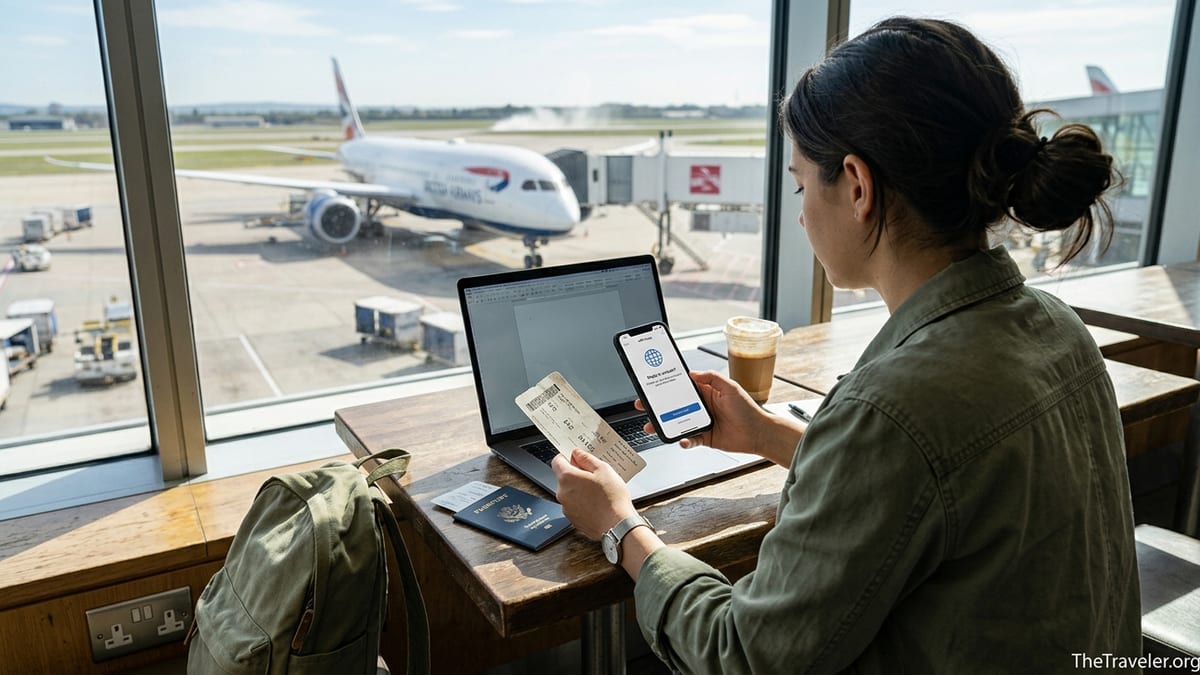
What Instabridge eSIM Is and Where It Works
Instabridge started in Sweden as a crowdsourced Wi‑Fi map and later expanded into global eSIM data plans. Today, the app combines several services: paid travel eSIMs, an ad-supported free data offering, tools to discover Wi‑Fi hotspots and an optional VPN. For travelers, the core attraction is the ability to buy and activate mobile data for dozens of countries without visiting a phone shop or swapping physical SIM cards.
Recent independent reviews describe Instabridge as a mid‑range eSIM provider in terms of pricing, but strong on coverage. Travel tech sites note that Instabridge eSIMs work in roughly 160 countries, with particularly solid performance reported across Europe, North America, Japan and much of Southeast Asia. Coverage is thinner in parts of Africa, Central Asia and some island nations, where rivals like Airalo and Nomad often list more options. In practical terms, a traveler planning a city‑heavy itinerary through Spain, Italy, Thailand or Japan can usually expect Instabridge to have a local or regional plan, while someone heading deep into rural Namibia might find fewer choices.
Unlike a traditional mobile operator that runs its own radio network, Instabridge acts as a digital intermediary. It buys wholesale capacity from local carriers and packages it into prepaid data bundles. When your Instabridge eSIM activates in the United States, for example, the phone might quietly roam on a major network such as AT&T or T‑Mobile, but all billing, top‑ups and plan management happen inside the Instabridge app. This arrangement makes it easy to hop between countries without changing SIM cards, but it also means coverage and speed will depend on which local partner network your plan uses in each place.
One distinctive feature reviewers highlight is Instabridge’s free data model in some markets, especially the United States and parts of Europe. Selected plans give users a small monthly data allowance, such as a few gigabytes, in exchange for running the Instabridge app with ads. For a budget traveler who mostly needs messaging, maps and email, this can significantly cut connectivity costs, although it comes with trade‑offs in privacy, app clutter and potential battery use.
How Instabridge eSIM Works Under the Hood
An Instabridge eSIM is a digital SIM profile that your phone downloads and installs. Instead of inserting a plastic card, you scan a QR code or let the app push the eSIM profile directly to the device. Modern iPhone models and many Android phones from brands like Samsung, Google and Xiaomi support this technology. Instabridge’s support pages emphasize that your phone must be both eSIM‑capable and network unlocked; a budget handset locked to a carrier in your home country will usually not accept third‑party eSIM profiles.
When you purchase a plan in the Instabridge app, the system generates an eSIM profile with parameters that tell your phone which network to register on, what access point name to use and how to authenticate. On iPhone, you are guided through the standard iOS eSIM setup screens: adding a new cellular plan, choosing a label such as “Travel,” and deciding whether this line should handle mobile data, voice or both. Instabridge’s guides typically recommend leaving your primary physical SIM active for calls and SMS from home, and using the Instabridge eSIM solely for data, which is how many frequent travelers operate in practice.
One clever architectural detail highlighted by specialist eSIM comparison sites is that Instabridge often uses a “multi‑use” profile. Instead of installing a new eSIM for every trip, you install one profile once and then activate different country or regional plans inside the app as you move around. For example, a digital nomad based in Lisbon might install Instabridge at the start of the year, use a Portugal plan in January, switch to a Spain plan for a month in Barcelona, and then add a Southeast Asia regional bundle ahead of a coworking retreat in Bangkok, all without ever scanning a new QR code.
The Instabridge app also tries to augment connectivity with its original Wi‑Fi crowd‑sourcing. In many cities, the app can show you nearby public hotspots, such as cafes or railway stations, along with basic quality indicators reported by other users. For travelers on tight budgets, this means they can rely on mobile data when walking between locations, then offload heavy tasks like cloud backups or video calls onto free Wi‑Fi whenever possible. In some places, such as large European capitals, this combination of eSIM data plus hotspot intelligence can effectively replace short‑term local SIM purchases.
Plans, Pricing and Real‑World Examples
Instabridge sells a mix of country‑specific, regional and global plans, all prepaid and data‑only. Exact prices change regularly, but the structure is typical: smaller packages for short breaks, medium bundles for two‑week trips and larger allowances for longer stays or heavier use. Tech reviewers who compared Instabridge to rivals in 2025 and 2026 generally found that it rarely delivers the single cheapest price per gigabyte, but often lands near the middle of the pack, with the added bonus of free Wi‑Fi and occasional promo data.
To give a sense of the price level, user reviews and comparisons have cited examples such as a United States plan hovering around the low single‑digit dollars per gigabyte for pay‑as‑you‑go data, and larger regional bundles in Europe or Asia that effectively bring the per‑gigabyte price down further once you cross thresholds like 10 or 20 GB. Travelers report that ad‑supported free plans in the US have offered several gigabytes per month at no direct cost, albeit with the requirement to watch ads and keep the app installed. These figures shift as Instabridge experiments with promotions and regional offers, so it is always worth checking the current app pricing shortly before departure.
Consider a couple flying from Chicago to Rome for a 10‑day holiday. A typical pattern is to buy a 10 GB Italy plan that activates on arrival. For moderate use – navigation, restaurant searches, social media, email and some video calls – many travelers find 1 GB per day a comfortable buffer, so 10 GB for 10 days is a common choice. Another example is a backpacker moving through Thailand, Vietnam and Cambodia over a month. Rather than stacking three separate country SIMs, they might opt for a Southeast Asia regional eSIM from Instabridge that covers all three, simplifying both setup and budgeting.
The free and very low‑cost plans are particularly attractive to long‑term travelers and digital nomads operating on slim margins. Online discussions in US‑focused telecom forums show people using Instabridge’s ad‑supported data as a fallback connection between trips, supplementing it with local prepaid SIMs or another eSIM brand when they need guaranteed high speeds or hotspot tethering. A remote worker might run their laptop on coworking Wi‑Fi, use Instabridge data for phone‑based messaging and maps, and only purchase a larger, faster eSIM plan during weeks when they expect to move frequently between cities.
Setting Up Instabridge eSIM Step by Step
For many travelers, the most intimidating part of using an eSIM is the initial setup. Instabridge tries to streamline this by funneling everything through its app, but the underlying steps mirror those from other providers. First, you download the Instabridge app from your phone’s app store while still at home, ideally on a reliable Wi‑Fi connection. The app runs a compatibility check to confirm that your device supports eSIM and is not carrier‑locked. If it flags a problem, it is safer to contact your home carrier or choose a different device than to discover incompatibility after landing abroad.
Next, you browse available plans for your destination. Travelers often do this a week or two before departure. Instabridge allows buying a plan in advance and waiting to activate it upon arrival, which is useful if you want to lock in a price during a promotion. Once you purchase, the app either sends an eSIM installation request directly to the operating system or presents a QR code. On an iPhone, you typically see a prompt that a new cellular plan is ready to be installed. You confirm, wait for the profile to download, then name the line something like “Italy eSIM” or “Travel Data.”
After installation, you configure how your phone uses the new line. Many travelers set the Instabridge eSIM as the default for mobile data, while keeping voice and SMS on their primary line. On iPhone and recent Android versions, you can choose to allow data roaming on the eSIM so that a regional plan will work across borders. Instabridge’s own guides emphasize checking that “Data Roaming” is enabled for the Instabridge line if your plan is regional or global, and turning off “Automatic” network selection only if support instructs you to manually choose a specific partner network.
The final step is activation at the destination. Some Instabridge plans activate immediately upon installation, but many only start counting validity once your phone first connects to a partner network in the covered country. This is important for timing: if your plan lasts 15 days, you generally want day one to be the day you land, not the day you buy. Travelers often put their phone in airplane mode on the plane, then, after touchdown and taxiing to the gate, turn on their device, ensure the Instabridge eSIM is active for data and wait a few minutes for the network to register. It is wise to test connectivity by opening a browser or maps app before leaving the airport.
Performance, Coverage and Common Issues
In controlled tests by technology publications and user reports in travel blogs, Instabridge’s performance has ranged from excellent to frustrating, largely depending on country and local network partners. In European capitals like Berlin or Madrid, reviewers have recorded fast 4G and even 5G speeds, more than sufficient for video calls and heavy app use. In busy parts of Tokyo and Osaka, users have reported similarly smooth experiences, with latency low enough for gaming and high‑definition streaming.
By contrast, some travelers have reported weak coverage and unstable connections in specific regions. Recent customer reviews on general consumer platforms mention situations where Instabridge struggled to maintain a signal, even though a different eSIM from another provider worked fine in the same location. This likely reflects differences in which local network Instabridge partners with and how roaming is prioritized. As with any eSIM provider, if you are heading to very rural areas or working in critical fields such as journalism or remote medical work, it can be sensible to carry a backup, whether that is a local SIM, another eSIM brand or access to reliable hotel Wi‑Fi.
Instabridge’s free and low‑cost tiers introduce additional quirks. Because free data is financed by advertising, some users complain about frequent full‑screen ads in the app, aggressive prompts to enable additional features such as a custom launcher on Android, and the need to periodically open the app to keep the plan active. Travelers who value a clean phone experience or dislike ad tracking may find this trade‑off unacceptable. Others are happy to tolerate some clutter in exchange for a small but steady data allowance over many months.
Customer support is another theme in real‑world feedback. While some reviewers praise Instabridge for responsive email support and quick refunds when an eSIM fails to activate, others report slow replies and unhelpful back‑and‑forth, especially during weekends or holidays. For travelers, this means it is safer to buy and test the eSIM a day before critical travel days rather than minutes before boarding a flight. If activation fails, you then have time to contact support or switch to an alternative provider without being stranded offline at immigration.
Instabridge Compared to Other Travel eSIM Options
To understand whether Instabridge is a good fit, it helps to compare it to other well‑known travel eSIM brands like Airalo, Nomad, Holafly, Yesim or Saily. Broadly, these providers sell similar digital data bundles but differ in coverage, app design, extra features and pricing strategies. Airalo, for example, is often praised for having one of the widest country lists and many ultra‑cheap micro‑plans, such as 1 GB for a few days in a given country, which is ideal for short city breaks. Holafly tends to focus on unlimited data offers at a higher flat price, appealing to heavy users who stream video and tether laptops frequently.
Instabridge’s differentiators lie in its free Wi‑Fi map, occasional ad‑supported free data plans and the way its eSIM can be reused across trips. For a backpacker who spends months at a time moving through budget destinations, the ability to get a few gigabytes of free or very cheap data each month, plus detailed Wi‑Fi hotspot information, can be more valuable than shaving a small amount off the per‑gigabyte price. By contrast, a business traveler who absolutely needs rock‑solid connectivity for video conferences at specific times might prefer a provider that focuses purely on premium paid plans with robust customer support and less app clutter.
Another comparison point is privacy and device experience. Some eSIM providers take a minimalist approach: their apps are used only to buy plans and push eSIM profiles, and otherwise stay out of the way. Instabridge’s app, particularly on Android, has a reputation for being more intrusive, with options to become your home screen launcher, show more ads and bundle in a VPN and other utilities. Travelers comfortable with tweaking settings can usually disable unwanted extras, but those who dislike complex apps may find simpler competitors more appealing for primary connectivity, using Instabridge only as a backup or for free data experiments.
Ultimately, many experienced travelers treat eSIMs as a toolkit rather than a single decision. It is increasingly common to see people combine Instabridge’s strengths, such as free or low‑cost baseline data and hotspot maps, with another provider’s strengths, such as very cheap regional bundles or strong support in specific countries. A family on a three‑week road trip across the western United States might run Instabridge on an older spare phone as a secondary data source while relying on a different eSIM or local SIM for the primary navigation and hotspot connection that powers the car’s tablets.
Practical Tips for Using Instabridge on the Road
Experienced users of Instabridge and other travel eSIMs tend to follow a few practical habits that reduce stress. First, they always install and test the eSIM before leaving their home country. Even if the plan will only activate abroad, you can confirm that the profile installs correctly and appears in your phone’s cellular settings. If your device refuses to install the eSIM or shows errors, it is much easier to diagnose while you have stable home Wi‑Fi and time to contact support.
Second, they monitor data usage closely. Instabridge’s app and your phone’s operating system both track how much data you have consumed. Because many Instabridge plans are capped, going over your allowance can abruptly cut off connectivity or trigger additional charges. A traveler working remotely from a cafe in Mexico City might restrict heavy downloads to Wi‑Fi and disable automatic video autoplay in social apps, stretching a 10 GB plan through a two‑week stay instead of burning it in a few days.
Third, they keep an eye on background battery and data use introduced by the Instabridge app itself, especially when using ad‑supported free plans. Some users report that location services and ad delivery can increase battery drain. Turning off unneeded features, such as the optional launcher on Android, and restricting background activity in the device settings can help. Travelers conscious of privacy may also review app permissions, disabling those that are not essential for eSIM management.
Finally, they always maintain at least one backup connectivity option. This could be a second eSIM from another provider already installed but inactive, a physical local SIM purchased at the airport, or reliable hotel and coworking Wi‑Fi. For example, a couple working as digital nomads in Bali might rely primarily on Instabridge for day‑to‑day data around town, but also keep a local prepaid SIM in a Wi‑Fi hotspot device in their apartment. If Instabridge has a temporary issue or they run out of data unexpectedly, they can immediately switch over without disrupting video calls or online deadlines.
The Takeaway
Instabridge eSIM offers an appealing mix of travel data, Wi‑Fi discovery and, in some markets, ad‑supported free connectivity that can meaningfully cut costs for frequent travelers. Its global footprint, with coverage across much of Europe, North America and Asia, means many city‑focused itineraries can be handled entirely through the app, without ever queuing in a phone shop after a long‑haul flight.
At the same time, Instabridge is not a perfect fit for everyone. Reviews point to a sometimes intrusive app experience, mixed customer support and inconsistent performance in certain regions. Travelers who value a minimal, ad‑free phone experience or who require mission‑critical connectivity may prefer to treat Instabridge as a secondary tool rather than their sole lifeline.
The most successful Instabridge users tend to be those who see it as one part of a broader connectivity strategy: install and test it in advance, combine it with reliable Wi‑Fi and possibly another eSIM or local SIM, and remain flexible about switching if conditions change on the ground. Used this way, Instabridge can be a valuable addition to a traveler’s digital toolkit, providing affordable data, useful hotspot information and a cushion of free or low‑cost connectivity between more conventional plans.
FAQ
Q1. What kinds of travelers are best suited to Instabridge eSIM?
Instabridge tends to suit budget‑conscious travelers, digital nomads and frequent city‑hoppers who are comfortable managing connectivity through apps and do not mind a slightly more complex interface. If you mainly need affordable data for maps, messaging and social media in well‑connected countries, it can be a strong option.
Q2. Can I use Instabridge eSIM and my regular SIM at the same time?
On most recent iPhone and Android models that support dual SIM, you can keep your home SIM active for calls and texts while using Instabridge for data. During setup, you choose which line handles mobile data and which handles voice, and you can change these settings at any time in your phone’s cellular menu.
Q3. Does Instabridge eSIM include a local phone number for calls and SMS?
Most Instabridge travel eSIM plans are data‑only and do not provide a local phone number. Travelers who need to receive SMS codes or make regular local calls usually keep their home number active over roaming, use app‑based calling services, or purchase a separate local SIM that includes voice minutes.
Q4. How reliable is Instabridge eSIM for remote work and video calls?
Reliability depends heavily on the country and local partner network. In major cities across Europe, North America and parts of Asia, many users report speeds that easily support video calls. In more rural or less well‑served regions, performance can be weaker. For mission‑critical calls, it is wise to have a backup connection, such as hotel Wi‑Fi or a second eSIM.
Q5. Is Instabridge eSIM cheaper than buying a local SIM at the airport?
In some destinations, especially where local operators offer aggressive tourist SIM deals, a physical local SIM can still be cheaper per gigabyte. Instabridge’s value lies more in convenience, not having to queue, and, in some countries, the possibility of free or ad‑supported low‑cost data. Checking both Instabridge’s in‑app prices and typical local SIM offers before traveling gives the clearest picture.
Q6. Will Instabridge work in very rural areas or while driving long distances?
In rural regions, coverage depends on which local network Instabridge uses and how strong that network’s footprint is away from cities. Some travelers report good results on highways and in small towns, while others see more dead zones than with a different provider. If your itinerary includes remote driving or hiking, carrying a local SIM from a carrier known for rural coverage can provide extra peace of mind.
Q7. What happens if my Instabridge eSIM stops working during a trip?
If your connection suddenly fails, basic troubleshooting steps include toggling airplane mode, checking that mobile data and data roaming are enabled for the Instabridge line, and restarting the phone. If that does not help, contacting Instabridge support from a Wi‑Fi connection is the next step. Having an alternative, such as another eSIM or local SIM, reduces the impact if support takes time to respond.
Q8. Does using Instabridge’s ad‑supported free data affect my privacy?
Ad‑supported plans generally involve some level of data collection to deliver targeted advertising and measure usage. Instabridge’s app may also request permissions for location and other device functions. Travelers who are privacy‑sensitive should review the app’s permissions and privacy policy, disable nonessential features and consider using paid, ad‑free plans if they want to minimize tracking.
Q9. Can I share Instabridge data with my laptop or other devices?
On most phones, if the local network and plan allow it, you can use your phone’s hotspot or tethering feature to share Instabridge data with a laptop or tablet. Some users report that heavy tethering can consume data quickly, so it is wise to monitor usage closely and, for large downloads or software updates, wait until you have access to stable Wi‑Fi.
Q10. How early should I set up Instabridge eSIM before a trip?
It is advisable to install the Instabridge app and eSIM profile at least a few days before departure, while you still have reliable home Wi‑Fi. You can usually purchase a plan in advance and let it activate automatically on arrival. This buffer gives you time to solve any compatibility or activation issues without the pressure of standing in a foreign airport without a data connection.