


More news on this day
At least nine European countries have delayed enforcing new post-Brexit biometric border checks for British and other non-EU travellers, after weeks of airport congestion and reports of queues stretching for hours at some of the bloc’s busiest gateways.
Get the latest news straight to your inbox!
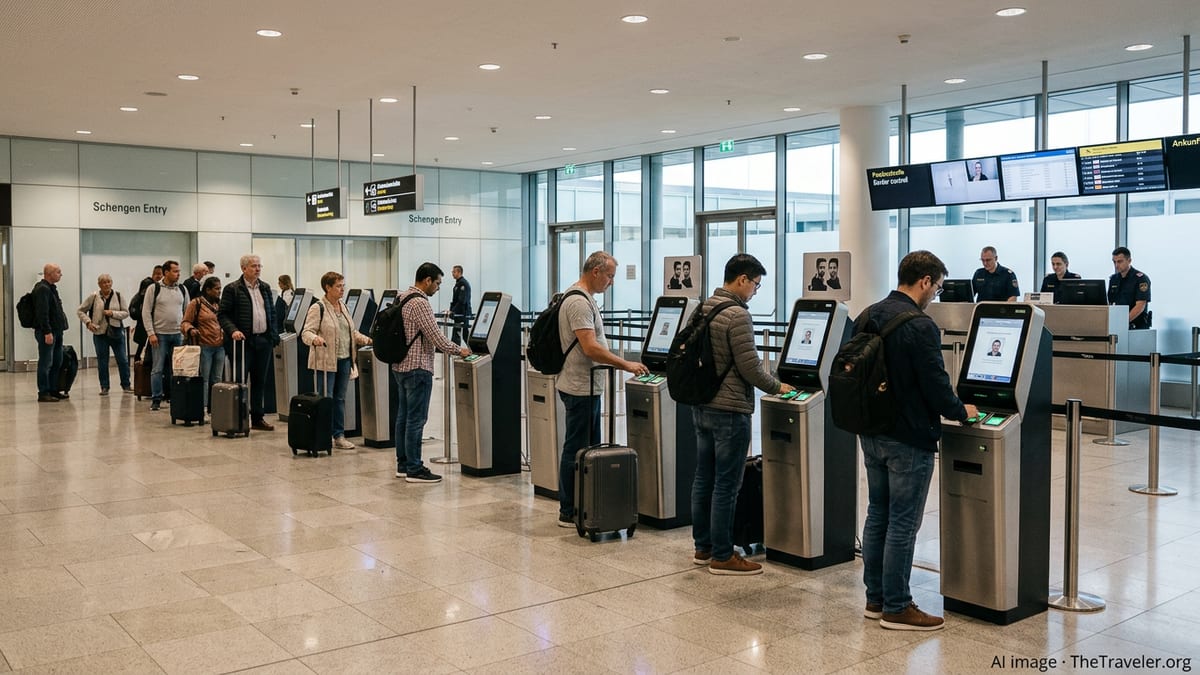
Informal Pause After Grace Period Expires
The European Union’s Entry/Exit System, a biometric border database for non-EU visitors, formally became compulsory across the Schengen area this summer following a multi-year rollout and repeated technical delays. From 6 September 2026, member states were expected to end temporary derogations that allowed them to switch the system off during peak periods.
According to recent specialist travel and business coverage, at least nine Schengen countries have now been informally allowed to delay full enforcement of the rules. The move amounts to a significant softening of the EU’s stance after months in which central institutions urged governments and airports to persevere with the new procedures despite growing criticism over operational problems.
Reports indicate that the affected states have told the European Commission they will not insist on biometric registration at every crossing point and for every eligible passenger until they are confident that equipment, staffing and data links are working reliably. In practice, this means some airports and land borders can revert to traditional passport stamping at busy times, effectively slowing down the introduction of the digital system.
The temporary flexibility follows a summer in which the new controls became closely associated with post-Brexit travel friction for UK nationals, who are now treated as “third-country” visitors under EU border law and must complete biometric checks on first entry to the Schengen zone.
Queues, Missed Flights And Patchy Technology
The informal delay follows reports of severe disruption at several European airports and land crossings as the Entry/Exit System moved from pilot stages into daily use. Recent coverage from Brussels described non-EU travellers facing queues of up to three hours during peak morning periods, with some flights departing half empty because passengers remained stuck in border lines.
In Greece and at key tourist gateways in Spain, Italy, Belgium and Portugal, local media and industry associations have highlighted bottlenecks where biometric kiosks failed, data links stalled or too few counters were staffed to cope with surging holiday crowds. Passengers have reported repeated registrations when earlier biometric data apparently did not transfer correctly between systems, contributing to further delays.
Airport and airline groups have argued that the system’s first-time enrolment requirement for each non-EU visitor was underestimated, particularly at leisure destinations with a high proportion of new or infrequent travellers. Trade bodies in the aviation sector have warned that, without adjustments, long queues risk damaging Europe’s reputation as an easy short-break destination for visitors from the United Kingdom, North America and other key markets.
Travel forums and social media have amplified individual accounts of families missing flights, spending many hours in crowded halls or being redirected between malfunctioning kiosks and manual booths. While such experiences are not universal, they have shaped wider perceptions of the new border regime as it comes into force.
What The Delay Means For Travellers
The Commission’s informal acceptance that nine countries can hold back on strict enforcement does not scrap the Entry/Exit System or remove the underlying legal obligation to register biometric data. Instead, it gives national authorities limited scope to prioritise smooth passenger flows in situations where infrastructure or staffing cannot yet support full use of the technology.
For travellers, this means that experiences will continue to vary widely by airport, country and time of day. Some border posts are fully equipped and using biometric kiosks consistently, while others are blending the new electronic checks with traditional manual stamping or, in some cases, suspending biometric capture during particularly busy peaks.
British visitors and other non-EU nationals should still expect to be treated as third-country passengers and may be asked to provide fingerprints and a facial image on their first trip after a local system becomes operational. However, in the nine countries delaying enforcement, there is a higher likelihood of manual processing, especially if queues begin to build and border staff are instructed to keep lines moving.
Industry commentators advise allowing extra time for border formalities at European airports this autumn, even where recent reports suggest that delays are easing. Travellers connecting through hubs that serve several non-EU markets have been encouraged to pay particular attention to minimum connection times, as biometric registration can add unpredictability to peak-hour flows.
Airlines And Airports Push For Longer Reprieve
The decision to tolerate a slower rollout in nine countries follows sustained lobbying from airlines, airports and travel industry groups. Low-cost carriers with large networks linking the United Kingdom and Ireland to Mediterranean destinations have been especially vocal, arguing that the system’s implementation timetable did not reflect operational realities at busy seasonal airports.
Publicly available industry statements have called for the EU to extend formal derogations well into 2027, warning that otherwise border congestion could reappear during future peak seasons. Airlines contend that extensive recruitment and training of border staff, as well as hardware upgrades and software fixes, are still needed before the biometric regime can function reliably under full summer loads.
Airport operators in tourist hotspots have raised similar concerns, pointing to terminal layouts that were never designed for prolonged manual oversight of automated kiosks or for holding large numbers of passengers in pre-border areas. Some have introduced temporary marquees, queuing systems and additional signage in an attempt to avoid scenes of travellers queuing outside terminal buildings in high temperatures.
While the Commission has publicly defended the long-term benefits of the Entry/Exit System, it has also convened repeated coordination meetings with national authorities and industry representatives and has encouraged member states to share practical solutions that have helped reduce waiting times at specific airports.
Next Steps For EU Digital Borders
The Entry/Exit System is intended to underpin a broader shift towards data-driven external border management in the EU, including the planned launch of the European Travel Information and Authorisation System for visa-exempt nationals. Commission documents describe these initiatives as central to the future Schengen framework, combining security objectives with the promise of smoother automated crossings once initial registration hurdles are overcome.
Despite the latest concessions, the political direction appears unchanged. Official publications continue to describe full deployment of the Entry/Exit System as a near-term objective, with member states expected to fix technical shortcomings, upgrade facilities and integrate the new procedures into routine border work.
For now, however, the decision to allow nine countries to delay strict enforcement underlines the scale of the challenge involved in reshaping how tens of millions of people enter and leave Europe each year. The experience of summer 2026 suggests that technology, infrastructure and staffing need to advance together if the EU’s digital border plans are to deliver on their promise without repeating the scenes of queues and missed flights that have marked the first season of post-Brexit biometric checks.