


More news on this day
Dubai has managed to attract around 7 million visitors this year even as the war involving Iran disrupted Gulf airspace, forced mass flight cancellations and tested the city’s reputation as a safe global hub.
Get the latest news straight to your inbox!
Tourism holds up as air traffic slumps
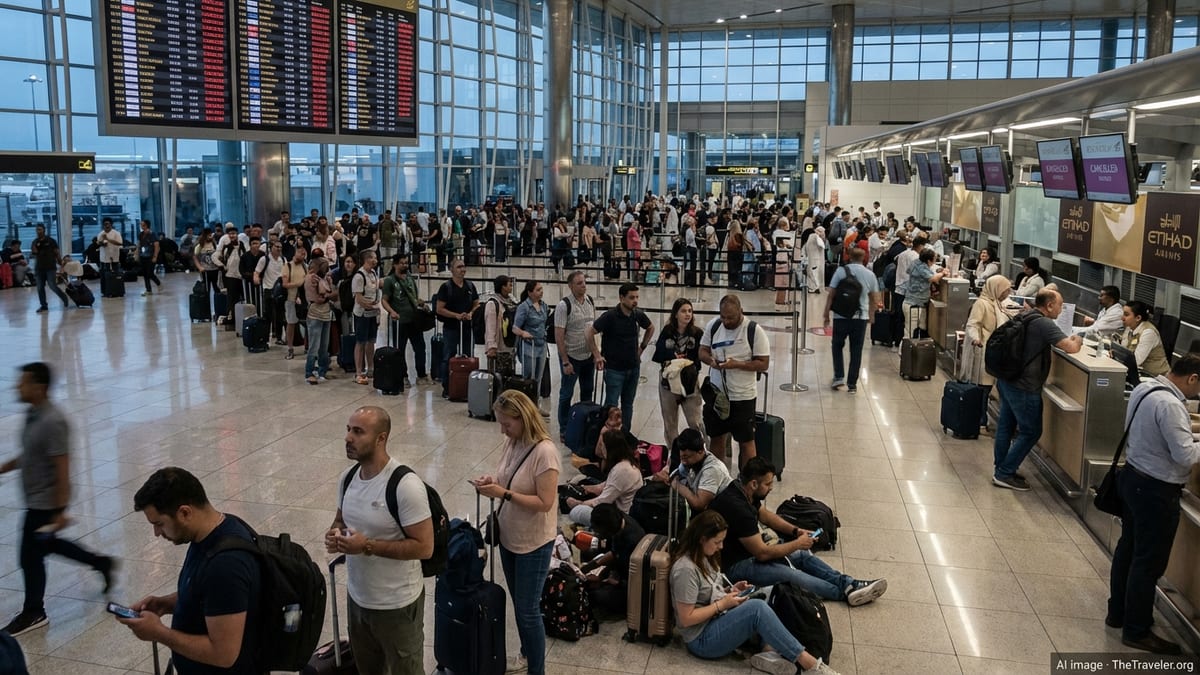
Publicly available airport data and industry reporting show that Dubai International Airport handled about 31.5 million passengers in the first half of 2026, a drop of more than 30 percent from a year earlier after the outbreak of war involving Iran triggered widespread flight suspensions across the Gulf.
Within those totals, travel analysts estimate that roughly 7 million of the people passing through Dubai this year have been leisure visitors staying in the city, rather than transit passengers simply changing planes. That figure is well below the record tourism numbers of 2024 and 2025 but stands out given the scale of the disruption and the wave of travel advisories issued for the region.
Reports indicate that passenger volumes plunged in March, when missile and drone attacks near major Gulf hubs led to temporary airport closures and rerouting of long-haul traffic between Europe and Asia. Dubai’s own media updates earlier in the year described traffic dropping to a fraction of normal levels as airlines suspended services during the most intense phase of the conflict.
By late spring and into summer, however, traffic had begun to recover as carriers restored capacity and travellers adjusted to new routings and security procedures. The partial rebound has been enough to keep Dubai in the ranks of the world’s busiest international hubs, even if overall flows remain well short of earlier forecasts.
Forecast cut from 100 million to 70 million passengers
Before the conflict escalated at the end of February, Dubai Airports had projected that Dubai International would handle close to 100 million passengers in 2026, approaching the all-time high set before the pandemic. That outlook was based on rapid growth in both point-to-point tourism and transfer traffic, along with new routes into emerging markets in Asia and Africa.
According to Reuters-based coverage and regional business press reports, the operator now expects around 70 million passengers for the full year after almost two months of airspace restrictions and route closures forced a sharp revision. Executives have indicated in public comments that the original 100 million target is unlikely to be reached before the end of 2027.
The gap between previous expectations and the new guidance underlines how severely the Iran war has disrupted aviation across the Gulf. Temporary shutdowns of key corridors, extra fuel and insurance costs, and continued caution by some European and Asian carriers have all weighed on traffic through Dubai, one of the principal east–west transit points.
Even with the downgrade, the revised forecast still implies tens of millions of additional passengers in the second half of the year, suggesting that operators are counting on a continued recovery in demand and on the gradual relaxation of restrictions as the security situation stabilizes.
Key source markets stay resilient
Despite the turmoil, publicly available statements from Dubai Airports and airline updates indicate that India, Saudi Arabia and the United Kingdom remain the top three origin and destination markets for Dubai this year. These routes have historically underpinned both tourism and business travel to the city and have shown particular resilience through previous shocks.
Travel industry data show that Indian cities continue to supply the largest single share of visitors, supported by strong family, trade and education links. Routes to Saudi Arabia and the wider Gulf region have also recovered more quickly than some long-haul European services, reflecting shorter flight times and regional mobility that is less sensitive to war-related advisories issued in Western capitals.
Business travel has been weaker, in part because corporate risk rules and insurance conditions make it harder for companies to send staff into areas covered by security warnings. However, conferences, trade fairs and sector events in Dubai have continued to draw regional participants, helping to support hotel occupancy in key business districts.
For leisure travellers, package operators report that Dubai is increasingly marketed as a stopover or multi-centre option combined with destinations viewed as less exposed to the conflict. That strategy has contributed to the 7 million visitor figure even as some tourists who might once have spent an entire holiday in the city choose alternative beach or cultural destinations.
Airlines rebuild networks after closures and strikes
The aviation recovery underpinning Dubai’s visitor numbers has taken shape gradually over the past several months. Factboxes compiled by Reuters and other outlets show that many international airlines initially halted flights to Dubai and other Gulf hubs when the war began, then resumed limited services as new safety assessments were completed.
Some carriers from Europe and East Asia have restored daily flights, while others maintain reduced frequencies or continue to route aircraft around certain airspace. Regional giants based in the United Arab Emirates and Qatar have largely rebuilt their networks, although they, too, report higher operating costs and tighter scheduling margins as a result of detours and slot constraints.
Separate coverage from Gulf-based business media indicates that Emirates alone carried millions of passengers over the peak summer months as it returned to nearly full network capacity, highlighting the role of home carriers in propping up Dubai’s connectivity. At the same time, industry briefings acknowledge that renewed missile and drone incidents can still trigger short-notice diversions and delays.
Aviation analysts note that Dubai’s role as a connecting hub makes it especially vulnerable to regional shocks but also helps it bounce back quickly once routes reopen. Because a large share of passengers are in transit, airlines and airports can redirect flows more flexibly than point-to-point destinations that rely almost entirely on origin tourism.
Hotels, pricing and traveler sentiment
On the ground, the war’s impact has been most visible in hotel occupancy and pricing. Local and international media reports describe a period in March and April when some luxury properties drastically reduced rates in an effort to attract residents and remaining visitors after international arrivals dropped.
Recent data suggest that occupancy has improved from those lows but remains uneven across the city, with beachfront resorts and established central districts faring better than newer outlying developments. Promotional campaigns, flexible booking policies and bundled offers with theme parks or shopping experiences have all been used to entice cautious travellers.
Social media discussions and traveler forums reveal a mixed picture on sentiment. Some potential visitors say they have postponed trips because of security concerns or insurance limitations, while others report that once in Dubai they feel relatively insulated from the conflict, citing visible security measures and the city’s focus on business-as-usual.
Tourism strategists argue that sustaining roughly 7 million visitors in such a challenging year reflects both Dubai’s existing global brand and the government’s long-term investment in infrastructure and attractions. The coming winter season, typically the city’s busiest period, is expected to provide a clearer test of how quickly international tourists are willing to return in greater numbers while the broader regional situation remains unsettled.