


More news on this day
A new scheme launching in Britain this weekend will allow many rail passengers stranded by cancellations to board alternative operators’ trains at no extra cost, in a move aimed at reducing disruption and confusion across some of the country’s busiest routes.
Get the latest news straight to your inbox!
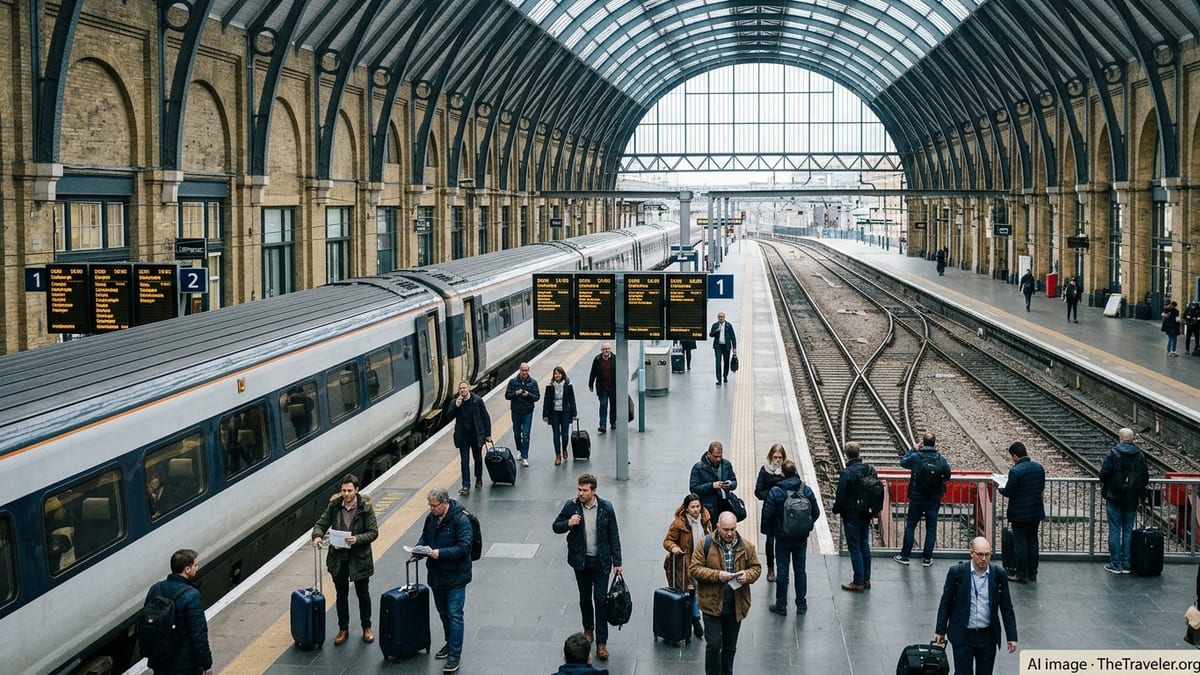
Automatic ticket acceptance to cover many cancelled services
Publicly available information indicates that from Sunday 20 September 2026, rail passengers whose trains are cancelled will gain an automatic right to complete their journey on another participating operator’s service without paying again. The initiative is designed to standardise a patchwork of local agreements and informal practices that previously left many travellers unsure of their options when services were disrupted.
Under the new approach, a valid ticket for a cancelled train can be used on a different operator’s service on the same route, typically within a window of around two hours before or after the original departure time, according to industry-facing briefings and passenger communications. Travellers will not have to buy a new ticket or seek approval in advance, and frontline staff are expected to be informed of the new acceptance rules.
Discussion on passenger forums and news-sharing platforms indicates that the scheme is being introduced across large parts of the franchised rail network in England and Wales, with several major intercity and regional operators taking part from day one. The change is being presented as a way to provide clearer, more dependable back-up options when last-minute cancellations leave trains overcrowded or boards suddenly wiped of services.
The launch follows years of debate about how closely UK rail rules should mirror air passenger protections, where travellers affected by cancellations already enjoy a legal right to rerouting. Commentators note that while the new rail scheme falls short of those aviation-style obligations, it represents a significant step toward more predictable onward travel when disruption occurs.
Gaps remain as some operators sit outside the scheme
Despite its broad coverage, the initiative will not immediately apply to every rail company. According to public commentary and published summaries of the plans, several open access operators that run niche or long-distance services on key intercity corridors are currently excluded from the automatic acceptance rules.
Passengers on these services may still find themselves with fewer options if trains are cancelled, particularly on routes where frequencies are limited and alternative operators run different stopping patterns. In such cases, travellers may need to rely on existing discretionary arrangements, request assistance at stations, or seek refunds and compensation through normal channels rather than boarding the next train as of right.
Reports also indicate that at least one franchised operator with a relatively high level of cancellations is expected to join the scheme later rather than at launch. That delay has attracted criticism from some passenger advocates who argue that those facing the greatest disruption should benefit from the most comprehensive support. Industry sources suggest that technical and commercial issues, including revenue-sharing arrangements between operators, are behind the staggered rollout.
The partial coverage means that passengers will still need to pay attention to which company operates their service and whether it is signed up to the scheme. Travel experts are advising people to check operator announcements and station posters to understand how the rules apply on their usual routes before assuming that any alternative train will be available at no extra charge.
How the new rules fit into wider passenger rights reforms
The ticket-acceptance scheme is emerging against a backdrop of wider efforts in the UK and across Europe to strengthen protections for rail users. In Britain, the Office of Rail and Road has recently consulted on a framework to ensure fairer redress when booked passenger assistance for disabled and less mobile travellers is not delivered, including clearer expectations around refunds, alternative transport and other remedies.
Across the European Union, regulators have already implemented updated rail passenger rights and are working on further proposals to extend protections for journeys that involve multiple operators and single tickets. These initiatives aim to close long-recognised gaps affecting passengers who hold through tickets across different companies or who are stranded far from home by missed connections and late-night cancellations.
Analysts suggest that the new British scheme aligns with this broader trend by making it easier for passengers to continue their journey when a single operator’s service fails. However, because the initiative is based on agreements between companies rather than comprehensive legislation, its scope and resilience may depend on continued support from participating operators and future policy decisions.
Advocacy groups focused on sustainable transport have frequently argued that reliable, passenger-friendly rail systems are essential if travellers are to be encouraged out of cars and short-haul flights. Measures that reduce the risk of being stranded and cut the time spent waiting for a replacement train are viewed as a key part of making rail travel more attractive for everyday journeys.
Practical impact for weekend travellers
The timing of the launch is significant, coinciding with a period of scheduled engineering works and seasonal disruption on several parts of the UK network. Network maintenance programmes often concentrate on weekends, when passenger numbers are lower but leisure travel demand can still be high, making last-minute cancellations particularly inconvenient for families, tourists and event-goers.
For travellers heading to or from major cities, the new scheme should mean that a cancelled train no longer automatically results in hour-long gaps or expensive last-minute ticket purchases. In many cases, passengers will be able to simply board the next available service operated by a different company along the same corridor, subject to the detailed conditions set out by participating operators.
Rail industry information suggests that frontline staff have been briefed on the scheme and that ticket barriers will be set to recognise valid tickets across a wider range of services during disruption. Even so, experienced passengers are recommending that travellers allow extra time, keep digital or printed copies of their tickets handy, and be prepared to explain that they are travelling under the new acceptance arrangements, at least in the early weeks while the system beds in.
Some observers caution that the new rules will not eliminate disruption altogether. Capacity constraints, short-notice staffing issues and infrastructure problems can still lead to crowding and delays, particularly at peak times or on popular weekend leisure routes. The scheme is intended to give passengers more certainty about their rights when the timetable breaks down, rather than to guarantee a seat on the next train.
Next steps and what passengers should watch for
As the scheme goes live, attention is likely to focus on how consistently it is applied across the network and whether passengers experience the promised reduction in hassle when trains are cancelled. Consumer organisations are expected to monitor reports from travellers and may call for clearer public reporting on performance, including how often alternative operators honour tickets and any patterns of refusal or confusion.
Further adjustments may follow once data from the first months of operation becomes available. There is scope for more operators to join, and for the time windows and routes covered by the acceptance rules to be refined in response to observed bottlenecks and passenger feedback. Policymakers and regulators will also be watching to see whether the voluntary scheme delivers sufficient protection or whether more formal obligations are needed.
Passengers are being encouraged by travel commentators to review information from train companies and independent advice services ahead of journeys that rely on tight connections or late services. Understanding which operators participate, how long tickets remain valid after a cancellation, and what to do if a replacement journey involves a different route will help travellers make full use of the new rights.
For now, the launch represents a tangible shift in favour of passengers on a rail network that has faced sustained criticism over reliability and customer service. If the scheme performs as intended, the sight of stranded travellers staring at departure-board cancellations may still be a feature of Britain’s stations, but fewer of them should be left wondering whether they can simply get on the next train home.