


More news on this day
Summer storms across the northeastern United States triggered a fresh wave of air travel disruption on July 6, as Cleveland Hopkins International Airport reported 69 delayed flights and 15 cancellations affecting major routes to New York, Newark, Minneapolis, Toronto and Dublin.
Get the latest news straight to your inbox!
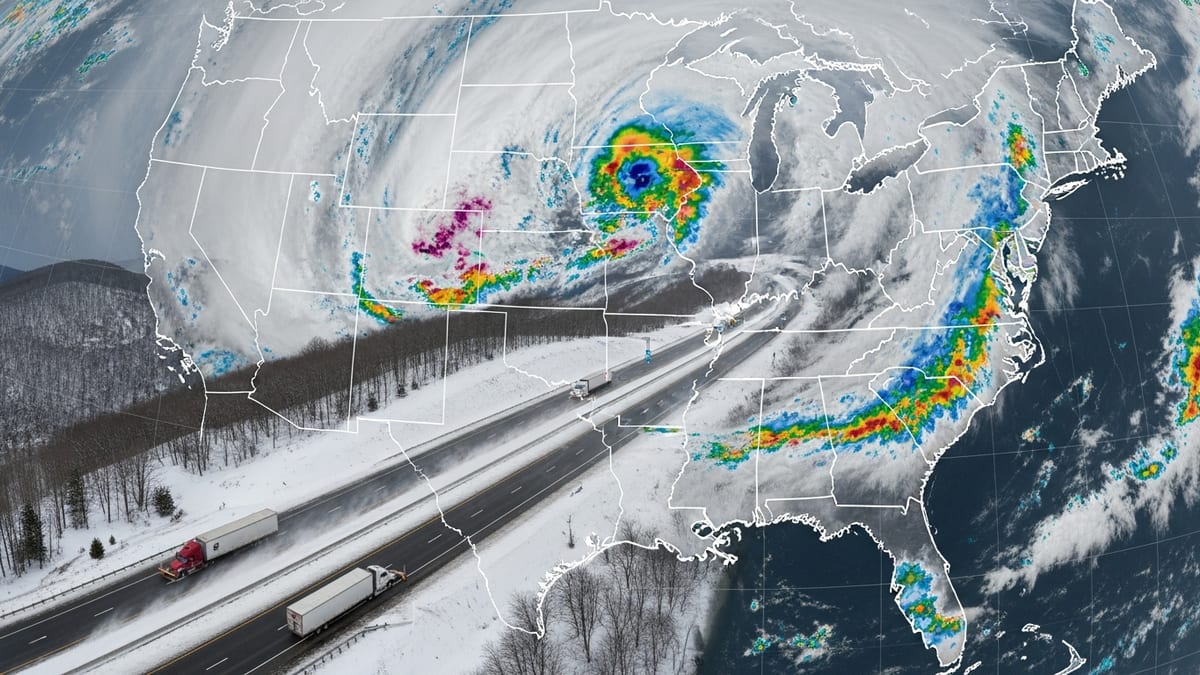
Storm Systems Ripple Through Key Northeast and Midwestern Hubs
Operational data compiled from tracking services and airport condition reports for July 6 show Cleveland’s disruption closely tied to thunderstorms and unstable weather over the New York region and adjacent airspace. The pattern follows several days of weather-related slowdowns impacting Newark and other New York area airports during the Independence Day travel period, a stretch that traditionally sees some of the heaviest summer demand.
Published coverage in recent days has highlighted how even localized convective storms around New York and Newark can prompt holding patterns, ground stops and diversion decisions that reverberate through the national network. With many Cleveland services operating as feeder or connecting flights into New York, Newark and onward transatlantic routes, that congestion quickly translated into delayed departures and missed connections at Hopkins.
Tracking boards for July 6 show multiple departures between Cleveland and Newark listed in delayed status, alongside knock-on impacts to services bound for other East Coast and Midwest hubs. The same weather system complicated arrivals from the New York area into Ohio, tightening aircraft and crew availability at Cleveland precisely as afternoon and evening travel volumes built.
Although Cleveland itself saw less intense storm activity than the coastal airports, its role as a connecting point for traffic heading to and from the New York region placed it directly in the path of the disruption. By early evening, the combination of late‑arriving aircraft and lingering airspace constraints had solidified into a sustained delay pattern.
Major U.S. Carriers and Regional Partners Affected
The disruption tally at Cleveland Hopkins included flights operated by United, Delta, Southwest, American and Republic Airways, along with services flown by other regional partners. Publicly available schedules show these airlines collectively handling a large share of the airport’s traffic to New York City area airports, Minneapolis, Toronto and international destinations such as Dublin.
United and its United Express partners, including Republic, were among the most exposed due to their dense schedule of flights linking Cleveland with Newark and other East Coast hubs. Tracking data indicated several United‑branded departures to Newark facing rolling delays, with at least one service flagged as returning to the gate after initial taxiing as the situation evolved.
American, Delta and Southwest each experienced a smaller but still significant set of schedule changes, particularly on flights feeding New York and major Midwest hubs. For some departures, the operational challenge was less about direct weather over Cleveland than about securing arrival slots and workable connection windows at congested downstream airports.
Regional operators such as Republic played a central role in the day’s disruption statistics, since many of the affected routes are flown under major airline brands but operated with smaller regional jets. When upstream delays disrupt a series of short‑haul turns, the resulting schedule ripple can quickly push multiple departures into late status or lead to targeted cancellations to rebalance operations.
Key Routes Hit: New York, Newark, Minneapolis, Toronto and Dublin
The 69 delays and 15 cancellations recorded at Cleveland Hopkins on July 6 were concentrated on a handful of high‑demand routes. Services to New York area airports and Newark represented a sizable share of the disruptions, reflecting both the intensity of the weather impacts there and the importance of those cities as onward connection points for domestic and international travel.
Flights between Cleveland and Minneapolis also faced timetable pressure as aircraft and crews repositioned around weather‑related constraints in the Upper Midwest. Public trackers showed select departures between the two cities operating behind schedule, a pattern consistent with broader operational challenges at northern hubs during active summer storm systems.
Transborder services to Toronto were similarly affected. Delays on U.S. domestic feeder flights reduced connection times for passengers continuing into Canada, while congestion around New York and other eastern hubs limited opportunities to reroute disrupted travelers through alternative gateways.
The day’s disruption extended across the Atlantic as well. The nonstop link between Cleveland and Dublin, a key summer route for both leisure and visiting‑friends‑and‑relatives traffic, was caught up in the ripple effects from delayed feeder traffic and weather‑related flow restrictions over the northeastern United States. Even when long‑haul departures were able to operate close to schedule, the late arrival of connecting passengers and baggage created additional stress across the operation.
Passenger Experience Marked by Missed Connections and Rebookings
For travelers passing through Cleveland Hopkins, the numerical tally of delays and cancellations translated into longer days in terminals, compressed connection windows and, in some cases, overnight stays. Reports shared on social platforms on July 5 and July 6 described diversions into Cleveland for flights originally bound for New York area airports, as well as passengers arriving in Hopkins to find their onward legs to Newark or Minneapolis substantially delayed.
According to publicly shared itinerary details, some flyers connecting through Cleveland from smaller regional markets saw their New York‑bound flights depart hours later than planned, while others were shifted to alternative routings through Chicago or other hubs. For travelers on eastbound transatlantic itineraries, missed connections in Cleveland risked extending itineraries by half a day or more, particularly when daily services such as the Dublin flight were involved.
In line with standard industry practice during weather‑driven events, the affected airlines directed customers to mobile apps and online tools to monitor real‑time status changes and request alternate flights. Travel waivers already in effect for parts of the East Coast over the July 4 holiday weekend continued to play an important role, allowing some passengers greater flexibility to move their trips away from the peak of the disruption.
Even where flights ultimately departed, reconfigured aircraft assignments and gate changes added complexity, especially for passengers unfamiliar with Cleveland Hopkins’ layout. The cumulative effect was a day of persistent operational friction rather than a single, concentrated outage.
Broader Context: Busy Holiday Travel Meets Fragile Summer Operations
The July 6 disruption at Cleveland Hopkins unfolded against a backdrop of elevated summer travel and a series of recent weather‑related slowdowns at Newark and other Northeast hubs. Industry performance data for 2026 have underscored how quickly operations can deteriorate during peak periods when storms intersect with already tight schedules and congested airspace.
Cleveland’s role as both an origin‑and‑destination market and a connecting waypoint means it is particularly sensitive to problems emerging at larger coastal hubs. As carriers continue to rebuild and adjust their networks, flights linking Hopkins to New York, Newark, Minneapolis, Toronto and Dublin have grown in strategic importance, handling a mix of business, leisure and visiting‑friends‑and‑relatives traffic.
Public analysis of delay trends suggests that similar episodes are likely to recur over the remainder of the summer as storm systems repeatedly form over the Midwest and Northeast. For Cleveland‑area travelers, that translates into a continued need for flexible planning, close monitoring of real‑time flight information and a clear understanding of each carrier’s waiver and reaccommodation policies when severe weather threatens.
While the 69 delays and 15 cancellations recorded on July 6 were disruptive, they also reflect an industry increasingly structured around managing, rather than eliminating, weather‑driven volatility. For passengers moving through Cleveland Hopkins at the height of the holiday rush, the experience offered a vivid reminder that even short‑haul hops to New York or Toronto can be heavily influenced by conditions hundreds of miles away.