


More news on this day
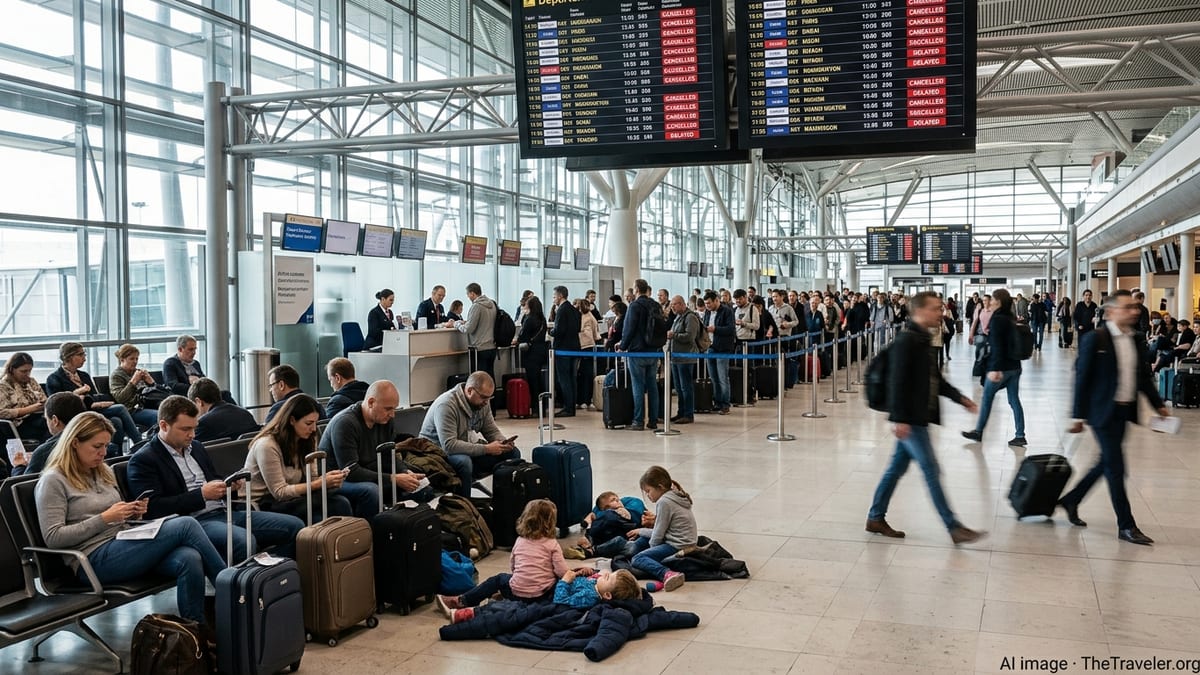
Passengers flying through Dubai and other Middle East hubs are dealing with another spell of disruption, as Emirates, Etihad Airways and Flydubai report rolling delays and scattered cancellations while Air France extends a suspension of its Dubai route amid persistent regional risks.
Get the latest news straight to your inbox!
Regional tensions and overseas glitches squeeze Gulf hubs
Publicly available flight-tracking data and regional aviation coverage indicate that operations at Dubai International Airport and Abu Dhabi’s Zayed International Airport remain under pressure from a combination of security concerns in the Gulf and knock-on effects from overseas air traffic problems. Recent reports describe delays and a limited number of cancellations across both hubs, even as most scheduled services for Emirates, Etihad, Flydubai and Air Arabia continue to operate.
Coverage from UAE-based outlets notes that the latest wave of disruption coincides with renewed volatility linked to the US–Iran confrontation, missile incidents affecting Jordan and conflict-related advisories for Gulf airspace. At the same time, airlines are still working through the impact of a recent air traffic control failure in the United Kingdom, which forced diversions and cancellations on some Europe–Gulf routes and has continued to ripple through schedules.
Travel-industry advisories emphasise that the operational picture can change quickly, with flights delayed or pulled at short notice when airspace restrictions tighten or airport congestion builds. Passengers are being urged by airlines and compensation platforms to monitor their flight status through official apps and websites before leaving for the airport.
Despite the challenges, the main UAE carriers have kept core regional and long-haul sectors in place, adjusting departure times and aircraft routings to work around restricted areas. Reports indicate that this has helped preserve much of the capacity through Dubai and Abu Dhabi, even as on-time performance has deteriorated on some days.
Emirates, Etihad and Flydubai juggle delays and limited cancellations
Operational updates compiled by regional media show Emirates, Etihad and Flydubai continuing to run a broad network from Dubai and Abu Dhabi, while absorbing punctuality setbacks on selected routes. Tracking on recent days has highlighted late departures and arrivals on services linking the UAE with destinations such as the UK, India, Pakistan and Saudi Arabia, typically ranging from minor schedule slips to multi-hour delays.
Reports from Gulf-focused outlets describe Emirates cancelling a handful of services from London Heathrow to Dubai on days when UK air traffic issues or wider congestion made operations difficult. Etihad has also seen disruptions on some European and South Asian routes, with one Abu Dhabi–London Heathrow rotation reported to incur an extended delay after the inbound flight diverted to Paris Charles de Gaulle.
Flydubai, the Dubai-based low-cost carrier, has faced isolated cancellations and significant delays on parts of its regional network, particularly to and from markets including Russia, the Caucasus and the Balkans. According to aviation coverage, some Kuwait and Bahrain flights operated by Air Arabia and other Gulf carriers have also been trimmed or retimed in response to airspace constraints and shifting demand.
Even where flights are operating, onboard service providers and airports are contending with tighter turnaround schedules, crew reassignments and the need to refile flight plans to avoid sensitive zones. Travel analysts quoted in open reports suggest that this environment is likely to sustain an elevated risk of short-notice disruption for the remainder of September.
Air France extends Dubai suspension while other routes resume
Against this backdrop, Air France has taken a more conservative stance on its Dubai service than many Gulf-based carriers. Information from the airline’s customer updates and third-party tracking platforms shows that the Paris–Dubai route remains fully suspended, with the latest extension running until at least mid-September. That prolongs a pause that has been in place through earlier phases of the regional security flare-up.
Regional aviation round-ups highlight that Dubai is now one of the last major Middle East destinations in Air France’s network without scheduled passenger flights, even as the carrier restores connectivity elsewhere. According to recent coverage, Air France has resumed or maintained services to cities such as Tel Aviv and Riyadh, while keeping suspensions in place for Beirut and Dubai on specified dates as it continues to monitor risk assessments and insurance requirements.
The approach underlines how international airlines are calibrating exposure differently across the region. Some European and Asian carriers, including KLM, Cathay Pacific, Singapore Airlines and British Airways, have either kept full suspensions on Dubai and Abu Dhabi routes or are working toward a gradual return from late October with reduced weekly frequencies. Others, such as Air Canada and certain low-cost operators, are reported to have postponed any reinstatement of UAE flights into 2027.
For travellers, the extended pause from Air France narrows the choice of nonstop options between Paris and Dubai and pushes more demand onto Gulf carriers and other European airlines that continue to operate via their hubs. Travel advisors point out that passengers holding Air France tickets are generally being offered rebooking, rerouting or refunds in line with the carrier’s published disruption policies.
Conflict-zone guidance and insurance concerns shape airspace choices
The European Union Aviation Safety Agency’s conflict-zone information bulletin for parts of the Gulf remains a key reference point for airline decision-making. Public bulletins and media summaries explain that the advisory, recently extended through the end of September, encourages carriers to exercise caution when planning routes across airspace over the waters of the UAE, Bahrain, Kuwait, Oman and Qatar because of the risk of miscalculation or escalation linked to the US–Iran stand-off.
While the bulletin does not amount to a blanket ban on overflights, it pushes operators to carry out detailed risk assessments and to consider alternative routings that keep aircraft further from areas of concern. For non-Gulf airlines whose business models rely on more limited Middle East exposure, this can tip the balance toward suspending certain city pairs altogether rather than absorbing the operational complexity and potential insurance implications.
Gulf-based carriers, by contrast, tend to maintain a higher degree of exposure to regional airspace, though they also adjust routings and altitudes in line with safety guidance. Analysts quoted in open reports note that these airlines typically have more flexibility to reconfigure schedules at short notice because of their hub-and-spoke structures and dense short-haul networks, even if that results in a patchwork of delays, aircraft swaps and ad hoc cancellations.
Industry observers add that war-risk insurance premiums and crew safety considerations are shaping route planning alongside government advisories and airspace notices. For some long-haul operators, routing around risk zones can add significant flying time and fuel costs, potentially undermining the economics of thin-margin routes until conditions stabilize.
What passengers through Dubai and the wider region should expect
Consumer-focused travel platforms tracking disruption across Dubai, Abu Dhabi and Sharjah report that most flights are still departing, but often not on time. On recent peak days, these trackers have logged scattered cancellations and a rise in delays, particularly for services touching the UK, parts of Europe and selected Middle Eastern destinations where airspace congestion is most acute.
Advisories compiled by Gulf-based news outlets and passenger-rights organisations consistently recommend that travellers build extra time into their journeys, pay close attention to airline notifications and consider the implications of tight connections through Gulf hubs. Those booked on itineraries involving multiple carriers or self-connecting tickets are being encouraged to allow generous buffers or to explore rebooking options that reduce dependence on heavily affected corridors.
With Air France’s Dubai route still offline and several other foreign airlines yet to return to UAE markets, Emirates, Etihad and Flydubai are likely to continue absorbing a disproportionate share of demand into and out of the region. Capacity constraints during busy travel periods may translate into higher load factors and limited availability on popular departures, even when overall schedules appear robust on paper.
Travel specialists caution that the situation remains fluid, and that further shifts in the regional security environment or additional infrastructure failures overseas could quickly alter the disruption pattern. For now, travellers are being advised to stay informed, keep documentation of any delays or cancellations and review their rights under airline contracts and local regulations before making changes to their plans.
Condé Nast Traveller Middle East – Dubai and Middle East flight disruption
AirHelp – UAE flight delays and Air France Dubai suspension update
Khaleej Times – UAE flights latest delays and cancellations
TheTraveler.org – UAE flights hit by delays as Air France extends Dubai ban