


More news on this day
UAE travellers are facing another turbulent week, with Emirates, Etihad, Air Arabia and flydubai reporting fresh delays and cancellations as Air France extends its suspension of Dubai flights amid ongoing regional tensions and operational disruptions.
Get the latest news straight to your inbox!
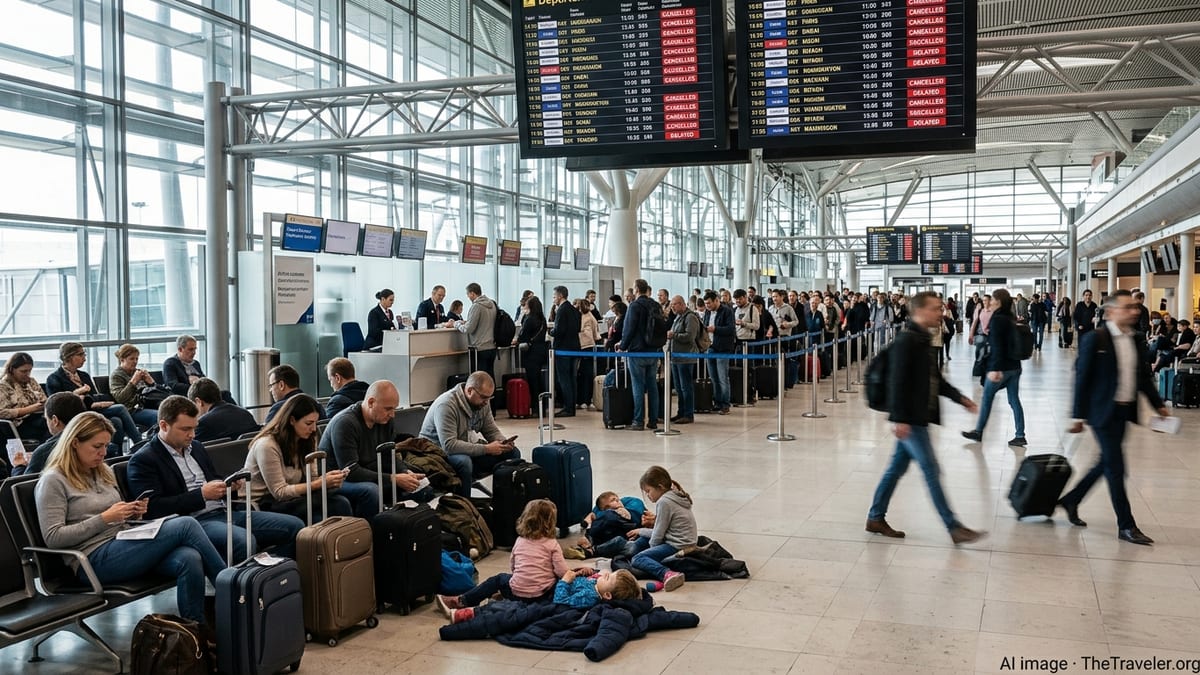
Air France keeps Dubai flights off schedule
Publicly available schedules show that Air France has prolonged the pause on its Paris–Dubai services through September 8, maintaining a temporary halt that began earlier this month as regional security concerns escalated. The carrier has kept Dubai off its active network while continuing to operate to other Gulf cities, creating a gap on one of the busiest Europe–UAE corridors.
Coverage from regional outlets indicates that the Paris-based airline initially suspended flights until September 4 before extending the measure in response to the evolving situation in Gulf airspace. Passengers booked on these routes have been advised to seek rebooking on alternative services or request refunds through normal customer-service channels, with no firm restart date beyond the current suspension window publicly confirmed so far.
Reporting on broader Middle East operations suggests Air France has resumed some routes in the region, such as services to Tel Aviv and Riyadh, while keeping Dubai and Beirut off the schedule until at least mid-September. This staggered pattern underlines how airlines are adjusting city by city as they reassess risk and airspace guidance across the wider region.
Emirates and Etihad manage rolling disruptions
Flag carriers Emirates and Etihad continue to operate extensive networks from Dubai International and Abu Dhabi’s Zayed International Airport, but passengers are seeing a patchwork of delays, schedule changes and selective cancellations. Recent travel updates from Emirates highlight disrupted services on routes such as Jakarta, where volcanic ash forced the temporary closure of Soekarno Hatta International Airport and led to multiple Dubai–Jakarta flights being cancelled over several days in early September.
Etihad has faced similar operational challenges, including knock-on delays linked to air traffic control problems in the UK and diversions of inbound services. Gulf-based coverage notes that an Abu Dhabi–London Heathrow service was expected to experience extended delay after the corresponding inbound flight diverted to Paris Charles de Gaulle, illustrating how overseas infrastructure issues are spilling over into UAE schedules.
In parallel, both UAE carriers are navigating the impact of regional security tensions on flights to nearby Gulf destinations such as Kuwait and Bahrain. Reports indicate that while some services have been maintained or partially restored, schedules have been trimmed and frequencies adjusted, resulting in an uneven picture for travellers booking short-haul regional trips out of Dubai and Abu Dhabi.
Flydubai and Air Arabia trim Gulf and regional routes
Low-cost carriers flydubai and Air Arabia, which handle a significant share of short- and medium-haul traffic from the UAE, are also contending with rolling schedule changes. Gulf-based aviation reports describe cancellations on selected Kuwait and Bahrain flights operated by Air Arabia, as well as isolated disruptions and route adjustments within flydubai’s regional network.
These changes come on top of earlier suspensions and frequency cuts prompted by tensions around Iran and updated airspace advisories affecting Gulf routes. Flydubai has been named among airlines cancelling or rerouting services on certain regional sectors, with specific departures from Dubai to neighbouring capitals such as Bahrain listed among recent cancellations in local travel updates.
While the overall networks of both carriers remain largely intact, the pattern of targeted cancellations, reduced frequencies and altered timings has made planning more complicated for budget-conscious travellers who rely on these airlines for quick regional hops. Many passengers are being encouraged by publicly available guidance to reconfirm departure times and gate information on the day of travel.
Multiple triggers: security tensions, UK outage and Indonesia ash
The latest disruption is not tied to a single cause. Published coverage points to a combination of regional security tensions involving Iran, a major air traffic control outage in the UK and a significant volcanic eruption in Indonesia as key drivers of the current wave of delays and cancellations affecting UAE flights.
In the UK, a technical issue impacting the National Air Traffic Services (NATS) has led to widespread disruption for flights to and from British airports. Emirates and Etihad services linking Dubai and Abu Dhabi with London and other UK cities have appeared among the affected flights, with some departures cancelled or facing extended delays as carriers work through congestion and slot constraints.
Meanwhile, the closure of Jakarta’s main airport due to volcanic ash has directly disrupted Emirates’ operations on the busy Dubai–Jakarta route, prompting several days of cancellations listed on the airline’s own travel updates. Regional media also highlights broader cutbacks to Indonesia services by multiple carriers, which have rippled through to UAE hubs where many passengers connect onward to Southeast Asia.
Overlaying these operational shocks are ongoing US–Iran tensions, which have prompted updated advisories around certain airspace corridors in the Gulf. European agencies have extended warnings for flights transiting the region, and several international carriers have maintained or expanded suspensions of services to UAE airports as they review routings and risk assessments.
What UAE-bound passengers are being told to do
With conditions changing day by day, the consistent message across official airline channels and regional media coverage is for passengers to stay closely informed before travelling to the airport. Emirates’ travel advisory pages instruct customers to monitor flight-status tools and email notifications for updates on delays or cancellations, and to ensure their contact details are current in existing bookings.
Similar guidance has been issued for Etihad, flydubai and Air Arabia services, with travellers urged to verify that their flight is operating as scheduled and to allow extra time at the airport where possible. Local news outlets summarising daily disruption at Dubai International and Zayed International repeatedly advise checking airline websites and apps rather than relying solely on printed itineraries or earlier confirmations.
For those affected by the extended suspension of Air France’s Dubai services, publicly available information points to rebooking options on alternative dates or carriers, subject to seat availability and fare conditions. Travel agents and online booking platforms are also flagging the need to review connection times and transit points carefully, especially for itineraries linking Europe, the Gulf and Asia while airspace advisories and weather-related restrictions remain in force.
As September progresses, airlines are expected to continue making rolling adjustments, meaning UAE passengers may face further changes even after checking in. Industry observers note that for now flexibility, real-time monitoring and a willingness to accept rerouting or schedule shifts are likely to be essential for anyone flying into or out of Dubai and Abu Dhabi.
Gulf News: UAE flights status – Emirates, Etihad, Air Arabia, flydubai delays and cancellations
The National: Middle East flights – which airlines are flying and which remain suspended
Emirates: Official travel updates and flight-status information