


More news on this day
The UK Foreign, Commonwealth and Development Office has issued updated travel warnings for 13 countries, refining its online foreign travel advice to reflect heightened regional tensions, security incidents and potential disruption to air and sea routes used by British holidaymakers.
Get the latest news straight to your inbox!
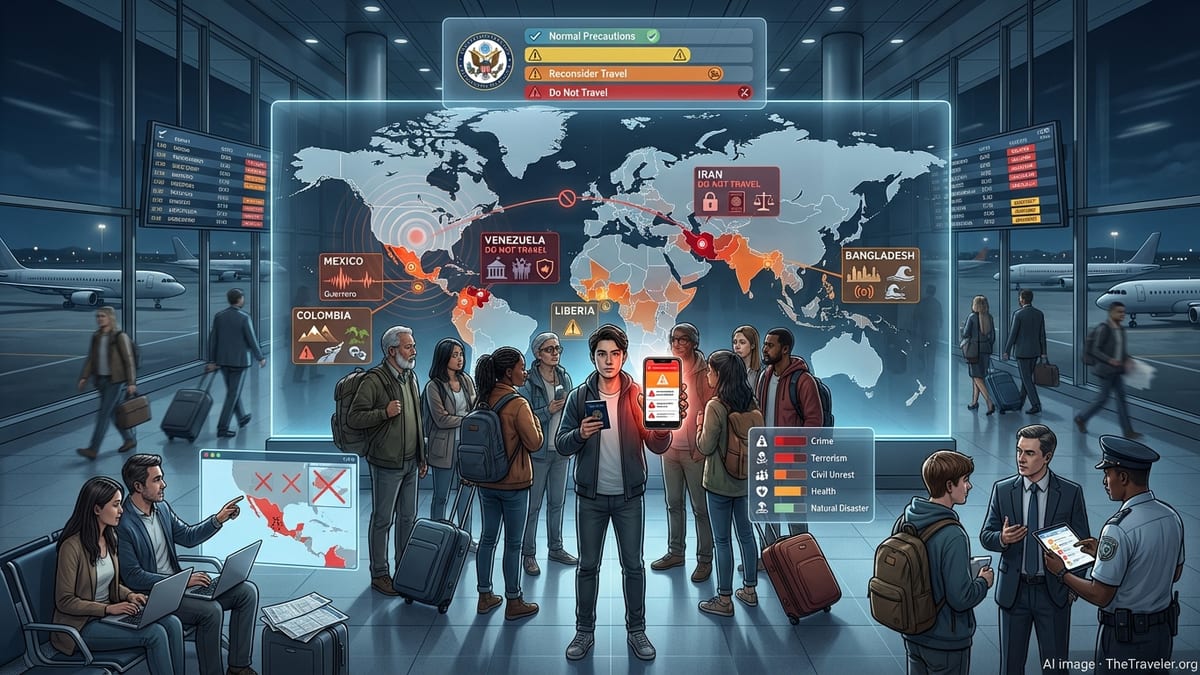
What the new Foreign Office update changes
According to recent coverage of the changes, the latest update brings together a series of earlier revisions into a clearer warning framework for 13 countries, many of them in and around the Middle East. The move places a renewed focus on how fast-changing regional dynamics can affect trips even to areas that remain open to tourism.
Publicly available information on the government’s foreign travel advice service shows that these changes do not automatically mean a blanket ban on visiting every country listed. Instead, the Foreign Office often advises against all travel or all but essential travel to specific border regions, conflict zones or areas with a track record of terrorist attacks, while allowing travel to other parts of the same country to continue.
The updated wording, dated in late October 2026, stresses that conditions can deteriorate with little warning. Travellers are urged via open guidance to pay close attention to local curfews, checkpoints, airspace restrictions and the possibility of sudden airport closures or flight diversions when planning journeys that cross or skirt affected regions.
Commentary from travel risk analysts suggests that the consolidation of warnings into a 13-country list is intended to highlight how incidents in one state can quickly spill over into neighbours, affecting overflight routes, cruise itineraries and overland tours that might not previously have been seen as high risk.
Which destinations are affected by the 13-country warning
Published reports referencing the latest update indicate that the 13 countries covered sit largely within a broad arc across the Middle East and adjacent regions, including several popular winter-sun and transit hubs. Within these states, the Foreign Office distinguishes between major tourist centres and higher-risk areas near active front lines, militarised borders or regions with a persistent record of attacks on civilians.
For example, coverage notes that advice for certain countries continues to flag zones within roughly 10 kilometres of key frontiers as places where British nationals are strongly urged not to travel at all. In some cases, that line is drawn around borders where incidents of cross-border fire, drone strikes or shelling have been recorded, even when resort areas further inland remain open and operational.
The 13-country list also reflects concerns about indirect exposure to conflict. Some destinations feature in the update not because of large-scale violence on their own territory, but because their airspace, ports or land routes are viewed as vulnerable to spillover from neighbouring crises. Travellers changing planes in regional hubs or joining cruises that transit sensitive waterways are therefore being reminded to check advisories for every country their itinerary touches, not just their main holiday destination.
The Foreign Office’s travel advice pages are updated individually for each country, often several times a month when tensions are high. As a result, the specific areas covered by the strictest warnings can shift, expand or contract, and not every map or list circulating on social media will reflect the latest position.
What the warning means for holiday bookings and insurance
For British travellers with existing holidays booked in one of the 13 countries, the key practical question is how the updated guidance interacts with tour operator policies and travel insurance. Industry commentary notes that many UK package providers follow Foreign Office advice closely, with some allowing fee-free changes or refunds if an area moves into an “advise against all travel” category after a trip is purchased.
Insurers typically examine the exact wording used on the official travel advice pages. Where the Foreign Office advises against all travel, standard policies often exclude cover for new trips booked into those locations. If the warning is restricted to certain regions within a country, cover may remain in place for travel to unaffected areas, provided travellers do not enter zones marked as off limits.
Specialist travel risk platforms that track government advisories from several countries point out that the UK is not alone in updating guidance for this set of destinations. Comparative tables published by commercial travel advisory services show similar patterns in the positions taken by authorities in the United States, Canada, Germany and France, especially where there are concerns about terrorism, missile strikes or mass protests affecting key cities and transport hubs.
Travellers are therefore being advised, through publicly accessible briefings, to read policy documents carefully before cancellation, and to confirm with both their insurer and travel provider whether changes to Foreign Office wording trigger any right to rebook or claim compensation.
How to check if your trip is affected
British nationals can access the latest country-specific guidance on the UK government’s foreign travel advice service, which outlines safety, security, entry requirements and local laws for each destination. The service explains that advice may range from general awareness of heightened risks, through to formal recommendations against all but essential travel, and finally the strongest category of advice against all travel.
Travel experts emphasise in published commentary that anyone planning to visit or transit one of the 13 countries on the updated warning list should monitor advice repeatedly rather than checking only once at the point of booking. This is particularly important for trips that rely on connecting flights through regional hubs or that involve overland segments across multiple borders.
Public information also encourages travellers to register contact details with their airline or tour operator so that they can be reached quickly if schedules change at short notice. In some higher-risk countries, local authorities may impose curfews or restrict movement in certain districts in response to protests or security incidents, which can affect access to airports, ports and railway stations.
Given the potential for mobile network outages in parts of the region, the Foreign Office travel advice pages recommend that travellers keep printed copies of key contact numbers and booking references, and consider how they would communicate with family members or their travel company if digital channels were temporarily unavailable.
Broader pattern of tightening global travel advisories
The latest Foreign Office update for 13 countries comes against a wider backdrop of tightening travel advisories by several governments. Recently revised guidance by international partners has focused on many of the same regions, citing risks from drone and missile attacks, piracy, civil unrest and the possibility of airports or airspace being closed with limited warning.
Analyses by travel risk consultancies highlight that a growing number of countries now feature at least some areas covered by strong “do not travel” or “avoid all travel” language. These shifts are being driven by a combination of long-running conflicts, new flashpoints and concerns about critical infrastructure, including shipping lanes and major aviation corridors that are important for global tourism.
For travellers, the changing map of advisories underscores the importance of treating official guidance as a core part of trip planning rather than an afterthought. That includes checking not only headline destinations but also any stopovers, excursions or border crossings that form part of a broader itinerary across affected regions.
While many popular resorts, city centres and cultural sites in the 13 countries continue to welcome international visitors, the Foreign Office’s refreshed warnings signal that travellers should be prepared for a more fluid environment, where routes, rules and risk levels can evolve quickly in response to events far beyond the holiday brochure.