


More news on this day
More than 200 people who bought into the dream of a permanent life at sea aboard the Villa Vie Odyssey have been ordered to leave the ship in Cambodia after the operator said soaring fuel prices made it impossible to continue the voyage, leaving many residents suddenly stranded far from home.
Get the latest news straight to your inbox!
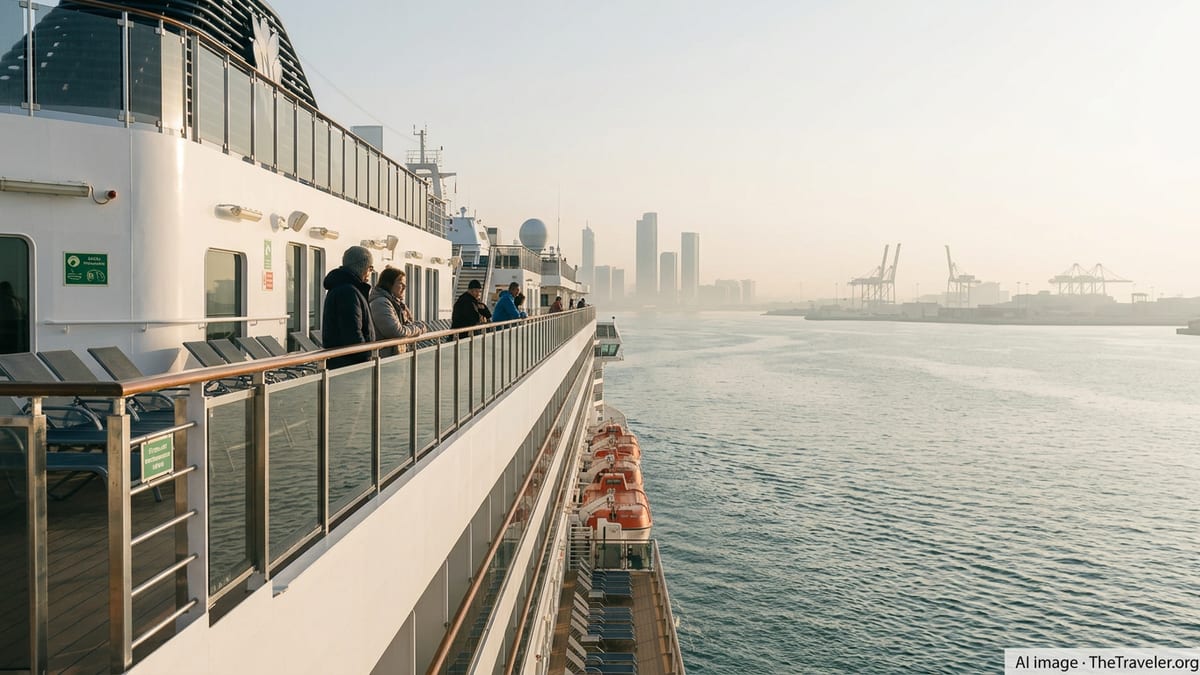
Residential cruise dream stalls in Cambodian port
The residential cruise ship, operated by U.S.-based company Villa Vie Residences, had been marketed as a way to “make the Odyssey your permanent home,” with cabins sold as long-term or lifetime residences rather than traditional cruise staterooms. Publicly available marketing material described purchase prices for suites starting around $230,000 for the lifetime of the vessel, plus ongoing monthly fees for services and maintenance.
The Odyssey departed Belfast, Northern Ireland, in October 2024 on what was promoted as a 3.5-year continuous voyage visiting all seven continents. Prospective residents were told they could sell or rent out their homes on land and instead live full time on board, with the ship functioning as both residence and transport.
Reports indicate that on the morning of October 27, 2026, residents awoke in the Cambodian port city of Sihanoukville to a notice instructing everyone to disembark with all of their belongings by early afternoon. Coverage from multiple outlets describes passengers being given roughly eight hours to vacate what, for many, had become their only home.
According to published coverage, the Odyssey had capacity for around 650 passengers, although about 200 to a little over 200 people are reported to have been living on board when operations were halted. Some had invested hundreds of thousands of dollars to secure cabins and pay residential fees since 2024.
Fuel prices and route disruptions blamed for sudden halt
Statements released by Villa Vie Residences and shared in media reports cite a sharp rise in fuel costs and difficulty sourcing fuel as the primary reasons for suspending operations. A company press release referenced in financial and travel coverage said fuel that had cost approximately 1,800 dollars per month in 2024 and 2025 had recently surged to between 6,000 and 8,000 dollars per month.
The operator linked the increase to geopolitical tensions, including the closure of the Strait of Hormuz and conflict involving Iran, which have disrupted global shipping and energy routes. Publicly available information suggests that these disruptions affected the Odyssey’s planned itinerary and made sourcing fuel along the voyage significantly more expensive and complex.
Reports also describe what one resident blogger called a “cascade of problems” in the months leading up to the shutdown, including delays, itinerary changes, and growing concern among residents about the company’s financial position. However, many passengers appear to have believed that the operator would find a solution and that the cruise would continue.
Instead, residents were informed that the ship could not guarantee sufficient fuel to leave Cambodia and that the voyage would be suspended while the company sought restructuring and new investment over a stated period of about 60 days. The ship has since remained at Sihanoukville Autonomous Port.
Residents suddenly seek housing and onward travel
The halt has turned a lifestyle product into an emergency travel problem for many on board. Published interviews and first-hand accounts describe residents hastily booking hotel rooms in Sihanoukville and nearby Phnom Penh, or making last-minute travel arrangements to neighboring countries such as Vietnam and Thailand while they consider longer-term options.
Some passengers told news outlets they had sold homes or businesses, or spent retirement savings, in order to purchase cabins and pay monthly fees on the Odyssey. One resident cited in international coverage estimated spending just under 500,000 dollars on the project since first boarding in 2024, leaving limited financial flexibility to secure alternative housing on short notice.
Others reported being effectively homeless once they stepped off the ship, relying on cheaper accommodation in Southeast Asia while awaiting clarity on whether voyages might resume or compensation be offered. Several passengers have turned to online communities and blogs to share practical advice, pool information and document the unfolding situation from Cambodia.
The abrupt end to the voyage has also affected crew and shoreside staff. Company statements highlighted a focus on supporting both residents and employees, although reports indicate that many details regarding severance, repatriation, or contract completion have yet to be fully communicated.
Company searches for investor and path to recapitalization
Villa Vie Residences has said in written statements, reproduced in multiple news reports, that it is seeking new investment and a financial restructuring that could allow the ship to resume sailing. The company has referenced a target period of roughly two months to work on recapitalization and evaluate options.
Publicly available information does not yet show any binding agreement with a new investor, and there is no confirmed restart date for the Odyssey’s voyage. Residents who hoped to continue living at sea currently face an indefinite wait and must decide whether to remain in the region or return to their home countries.
Questions also remain over refunds, ongoing maintenance fees, and the status of the long-term or lifetime cabin purchase agreements. As of late October 2026, travel and business outlets report that the company has not provided detailed public guidance on how much, if any, of residents’ investments might be recoverable in the event the voyage does not resume.
The situation is being closely watched within the emerging niche of residential cruising, where a small number of operators sell cabins as floating apartments. Analysts and industry observers note that the Odyssey case could influence investor appetite, regulatory scrutiny, and how future residential cruise projects structure fuel risk and financial protections.
Wider questions over passenger protections in new cruise models
The Odyssey incident arrives amid broader discussions about consumer protection in cruising and other long-term travel products. In many traditional cruise markets, regulations require operators to demonstrate financial security so that passengers are not left without some recourse if a voyage is canceled or curtailed.
However, residential cruising blends elements of real estate, timeshare and travel, and the regulatory framework is still evolving. Legal experts quoted in previous cases involving long-duration cruises have pointed out that the protections available to passengers can vary significantly depending on where the company is registered, where the ship is flagged, and how the product is marketed and sold.
For now, residents of the Villa Vie Odyssey are reliant on whatever contractual and statutory remedies may apply in their individual circumstances. Public reporting indicates that some passengers are consulting attorneys in their home jurisdictions, while others are waiting to see whether the operator secures new financing that would allow them to return to sea.
The episode underscores the financial and practical risks associated with committing to life aboard a ship, particularly when that commitment involves selling property on land. As rising operating costs and volatile fuel prices test business models across the cruise sector, prospective residents and long-term cruisers are being reminded to scrutinize contracts, contingency plans and financial guarantees before betting their homes on life at sea.