


More news on this day
U.S. air travel is experiencing another turbulent day as real-time aviation data shows 4,633 delays and 124 cancellations within, into, or out of the country, with thunderstorms disrupting operations at major hubs in Chicago, Detroit, and Washington’s Reagan National Airport.
Get the latest news straight to your inbox!
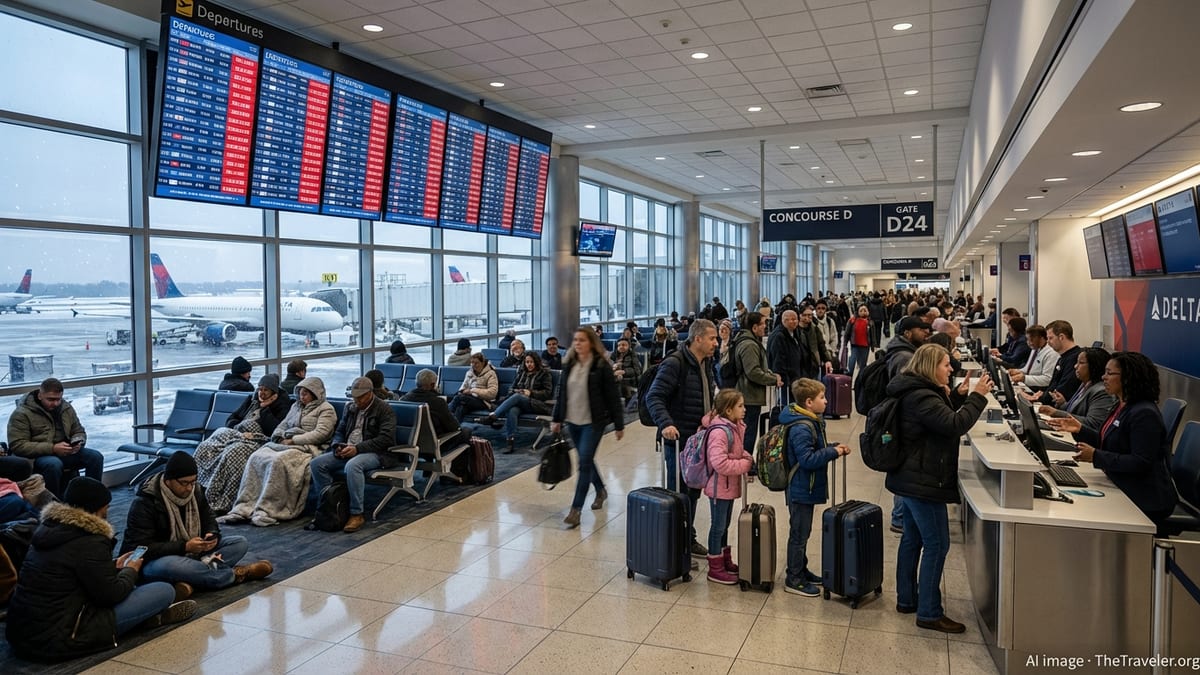
Storm Cells Disrupt Key Midwest and East Coast Hubs
Publicly available tracking data compiled on September 4, 2026 indicates that several hundred flights worldwide and 124 flights touching the United States have been canceled, while 4,633 are delayed, underscoring how quickly localized weather can ripple through interconnected networks. The latest figures place U.S. carriers among the most affected, with large hub airports bearing the brunt of schedule changes.
Reports highlight thunderstorms across the Midwest and East Coast, with particular impact on Chicago, Detroit, and the Washington, D.C. area. According to published coverage drawing on Federal Aviation Administration advisories, thunderstorms are affecting operations at Chicago O’Hare, Reagan Washington National, and other major airports, prompting air traffic flow programs and short ground delays that reverberate across domestic routes.
The pattern mirrors previous weather-driven disruptions this season, where a relatively modest national cancellation count still coincides with thousands of delays. Each hold at a major hub can cascade into missed connections, equipment imbalances, and rolling knock-on delays that reach far beyond the immediate storm zone.
Chicago O’Hare Emerges Again as a Weather Chokepoint
Chicago O’Hare International Airport continues to function as a critical chokepoint in the U.S. system when thunderstorms move across the upper Midwest. An operations plan advisory from the FAA’s Air Traffic Control System Command Center for September 4 flagged early morning thunderstorms around Chicago, warning that convective weather could affect flows into and out of the region.
Separate disruption analyses published in recent days describe how storms over Chicago can rapidly lead to widespread delays. Data reviewed from a major flight disruption tracker for September 3 indicated thousands of delays and hundreds of cancellations at Chicago and Florida airports when storm bands swept the region, illustrating how similar meteorological patterns quickly strain O’Hare’s already busy operation.
Real-time delay dashboards for Chicago O’Hare and Midway on September 4 show dozens of delayed movements across the day, with some periods of heightened disruption as thunderstorms pass through. Even when official airport status pages list general taxi and airborne delays at 15 minutes or less, the cumulative effect of repeated traffic management initiatives can extend journey times for thousands of travelers.
Detroit Weather Adds to Widespread Midwest Disruption
Detroit Metropolitan Wayne County Airport is also experiencing weather-linked operational strain. Recent coverage based on FlightAware data reported that Detroit had one of the highest numbers of delays and cancellations among U.S. airports on September 4, with more than 200 delayed flights and a double-digit cancellation tally recorded over the course of the day.
Social media and traveler reports from southeast Michigan describe severe thunderstorm warnings and rapidly changing conditions, consistent with the elevated disruption levels at Detroit Metro. As a major connecting hub for routes across the Midwest and to the East Coast, Detroit’s delays can intensify knock-on effects, especially for passengers connecting to or from Chicago and Washington-area airports.
Historic federal analyses of delay patterns have long identified Chicago and Detroit among the airports where weather, congestion, and airspace complexity can combine to generate significant passenger delay hours. The latest thunderstorm-driven disruptions appear to fit squarely within that long-running structural challenge.
Reagan National Under Severe Thunderstorm Watch
In the Washington, D.C. region, Reagan National Airport is facing its own weather complications. Forecasts from the National Weather Service on September 4 placed the airport under a severe thunderstorm watch through the evening, with numerous showers and scattered storms expected and a high probability of lightning, gusty winds, and reduced visibility around peak travel periods.
Real-time status information from the FAA shows Reagan National experiencing general departure gate holds and modest airborne arrival delays, typically reported at 15 minutes or less. However, additional aviation condition monitors classify the delay status at Reagan National as excessive at points during the afternoon, reflecting the cumulative impact of repeated storm cells crossing the Potomac corridor.
The Washington area is a dense aviation market, with Reagan National, Washington Dulles, and Baltimore/Washington International often affected in tandem by the same weather systems. When thunderstorms force even short interruptions to arrival and departure rates at these facilities, reroutes and airborne holding can quickly stack up for flights operating along the busy Northeast and Mid-Atlantic corridors.
What Travelers Can Expect as Delays Accumulate
With 4,633 flights delayed and 124 canceled across the U.S. network today, travelers can expect longer-than-normal journey times, missed connections on tightly timed itineraries, and ongoing schedule revisions throughout the evening. Disruption maps and airline performance dashboards indicate that large network carriers and their regional partners are among the most affected, especially on routes that pass through Chicago, Detroit, Atlanta, and the Washington area.
Travel guidance from consumer rights organizations notes that weather-related disruptions generally fall outside the scope of statutory compensation in the United States, particularly when thunderstorms trigger air traffic control restrictions. Even so, airlines are typically expected to assist with rebooking on later flights, provide refunds when trips are no longer possible, and, in some cases, offer meal or hotel vouchers at their discretion.
Experts who track long term delay data argue that the latest round of disruptions highlights how vulnerable the U.S. air travel system remains to convective weather around a small number of major hubs. As storm seasons lengthen and traffic demand remains high, days like this, characterized by several thousand delays but comparatively few cancellations, may become an increasingly common feature of the travel landscape.
U.S. Travelers Face Fresh Wave of Flight Delays and Cancellations — TheTraveler.org
Storms cause 283 cancellations and 6,750 delays at Chicago and Florida airports — AirHelp
Washington/Reagan National Airport Forecast — National Weather Service