


More news on this day
European air travel faced a sharp disruption in early September 2026, with 2,141 delayed flights and 113 cancellations reported across 12 major airports in nine countries, underscoring mounting pressure on an already stretched summer aviation network.
Get the latest news straight to your inbox!
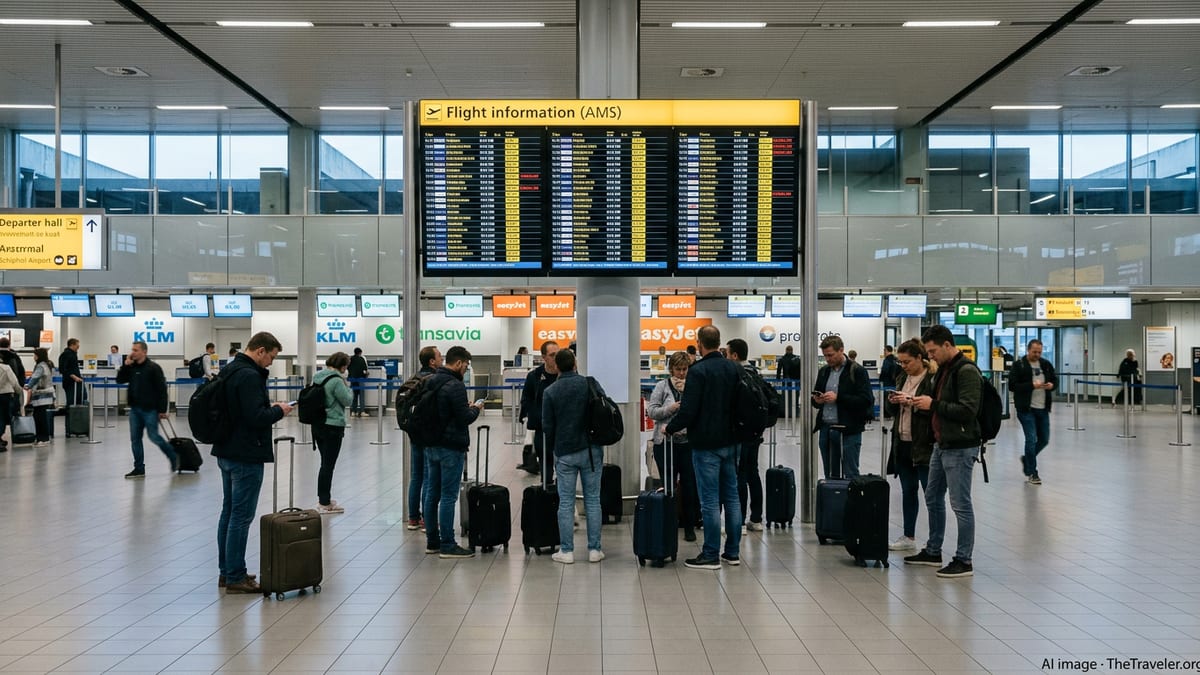
Sharp Spike in Disruptions Across Europe’s Major Gateways
Published coverage from disruption-tracking services indicates that the disruption wave peaked on 3–4 September 2026, when delays and cancellations accumulated across hubs in Germany, the United Kingdom, Italy, Spain, the Netherlands, the Nordic region, and Austria. A combined total of 2,141 delayed services and 113 outright cancellations was recorded across 12 large European airports, transforming a typical late-summer travel day into a continent-wide operational challenge.
Berlin Brandenburg Airport emerged as one of the worst-affected hubs, with data showing 127 delays and 28 cancellations in a single day. London-area traffic was also hit, with London Gatwick alone reporting 239 delays and a smaller number of cancellations, as short-haul carriers struggled to keep schedules on track. Similar patterns appeared at Rome Fiumicino, Amsterdam Schiphol, Barcelona El Prat, and major Scandinavian gateways, where long queues, gate changes, and aircraft rotations added to passenger disruption.
Separate analysis by flight-compensation platforms links a large share of the turmoil to a security incident and rescreening operation at Berlin Brandenburg’s Terminal 1 on 3 September, which created knock-on delays across the European network. Earlier disruptions in 2026, including localized air traffic control staffing issues and weather-related constraints, had already left airlines and airports operating with thinner margins for recovery when fresh operational shocks emerged.
How 12 Airports Turned Local Issues into a Network-Wide Crisis
Operational data and industry reporting show that the 2,254 flights affected during the Berlin-centered disruption, including the 2,141 delays and 113 cancellations, were not confined to Germany. Aircraft and crew operating through Berlin, Gatwick, Rome, Amsterdam, Vienna, Copenhagen, Oslo, Stockholm, Madrid-area airports, and other hubs in Norway, Sweden, and the Netherlands were drawn into a complex chain of reactionary delays.
In Berlin, rescreening procedures and temporary closure of departure areas forced airlines to hold boarding, reassign gates, and re-time outbound flights. As aircraft left late, arrivals into other European hubs began to bunch up, generating congestion on the ground and in surrounding airspace. Reports indicate that while some airports experienced only modest cancellation numbers, they recorded high volumes of delayed departures and arrivals as they worked through backlogs.
This pattern is consistent with longer-term European data. EUROCONTROL’s summer 2026 overviews describe a network operating at or above pre-pandemic traffic volumes, with daily traffic records repeatedly broken and average air traffic flow management delay hovering around 3 to 4 minutes per flight. In such conditions, a disruption at a single major node can quickly spread to other states as schedules leave little buffer to recover from an unexpected shock.
Underlying Pressures: Capacity, Staffing and Weather
The early-September disruption comes against a backdrop of sustained strain on European aviation infrastructure. EUROCONTROL’s European Aviation Overview and Flash Briefing series for summer 2026 highlight that while overall delays are lower than in 2025, congestion remains concentrated in a handful of “hot spot” airspace sectors, particularly in France, Spain, and Greece. These regions have generated a substantial share of en-route delays this year, with air navigation service providers citing capacity constraints, staffing, and transition to new traffic-management systems.
All-causes delay statistics for 2026 also point to the importance of so-called reactionary delays, where one late flight causes subsequent late departures for the same aircraft or crew elsewhere in the network. EUROCONTROL’s all-causes analysis for early 2026 shows reactionary issues contributing the largest single share of departure delay minutes, followed by airline-controlled factors and weather. When airports such as Berlin Brandenburg or London Gatwick experience acute disruption, the combination of these causes can quickly move from a local operational problem to a multi-country event.
Weather has added further unpredictability. Summer thunderstorms over central Europe and localized low-visibility events at busy hubs have periodically forced traffic-management restrictions, extending holding times and limiting runway throughput. While the early-September episode was primarily operational, many of the affected airports had already been working through residual delays from earlier weather or staffing issues, leaving little slack when Berlin’s incident unfolded.
Passenger Impact and Evolving EU Rules on Disruption
For passengers, the 2,141 delays and 113 cancellations translated into missed connections, overnight stays, and widespread schedule changes at the tail end of the peak holiday season. Consumer-rights organizations and flight-compensation platforms report elevated interest from travelers seeking to understand whether they are eligible for refunds, rerouting, or financial compensation when disruptions are not clearly linked to extraordinary circumstances such as severe weather or air traffic control strikes.
European legislation, particularly Regulation (EC) No 261/2004, continues to frame much of the discussion around passenger rights. Recent legislative texts under review at EU level emphasize that delays and cancellations often arise from multiple actors across the aviation chain, including airports and air navigation service providers. Draft recitals highlighted in mid-2026 underscore the principle that while passengers should have clear rights and timely information about causes of disruption, air carriers should retain the option to seek redress from third parties that contributed to an incident.
Publicly available material from EU institutions also stresses the importance of proactive communication. Passengers are expected to receive more detailed notifications about the nature of disruptions and their entitlements, as policymakers seek to close information gaps that have been evident during large-scale events across the network. The early-September disruption has renewed attention on how clearly and quickly airlines and airports relay updates when multiple hubs are affected simultaneously.
What Travelers Can Expect in the Coming Weeks
Industry data for August and early September 2026 show European air traffic running above 2025 levels, with daily flight numbers repeatedly surpassing pre-pandemic records on peak days. EUROCONTROL’s latest weekly assessments describe a broadly stable network performance compared with last year, but acknowledge that average delay per flight remains sensitive to local bottlenecks, weather, and staffing constraints in specific control centers and airports.
Travelers planning trips in the remainder of September are likely to see broadly normal operations on most days, punctuated by localized spikes in disruption when adverse weather, technical issues, or security events occur at major hubs. Published disruption maps from live flight-tracking platforms suggest that incidents at a few high-volume airports can still dominate the European picture, even when most other hubs continue to operate with only minor issues.
Passenger advocates advise monitoring flight status closely in the 24 hours before departure, using airline apps for rebooking options when schedules change, and keeping records of delays and expenses for potential compensation claims. With summer traffic levels expected to remain high into early autumn, the European aviation crisis of early September 2026 is likely to remain a reference point in ongoing debates about resilience, capacity, and passenger protections across the continent’s air transport system.
AirHelp: Berlin Brandenburg disruption and security scare
Travel and Tour World: 2,141 delays and 113 cancellations across Europe